The rapid evolution of the AI market has often been framed as a winner-take-all sprint, with NVIDIA holding the starting gun. However, the announcement on February 24, 2026, of a massive, multi-generational partnership between Advanced Micro Devices (AMD) and Meta Platforms suggests that the race is entering a more tactical—and potentially more competitive—second phase. By securing a deal to deploy up to 6 gigawatts (GW) of AI capacity, AMD isn’t just following NVIDIA’s lead; it is utilizing a “second-mover advantage” to address the specific pain points—cost, power, and proprietary lock-in—left in NVIDIA’s wake.
The Anatomy of the Deals: Customization vs. Standardization
To understand the shift, one must compare the fundamental DNA of Meta’s dual partnerships.
The NVIDIA Partnership: The Infrastructure of Record
Earlier in February 2026, Meta reaffirmed its commitment to NVIDIA’s “Vera Rubin” platform. This deal is characterized by breadth and immediate scale. Meta is deploying millions of Blackwell and Rubin GPUs, integrated with NVIDIA’s proprietary Spectrum-X Ethernet networking. It is a “full-stack” integration where Meta adopts NVIDIA’s entire ecosystem, from the CUDA software layer to the physical rack design. This partnership serves as Meta’s foundational layer for the massive training of “Personal Superintelligence” models.
The AMD Partnership: The Scalable Precision Tool
In contrast, the AMD deal is a $100 billion, multi-year strategic alignment centered on the unreleased MI450 architecture and the Helios rack-scale system. While NVIDIA provides the “general-purpose” AI powerhouse, the AMD deal is built on co-design. AMD is providing customized GPUs specifically optimized for Meta’s unique inference workloads.
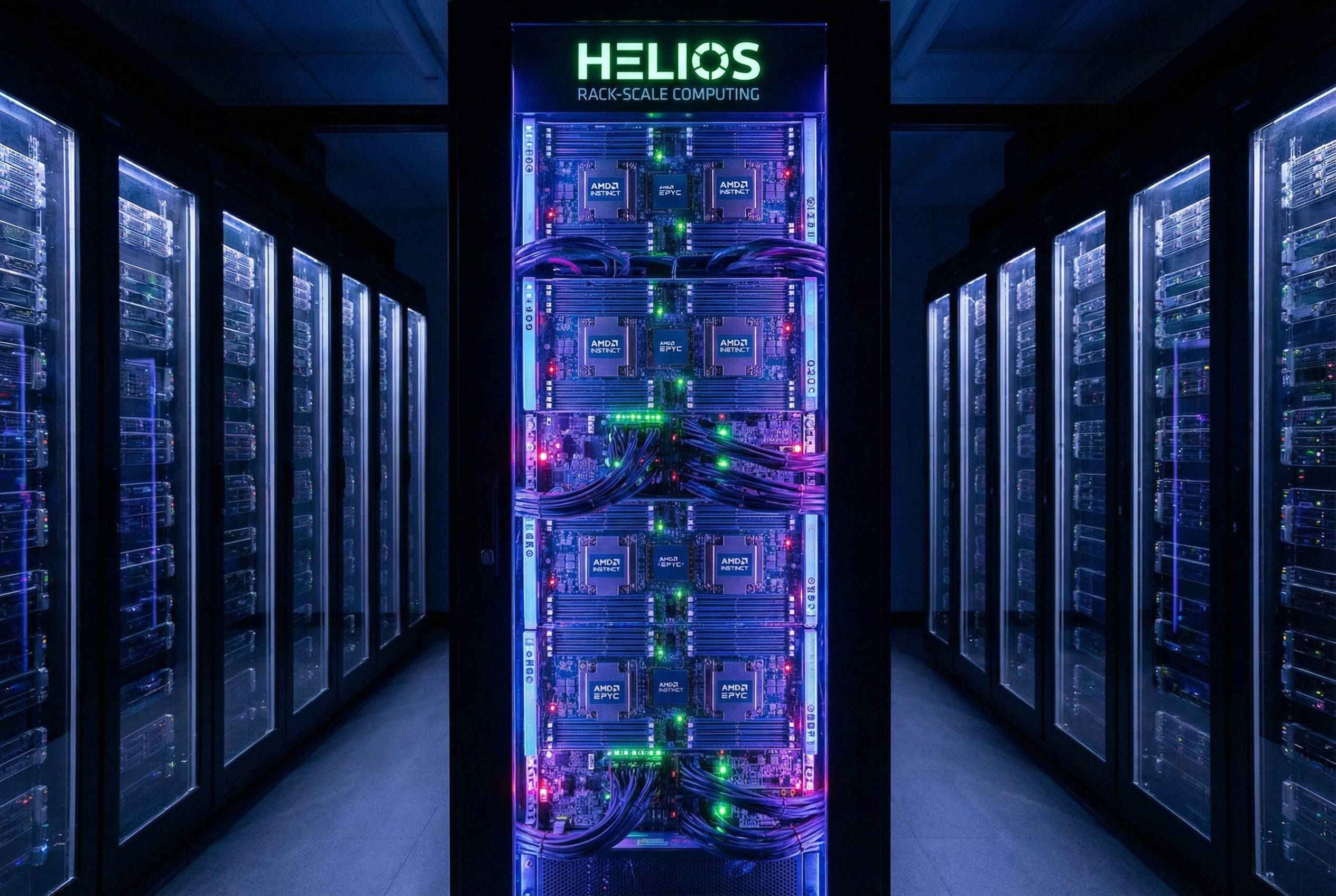
The financial structure of the AMD deal is also revolutionary. AMD has issued Meta performance-based warrants for up to 160 million shares. This ties the vendor’s success directly to the customer’s deployment milestones. By essentially making Meta a part-owner, AMD ensures a level of strategic intimacy that a traditional “buyer-seller” relationship like NVIDIA’s cannot easily replicate.
The Strategic Edge of Going Second
In technology, going first establishes the market, but going second allows for optimization. NVIDIA’s dominance with the H100 and B200 was built on being the only game in town during the initial LLM explosion. AMD, by arriving at scale now, has the advantage of responding to the feedback of the world’s largest AI spenders.
- Addressing the Memory Bottleneck: One of the primary critiques of NVIDIA’s early hardware was memory capacity for inference. AMD’s Instinct roadmap, including the MI325X and upcoming MI350, consistently offers significantly higher High Bandwidth Memory (HBM) capacity than contemporaneous NVIDIA chips. This allows Meta to run massive models like Llama 4 on fewer nodes, drastically reducing Total Cost of Ownership (TCO).
- Open Standards vs. Proprietary Moats: While NVIDIA’s CUDA is a formidable moat, it is also a “golden cage.” AMD has doubled down on the ROCm open-source software stack and the UALink interconnect standard. By going second, AMD is positioning itself as the leader of the “Open AI” movement, attracting companies like Meta that are desperate to diversify away from a single-vendor dependency.
- Power Efficiency at Scale: Deploying 6GW of power is an astronomical logistical challenge. By observing the thermal and power struggles of the Blackwell generation, AMD has optimized the MI450 and Helios systems for “performance-per-watt-per-dollar.”
Advancing the AMD Roadmap: Venice, Verano, and Helios
This partnership is the ultimate launchpad for AMD’s unreleased 2026 and 2027 portfolio. The Meta deal specifically mentions the 6th Gen AMD EPYC CPUs, codenamed “Venice” and “Verano.”
- Venice: Will serve as the primary “host” CPU for the AI racks, providing the high-speed PCIe lanes and data throughput required to keep the GPUs fed.
- Verano: A workload-specific EPYC variant designed for the high-efficiency needs of inference-heavy data centers.
- Helios: This is the “capstone” of the deal. Helios is a rack-scale architecture developed jointly via the Open Compute Project (OCP). It integrates AMD’s CPUs, GPUs, and networking into a single, modular unit that Meta can drop into its data centers at a gigawatt scale.
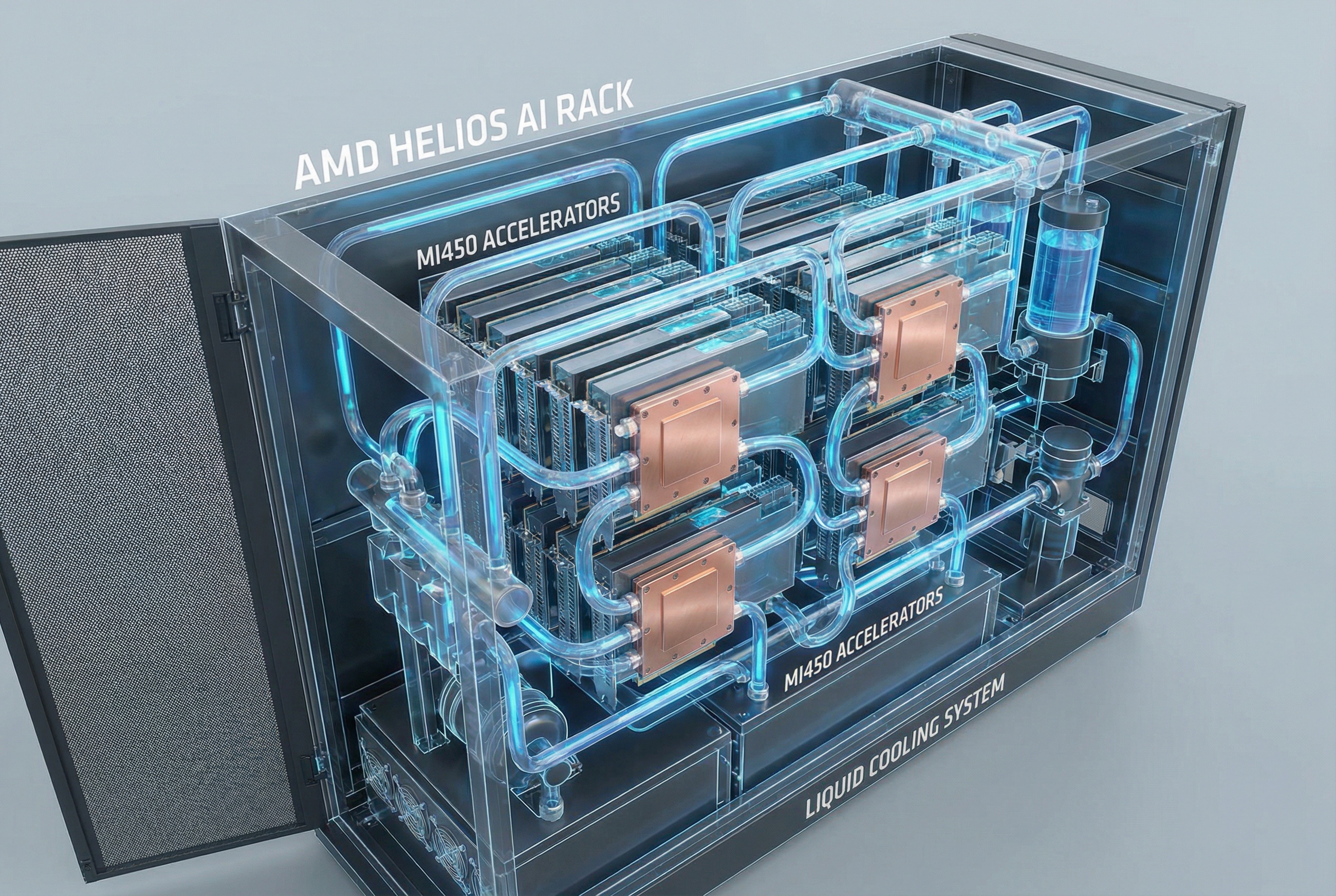
By securing Meta as the “Lead Customer” for these products, AMD guarantees high-volume production and real-world debugging before these products even hit the broader enterprise market. It transforms AMD from a component supplier into a systems-level company.
Customer Engagement: The “Anti-NVIDIA” Approach
NVIDIA’s meteoric rise has occasionally led to a perception of “supply-chain friction” among hyperscalers. AMD, under Dr. Lisa Su, has cultivated a reputation for being a “partner-first” organization.
The Meta deal is the embodiment of this practice. While NVIDIA sells its vision of the future, AMD is building Meta’s vision. The willingness to customize silicon at the wafer level and the issuance of stock warrants show a level of flexibility NVIDIA currently has no incentive to match. This engagement model is already winning over other giants; the structure of the Meta deal is nearly identical to the one AMD struck with OpenAI in late 2025.
For other large-scale purchasers—think Amazon or Google—AMD is providing a template for sovereignty. These companies don’t just want chips; they want a partner who will help them build their own proprietary AI stacks.
A New Template for Large-Scale AI Deals
The AMD/Meta pact marks the end of the “transactional” era of AI hardware. We are moving toward Infrastructure Alliances.
In the future, we should expect:
- Equity-Linked Procurement: Large buyers will demand warrants or equity stakes to offset the massive capital expenditure (CapEx) of building AI.
- Co-Design Requirements: Hyperscalers will no longer accept “off-the-shelf” silicon. They will require custom instructions or memory configurations tailored to their specific models.
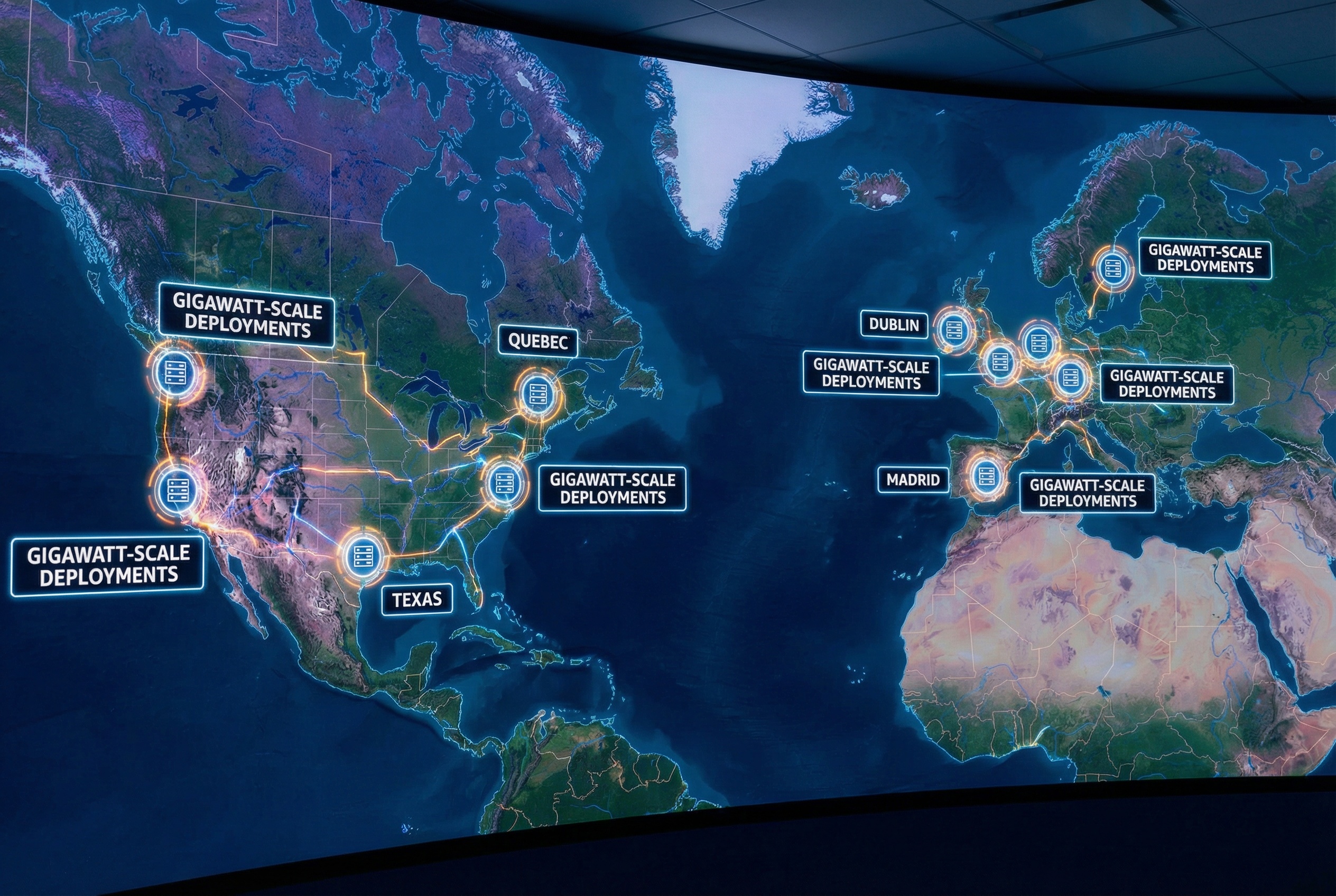
- Gigawatt-Scale Planning: Deals will be measured in power capacity (GW) rather than unit counts, reflecting the shift toward AI as a utility.
Wrapping Up
AMD’s partnership with Meta is a masterstroke of strategic timing. By allowing NVIDIA to clear the initial brush of the AI revolution, AMD has been able to design a response that hits exactly where the market is moving: toward open-source, power-efficient inference at a massive scale. With the MI450 and Helios systems, AMD has transitioned from a component vendor to a strategic architect, providing Meta with the tools to build a “Personal Superintelligence” without the constraints of a proprietary ecosystem. As the template for future $100 billion deals, this pact ensures that while NVIDIA may have started the race, the finish line will be determined by who plays the long game of customer-centric innovation.