If I’ve learned anything in my decades covering the tech industry, it’s that we have a pathological obsession with “the engine.” In the 90s, we obsessed over clock speeds while our software crashed. In the 2000s, we obsessed over browser wars while our security was a sieve. Today, the world is losing its collective mind over LLMs (Large Language Models), acting as if the “engine” is the entire car. It isn’t. You can have a Ferrari engine, but if you bolt it to a lawnmower frame with no transmission, you aren’t going to win Le Mans; you’re just going to have the loudest, most expensive way to ruin your grass.
The industry is currently drowning in “AI Intelligence,” yet starving for “AI Utility.” Most enterprises are approaching AI like a DIY home improvement project—they buy the raw materials, watch a few YouTube videos, and then wonder why their kitchen is on fire. The critical need for IT today isn’t more raw AI power; it’s Experience, Expertise, Authoritativeness, and Trustworthiness (E.E.A.T.). We don’t need more geniuses inventing new ways to fail; we need the guys who have already succeeded to give us their notes.
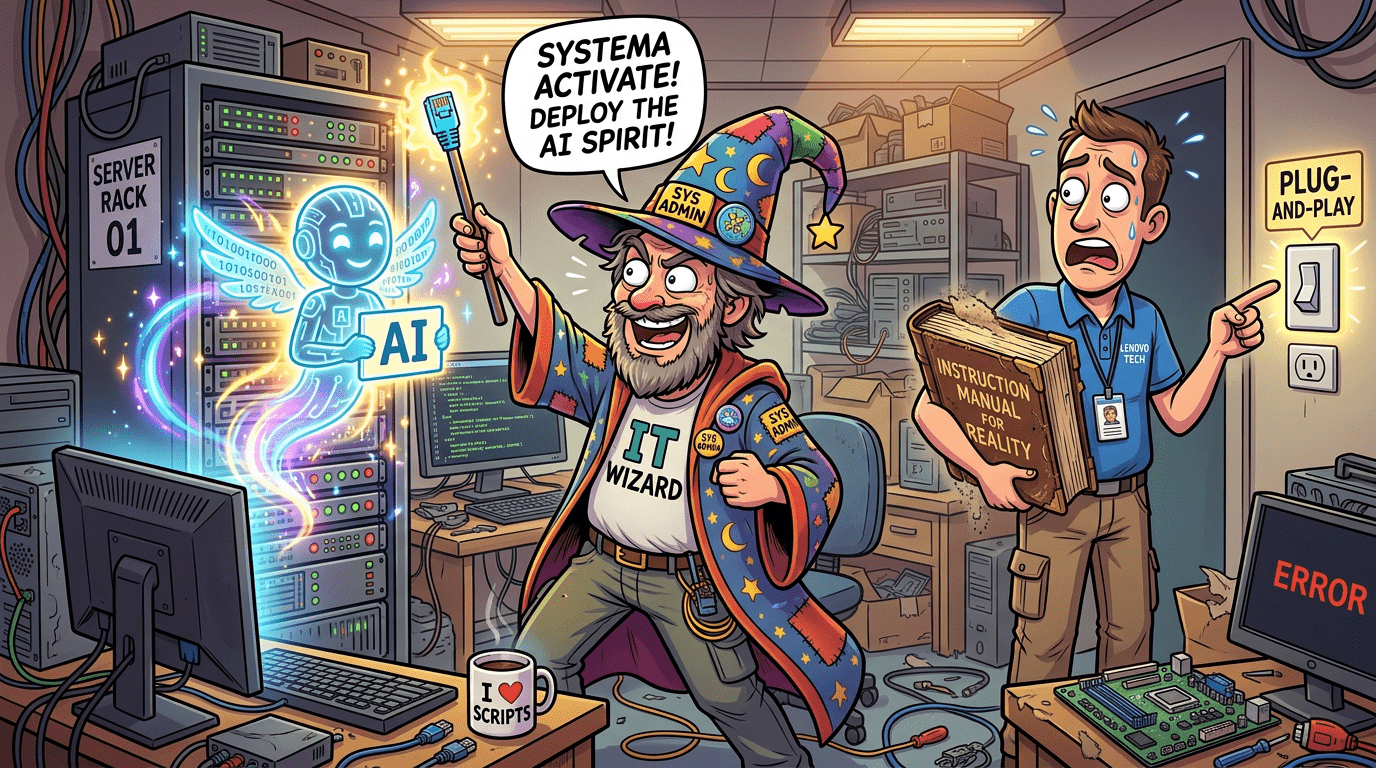
Why Reinventing the Wheel is for People with Too Much Budget
There is a specific kind of arrogance in Silicon Valley that suggests every problem must be solved from first principles. This is why we have 400 different food delivery apps and zero flying cars. In the enterprise, this manifests as “Custom AI Projects.” Companies spend millions hiring data scientists to build bespoke models that do things other companies solved five years ago.
The reality is that 90% of what an enterprise needs AI to do—inventory management, predictive maintenance, customer sentiment analysis—has already been done. The Lenovo Hybrid AI Advantage isn’t just about selling you a server; it’s about stopping the insanity of reinventing what already works. The critical path to ROI isn’t the “Intelligence”; it’s the “Library” of existing practices and software that can be deployed before your board of directors loses interest.
Lenovo as the Ultimate AI Guinea Pig
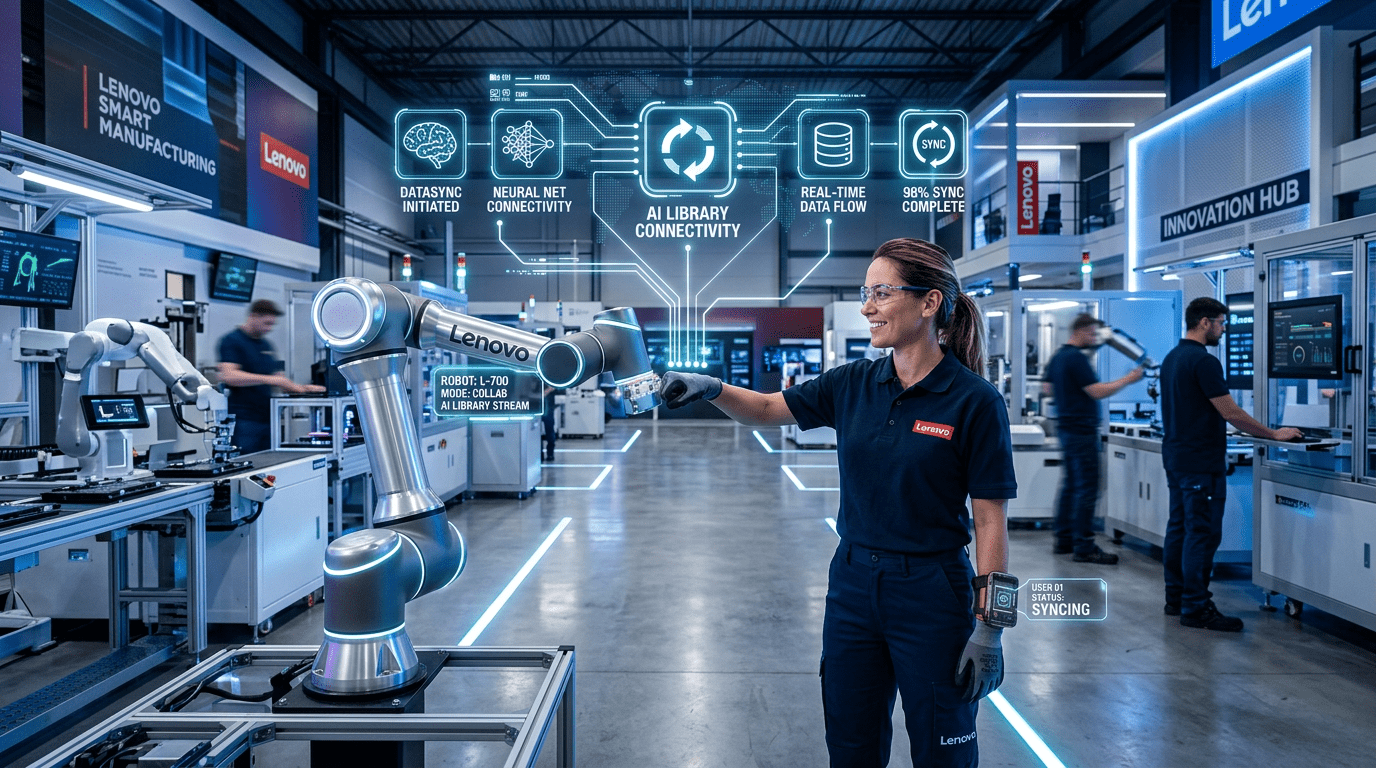
One of the reasons I’ve always respected Lenovo is that they tend to eat their own dog food – and they eat a lot of it. Before they try to sell you an AI-driven supply chain solution, they’ve already used it to manage one of the most complex global supply chains in human history. They aren’t just a hardware company; they are a massive robotics and AI laboratory that happens to sell laptops.
When you look at their internal use of AI and robotics in their manufacturing facilities, it’s clear they have the “Experience” component of E.E.A.T. locked down. They’ve made the mistakes, so you don’t have to. If you’re looking for a partner, do you want the startup that’s “pivoting” every six months, or the company that uses AI to ensure millions of devices reach hundreds of countries without a hitch? The answer is obvious to anyone who hasn’t been blinded by VC smoke and mirrors.
Unlocking Intelligence with the Lenovo AI Library
The star of the show here is the Lenovo AI Library. Think of it as the “GitHub” for people who actually want to get work done. Instead of staring at a blank prompt and asking an AI to “fix my business,” the Library provides access to modular, proven AI “blueprints.” These are pre-validated, pre-optimized solutions designed to run on-premises or in a hybrid cloud environment.
A prime example of this in action is detailed in the Signal65 Insights report on Lenovo xIQ. In the retail sector, for instance, Lenovo isn’t just giving a store a chatbot; they are deploying a “Super Agent” that understands inventory, customer flow, and local preferences. It’s the difference between a generic intern and a 20-year floor manager who knows where every single bolt is hidden.
The E.E.A.T. Factor in AI Deployments
Google’s E.E.A.T. guidelines are usually applied to SEO, but they are a perfect framework for AI procurement.
- Experience: Does your AI provider actually use this stuff? Lenovo does.
- Expertise: Can they handle the stack from the silicon to the software? Yes.
- Authoritativeness: Are they recognized leaders in global infrastructure? Obviously.
- Trustworthiness: Will they still be here in five years to support the deployment? Unlike the “AI-first” startup currently operating out of a WeWork, Lenovo isn’t going anywhere.
By focusing on these four pillars, Lenovo avoids the “hallucination” phase of AI deployment—where the tech promises the moon and delivers a lukewarm rock. They focus on making deployments relatively inexpensive because you aren’t paying for R&D; you’re paying for implementation.
Defining the New AI Era
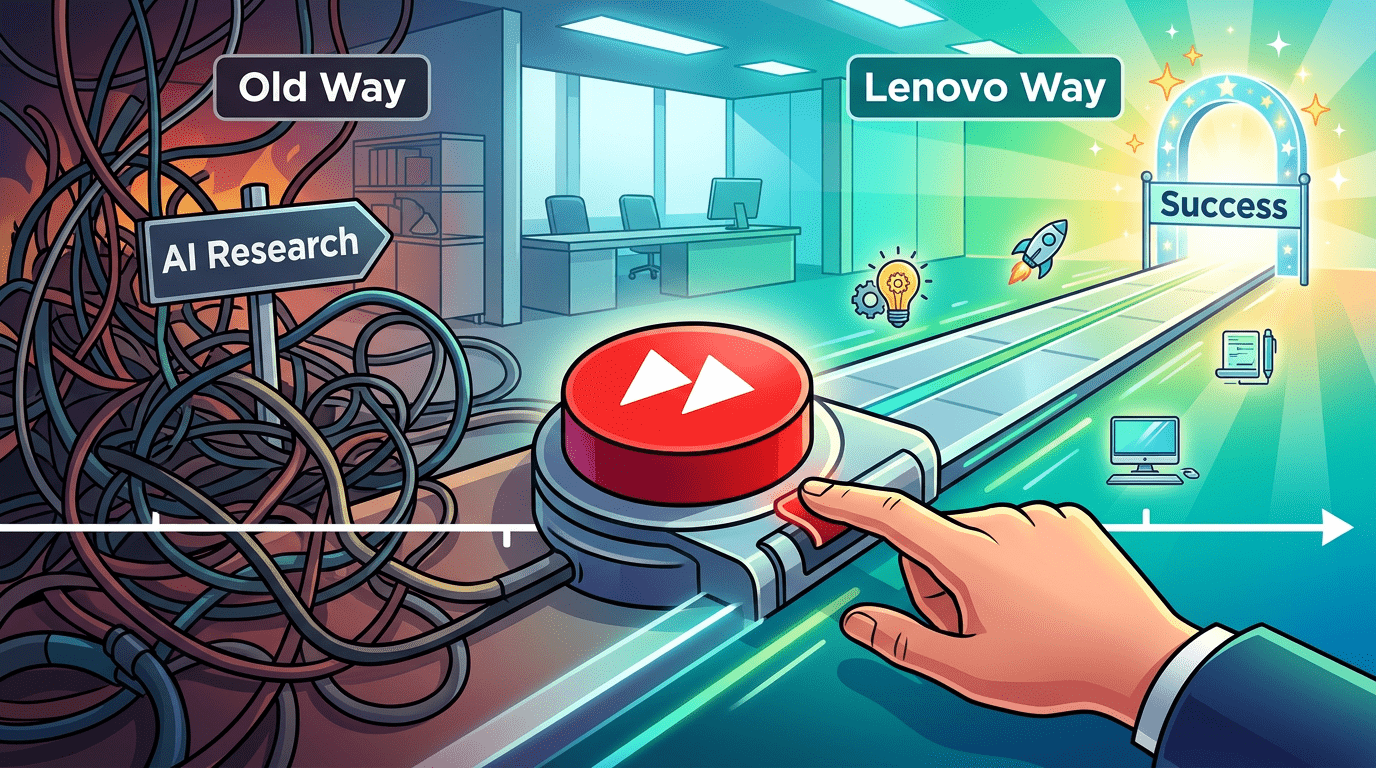
The “New AI Era” won’t be defined by who has the biggest model. It will be defined by who can get a functional, ROI-positive solution into production the fastest. We are moving from the “Exploration” phase of AI to the “Execution” phase. In this new landscape, speed is everything, but speed without direction is just a fast way to hit a wall.
Lenovo’s approach—prioritizing the library of practices over the engine of intelligence—is the “adult in the room” strategy. It acknowledges that IT departments are overworked, understaffed, and tired of being lied to by vendors. By providing a shortcut to what works, Lenovo is effectively commoditizing AI success. This makes the technology timely and effective, turning what used to be a three-year “transformation project” into a three-month “deployment schedule.”
Wrapping Up
The takeaway here is simple: stop acting like AI is a mystery that needs to be solved and start treating it like a tool that needs to be sharpened. The critical need for IT isn’t more intelligence; it’s better access to existing software and the experience required to deploy it without blowing the budget. Lenovo, through its AI Library and massive internal robotics experience, is offering a roadmap for the rest of us. If you want to actually see a return on your AI investment before the next decade, stop building engines and start visiting the library. The era of DIY AI is over; the era of Professional AI Deployment has begun.
- Lenovo Cracks the Code for Rapid AI Deployment with Massive Internal Expertise and Library Access - May 19, 2026
- The AMD Inflection and How Execution and AI Strategy Are Redefining the Semiconductor Hierarchy - May 13, 2026
- The Coming AI Storm and Why AMD’s coming July Event Is the New Industry North Star - May 5, 2026