In my decades covering the tech industry, I’ve seen the pendulum swing from the desperate need to be “always on” to the terrifying realization that being “always found” by advertisers and algorithms is a nightmare. We are currently witnessing a massive, tectonic shift in how the next generation views connectivity.
For years, the smartphone was the center of the universe. But for Gen Z, the “Digital Natives” who have never known a world without a screen, the glow is wearing off. They are increasingly seeking “off-grid” experiences—not because they want to disappear, but because they want to be safe without being tracked, monitored, or interrupted. This is the rise of the Satellite Wearable, and it’s going to change everything we think we know about mobile services.
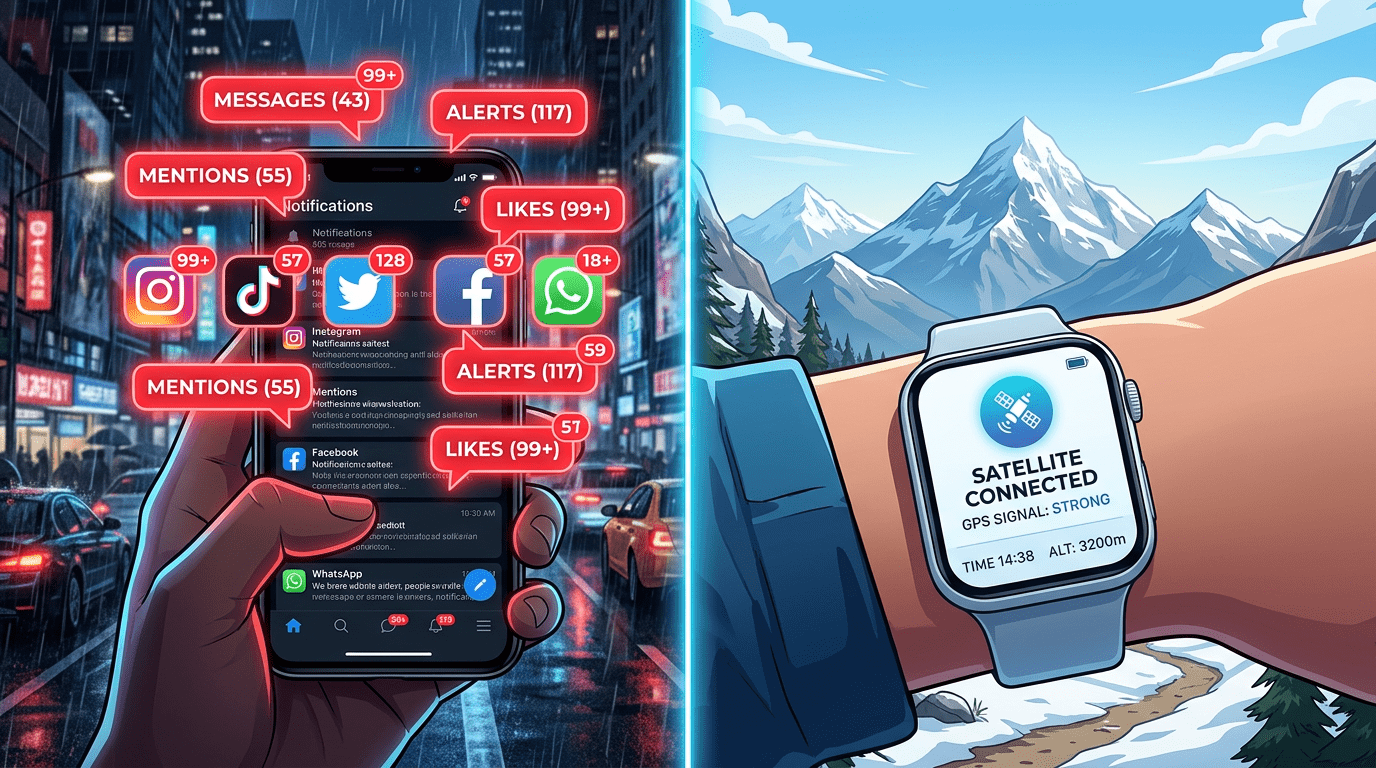
The Foundation of the Off-Grid Trend
Gen Z is currently leading a movement often referred to as “Digital Minimalism” or “The Great Disconnection.” Unlike Millennials, who embraced the social media gold rush, Gen Z is acutely aware of the mental health toll of constant cellular connectivity. They are dealing with unprecedented levels of anxiety and “notification fatigue.”
However, there is a paradox: while they want to disconnect from the social noise of the cellular grid, they are also a generation that prioritizes personal safety and “peace of mind” above all else. They want to hike, travel, and explore without a TikTok notification ruining the moment, but they need to know that if they break an ankle in a dead zone, they aren’t going to die there.
Standard cellular service is failing this demographic. Cellular networks are designed for high-density urban environments and data harvesting. They are notoriously spotty in the very places where Gen Z is seeking solace—national parks, remote beaches, and mountain trails.
Why Satellite Wearables Are the New Safety Net
This is where satellite technology enters the frame. For a long time, satellite communication was the domain of wealthy yacht owners or hardcore survivalists carrying bulky “bricks.” But miniaturization has finally caught up with the heavens.
Satellite wearables meet the emerging need of Gen Z because they offer a “silent” safety net. Unlike a cellular phone, which is constantly pinging towers and demanding your attention, a satellite wearable like the O-Boy sits dormant until it is actually needed. It provides a literal lifeline to the Global Rescue network without the baggage of an internet browser or an Instagram feed.
This is “Off-Grid Safety” – the ability to be unreachable by your boss or your ex, but instantly reachable by emergency services. According to research on Gen Z travel trends, this generation is looking for authentic, remote experiences, making the satellite link a functional necessity rather than a luxury.
Analyzing the O-Boy Smartwatch: The Vanguard of the Movement
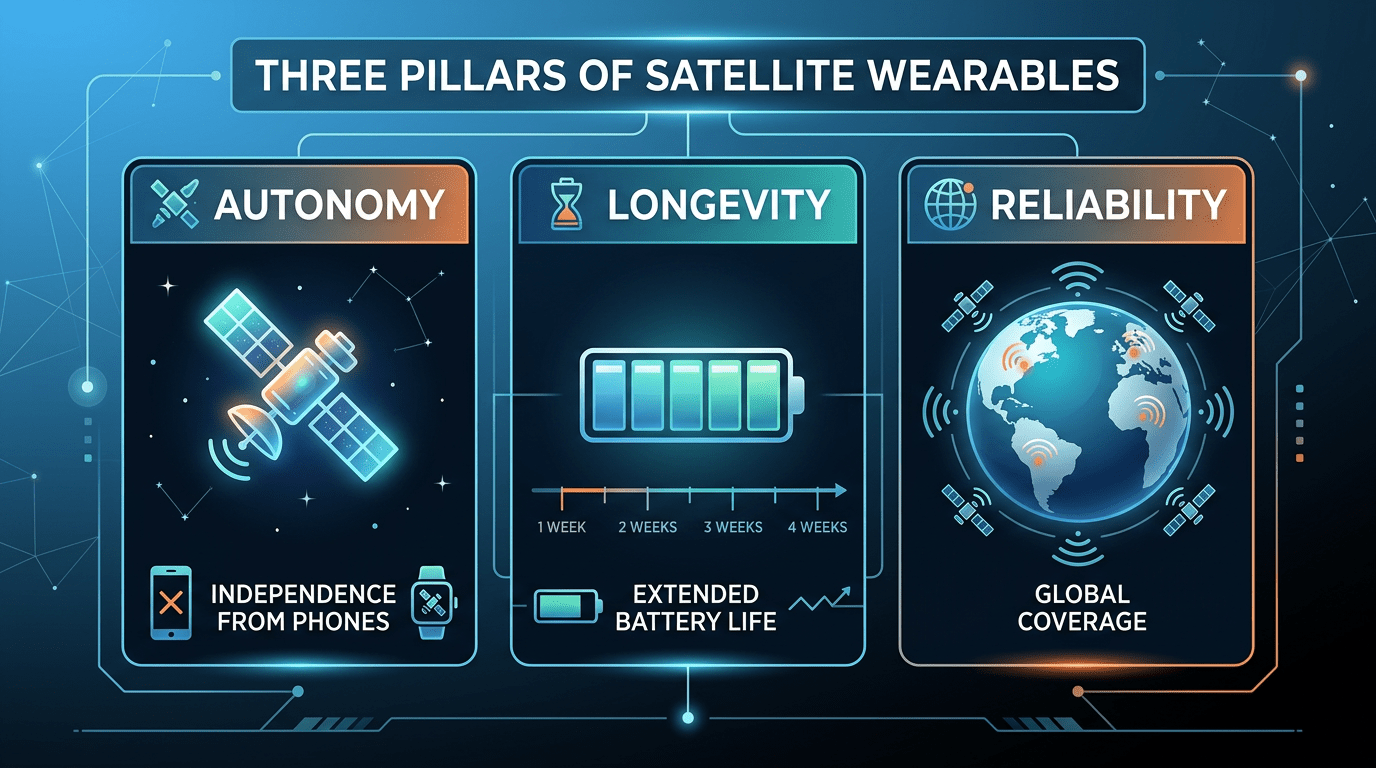
The O-Boy Smartwatch is perhaps the purest expression of this trend I’ve seen to date. It isn’t trying to be a “mini-phone” on your wrist. It is a specialized, ruggedized tool designed by Futurewave that prioritizes three distinct levels of satellite interaction: “GetMe,” “RescueMe,” and “TrackMe.”
The brilliance of the O-Boy lies in its independence. Most “smart” watches are tethered to a cellular phone. If your phone dies or loses signal, your watch becomes a very expensive paperweight. The O-Boy uses an omnidirectional antenna to talk directly to satellites.
For a Gen Z user, this is the ultimate “freedom” device. It allows them to leave the $1,200 smartphone in the glove box or at home. It Gen Z criteria by solving a real-world problem—emergency communication in dead zones—with a specialized hardware solution rather than a software gimmick.
The Competitive Landscape: Garmin, Apple, and the New Guard
The O-Boy isn’t alone, but it is unique in its focus. We have seen the Garmin inReach series dominate the handheld space for years, providing reliable two-way messaging. However, Garmin’s form factors are often still “prosumer” and bulky.
Apple famously introduced “Emergency SOS via Satellite” with the iPhone 14, but again, that is tied to the phone—the very device Gen Z is trying to put down. Other players like Bullitt Group have worked on satellite-integrated rugged phones, but the wearable form factor is where the real growth lies. We are expecting to see more “Sat-only” wearables that eschew LTE entirely to maximize battery life and focus on the “rescue” mission.
Gen Z Priorities: The Shift from “Status” to “Survival”
Over the next few years, we will see Gen Z shift their spending from “Status Products” (the latest flashy phone) to “Utility Products” (gear that enables experiences). This generation views the traditional cellular contract as a leash.
The rise of satellite wearables signals a move toward modular technology. Instead of one device that does everything poorly, we will see a suite of devices that do one thing perfectly. A high-end camera for photos, a satellite watch for safety, and a tablet for work. This “De-Siloing” of the smartphone will redefine product categories through the late 2020s.
Is this trend sustainable? Absolutely. As the cost of launching low-earth orbit (LEO) satellites drops—thanks to companies like SpaceX and its Starlink Direct to Cell initiative—satellite connectivity will become a standard feature, not an add-on.
The 2030s: A World Without Towers?
By the 2030s, the distinction between “cellular” and “satellite” will likely vanish. We are heading toward a “Hybrid Network” world. However, the hardware will remain bifurcated.
I predict that by 2032, we will see the “End of the Dead Zone.” For the consumer, this means your wearable will automatically switch to a satellite backbone the moment you step off the grid. But for Gen Z (who will then be in their 30s and 40s), the preference for “distraction-free” devices will have matured into a standard lifestyle choice.
Services in the 2030s will be sold based on “Intelligent Connectivity.” You won’t pay for data; you’ll pay for “Safety Tiers.” The O-Boy is the grandfather of this service model—paying for the assurance of rescue, not the ability to scroll through advertisements.

The Maturity of the Off-Grid Trend (Target Date: 2028)
I expect this trend to reach full maturity by 2028. By this date, the satellite constellations from Amazon (Project Kuiper), SpaceX, and Globalstar will be so dense that “Satellite-First” wearables will be as common as Fitbits were in 2015.
In this world, the primary mode of personal safety will be celestial. We will see a massive decline in traditional mountain rescue costs because everyone will be trackable via satellite, and the “lost hiker” trope will become a historical curiosity.
Wrapping Up
The rise of satellite wearables like the O-Boy is more than just a hardware trend; it is a cultural response to the “over-connected” era. Gen Z is leading the charge back into the wild, demanding safety without the surveillance and noise of the cellular grid.
By focusing on specialized, independent satellite communication, companies are meeting a deep-seated human need for freedom and security. As we move toward 2030, expect the smartphone to lose its grip as the “everything device,” replaced by a new generation of rugged, reliable, and “quiet” satellite tech that puts the user’s life—not their data—first.
- AMD Unleashes The Ryzen AI Halo Platform And Max PRO Processors To Revolutionize Local Agentic AI Development - June 2, 2026
- The War on Deepfakes: How Google’s C2PA Integration at I/O 2026 is Fighting Back to Protect Our Reality - May 28, 2026
- Lenovo Cracks the Code for Rapid AI Deployment with Massive Internal Expertise and Library Access - May 19, 2026