When Ithaca Holdings swooped in to acquire Bumble in a $1.3 billion take-private deal, the immediate industry reaction focused almost entirely on the consumer implications of saving a distressed social platform. But if you look past the consumer-facing interface and examine the pedigree of the buyers – John Hegeman, former Meta Chief Revenue Officer, and Ravi Gupta, a former Sequoia partner – you realize they didn’t just buy a matchmaking brand. They acquired one of the most complex, nuanced, and voluminous datasets of human behavioral interaction on the planet.
Dating apps are, at their core, massive sociological laboratories. They silently track how people initiate conversations, how they handle rejection, how they persuade, how they present themselves, and how their communication cadences shift when they are stressed, excited, or frustrated. If an artificial intelligence can be trained to perfectly map these raw human interaction dynamics, that exact same underlying technology can be redeployed into the corporate world to fundamentally rewrite enterprise human resources. We are standing at the dawn of the predictive, AI-driven enterprise, and the data models pioneered by consumer platforms are about to flip the corporate world upside down.

The Enterprise Data Goldmine
For decades, human resources departments have relied on incredibly blunt instruments to evaluate talent and manage corporate culture. Back when I was at IBM in the 1980s, HR was basically a filing cabinet of resumes, and honestly, the fundamental mechanics haven’t evolved as much as we pretend they have. We still use standardized interviews, which are easily gamed by charismatic but ultimately toxic candidates. We rely on self-reported personality tests like Myers-Briggs or DiSC assessments, which only tell you how an employee wants to be perceived, rather than how they actually behave under pressure. And we use annual performance reviews, which are almost entirely backward-looking and heavily skewed by recency bias and the subjective preferences of middle management.
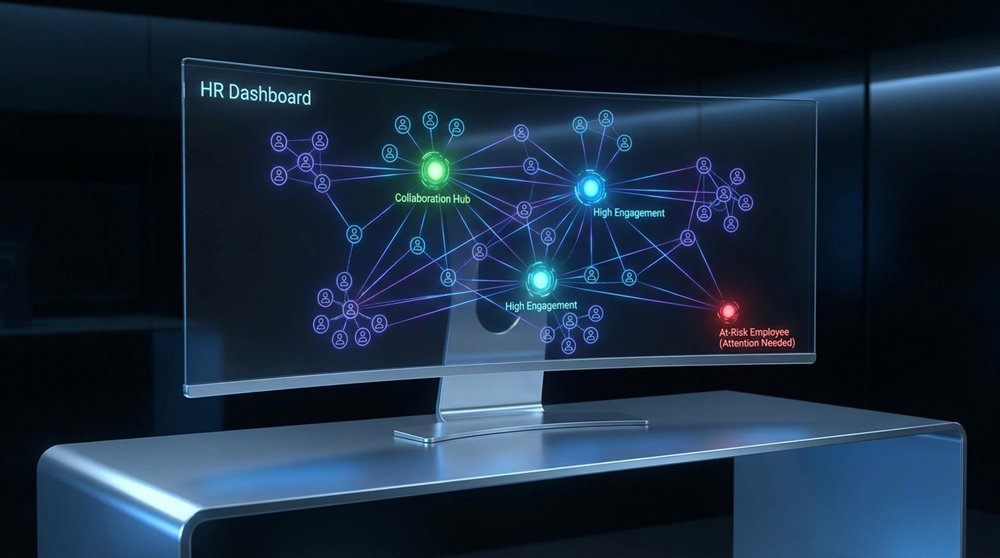
Enterprise platforms like Workday and SAP SuccessFactors have done an excellent job of digitizing the administrative side of HR, effectively tracking skills, payroll, and basic engagement metrics. But they historically fail to capture the invisible, highly complex web of actual human chemistry. This is exactly where the behavioral analytics pioneered by social and matchmaking AI changes the game. By analyzing actual daily communication—the tone of internal emails, the cadence of instant messages on Slack or Teams, the participation rates and vocal stress markers in video conferences—an enterprise AI can map the true psychological and operational reality of a company in real-time.
The Team Cohesion Engine
One of the most notoriously difficult challenges in any enterprise is assembling a highly functional team. You can put five brilliant engineers with perfectly complementary technical skills in a room, and the project can still spectacularly implode due to massive personality clashes. I’ve seen it happen more times than I can count.
By utilizing the same deep interaction-mapping algorithms used to determine long-term compatibility in consumer apps, enterprise AI can create the ultimate team cohesion engine. Instead of relying on a project manager’s gut instinct or a static skills matrix, the AI evaluates the historical interaction data of the workforce. It knows which employees naturally step up to mediate conflicts when a deadline looms. It knows which ones tend to dominate conversations and shut down introverted colleagues, and which combinations of communication styles lead to the fastest problem resolution.
When a new critical project launches, the AI doesn’t just recommend the best coders or marketing analysts; it recommends the combination of individuals whose psychological profiles and communication habits will create perfect operational symmetry. Having recently evaluated a variety of cutting-edge workplace solutions while serving as a judge at the HP Future of Work Accelerator Pitch Fest in New York City, I can assure you that the corporate appetite for this level of predictive, AI-driven team synergy is rapidly shifting from theoretical whitepapers to active, heavily funded deployment.
Identifying Toxicity and Insider Threats
The applications for this technology extend far beyond simply making product sprints run more smoothly. The most profound, and arguably the most critical, application of behavioral interaction mapping is threat detection and risk mitigation.
In the pre-hire phase, an AI trained on deep interaction data can analyze a candidate’s communication style during simulated assessments or interview processes to look for subtle red flags that human interviewers consistently miss. It can identify micro-aggressions, tendencies toward deceit, or deeply ingrained arrogance that would eventually prove toxic to the corporate culture. It stops the “brilliant jerk” from ever crossing the threshold.
But the post-hire applications are where the technology becomes truly transformative. My background is heavily rooted in enterprise security, and every security professional knows that the greatest threat to a company rarely comes from an external hacker breaching a firewall; it comes from the inside. Whether it is a disgruntled employee preparing to steal intellectual property, or an individual whose mental health is deteriorating to the point where they might cause physical harm to themselves or others, the signs are almost always there in advance. The problem is that human managers are rarely equipped to notice them until it is too late.
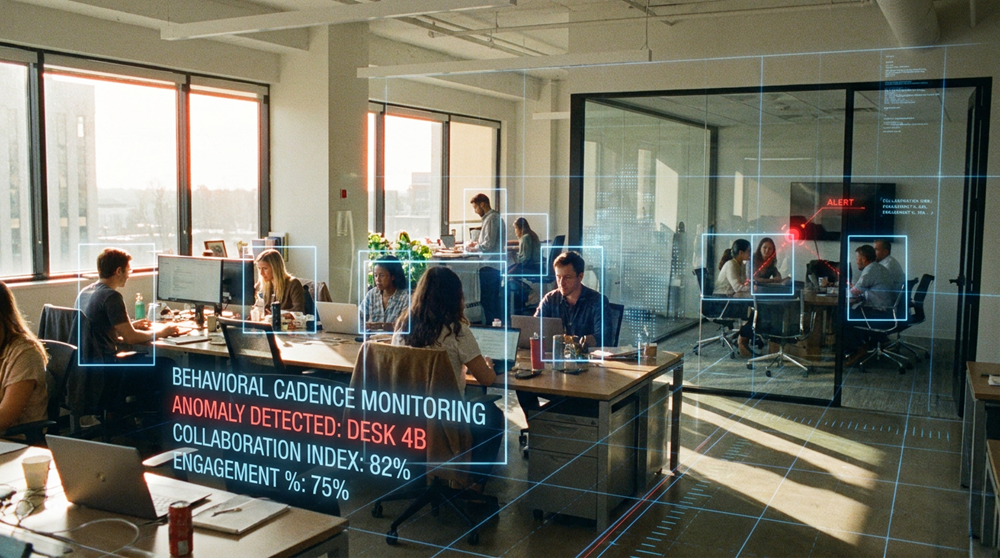
An AI continuously analyzing the workforce’s communication patterns establishes a baseline for every single employee. If an employee who is typically highly collaborative suddenly isolates themselves, begins using unusually aggressive syntax in their emails, drastically alters their login hours, and stops participating in team chats, the AI instantly detects this behavioral deviation.
The Proactive Intervention Protocol
This is where the technology shifts from a cold corporate surveillance tool into a genuine human safety net. The goal here is not to create a dystopian environment where employees are automatically fired by a robot for having a bad week. The goal is proactive, compassionate intervention to ensure that harm never materializes in the first place.
When the AI detects a critical deviation in an employee’s behavioral pattern, it can trigger automated, confidential protocols. If the system detects patterns consistent with severe burnout, deep depression, or personal crisis, it can automatically trigger the company’s Employee Assistance Program (EAP) to send completely confidential, non-punitive outreach offering mental health resources. It can subtly advise the employee’s manager to temporarily reduce their workload or approve pending time-off requests without ever disclosing the specific algorithmic trigger.
By identifying the people who are struggling long before their frustration manifests as a catastrophic security breach, a tragic incident of workplace violence, or devastating self-harm, the AI allows the enterprise to intervene with support and redirection. It fundamentally changes the role of HR from a reactive disciplinary body into a proactive wellness, security, and employee preservation apparatus.
Supercharging Satisfaction, Advancement, and Loyalty
While threat detection is critical for the survival of the company, using this interaction data to improve the daily lives of the employees is what will actually drive widespread adoption and acceptance. The old adage is entirely true: people do not quit bad companies; they quit bad managers. An AI interaction engine can effectively serve as the ultimate, unbiased advocate for every single employee on the payroll.
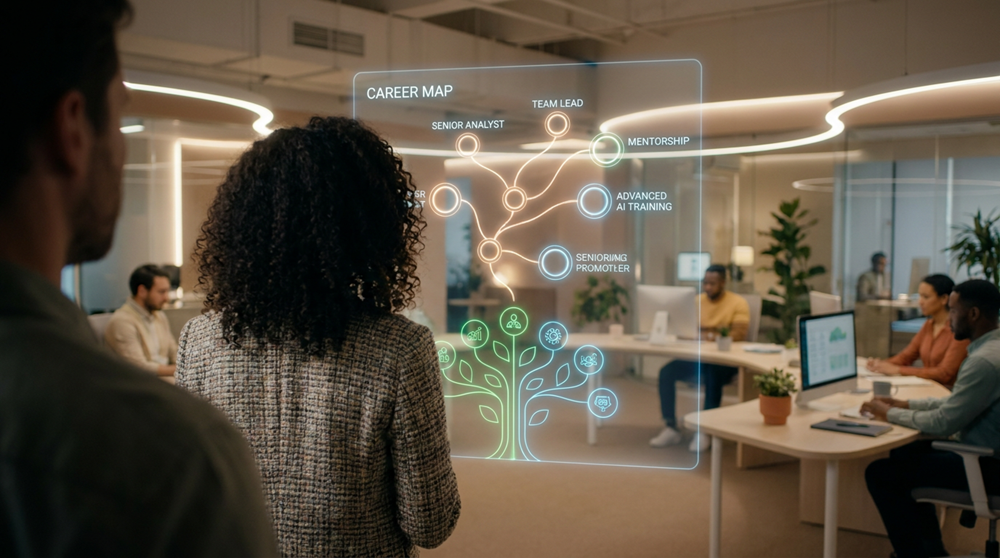
Because the AI is constantly analyzing the work and the communication surrounding it, it knows exactly what makes an individual employee thrive. It might notice that a mid-level analyst lights up and produces their absolute best work when tasked with mentoring junior staff, even if that isn’t officially part of their job description. It might recognize that a specific developer produces brilliant code but becomes deeply anxious and unproductive when scheduled for back-to-back video meetings.
Using this incredibly granular understanding, the AI can proactively suggest highly personalized career paths. It can recommend internal transfers to departments where the employee’s specific communication style is desperately needed. It can automatically flag an employee for a well-deserved raise or promotion based on their actual collaborative output and unseen foundational work, completely bypassing the biases of a human manager who might just favor the loudest person in the room. Platforms like Microsoft Viva are already laying the groundwork for this by analyzing Microsoft 365 graph data to provide basic insights into employee wellbeing and productivity, but a fully realized behavioral AI will take this to an entirely different universe.
When an employee feels genuinely seen, understood, and advocated for by their company’s infrastructure, job satisfaction skyrockets. You build an unprecedented level of employee loyalty because the enterprise is actively adapting to fit the human, rather than forcing the human to adapt to the rigid structure of the enterprise.
The Ethical Minefield of Corporate Surveillance
However, we must address the massive elephant in the room. The line between a highly supportive, AI-driven HR environment and a deeply oppressive corporate panopticon is razor-thin, and crossing it will destroy your company from the inside out.
If an enterprise deploys this level of interaction mapping without absolute transparency, strict ethical guardrails, and ironclad data privacy controls, the results will be disastrous. If employees believe that every single keystroke, sigh on a video call, and drafted email is being weaponized against them to calculate their termination risk, you will trigger the Hawthorne Effect on a massive scale. Employees will simply stop communicating authentically. They will use their own AI tools to rewrite their emails to sound perfectly, artificially compliant, completely destroying the integrity of the data and creating a workplace defined by intense paranoia and zero innovation.
Furthermore, algorithms are incredibly susceptible to historical bias. If the AI is trained on historical corporate data that rewarded aggressive, male-dominated communication styles, it might incorrectly flag a more empathetic, consensus-building communication style as a “lack of leadership capability.” Strong ethical oversight, regular algorithmic auditing, and strict legal controls regarding how this data can be used – and more importantly, who has access to it – are absolute prerequisites. Without these controls, the system will inevitably cause the exact type of long-term harm to the workforce that it was theoretically designed to prevent.
Wrapping Up
The technology required to map, analyze, and predict human behavior is advancing at a staggering rate, driven largely by consumer platforms looking to optimize digital engagement. But as the underlying data engines powering platforms like Bumble become more sophisticated, their true destiny lies in the enterprise.
By leveraging deep interaction data, companies have the unprecedented opportunity to fundamentally rewrite human resources. We can finally move beyond the guesswork and biases of traditional hiring to build perfectly cohesive, psychologically balanced teams. We can deploy proactive AI safety nets that detect the subtle behavioral shifts indicating burnout, toxicity, or impending harm, allowing for compassionate intervention before a crisis occurs. Most importantly, we can use this granular understanding of our workforce to design personalized career paths that dramatically boost job satisfaction and employee loyalty.
But the transition from legacy HR to predictive behavioral AI requires treading incredibly carefully through a minefield of privacy, security, and ethical concerns. The enterprises that get this right will not just build more efficient companies; they will build fundamentally healthier, safer, and more deeply human workplaces.
- The Hidden Enterprise Goldmine in Bumble’s $1.3 Billion Take-Private Deal - October 19, 2026
- The One Job Silicon Valley Forgot to Invent: Why Every Enterprise Needs a Chief AI Consequence Officer (CACO) - October 13, 2026
- Desktop AI: Why the Hardware Built for Tomorrow Is Finally Finding Its Real-World Job Today - October 9, 2026