We lost Louis Gerstner this week, and I’d like to take a moment to remember the guy since I did work for him. When Louis Gerstner arrived at IBM in 1993, the company wasn’t just bleeding money; it was bleeding relevance. I was there. I worked in internal audit and later in marketing during those tumultuous years, and the atmosphere was funereal. We were “dinosaurs” destined for the tar pit of history, while agile startups mocked our blue suits and rigid culture.
What happened next wasn’t just a financial turnaround; it was a masterclass in the psychological warfare of business. Gerstner, an outsider from RJR Nabisco who famously remarked that “the last thing IBM needs right now is a vision,” understood something that Silicon Valley engineers still struggle to grasp today: Perception is reality.
The Marketing Machine That Saved Big Blue
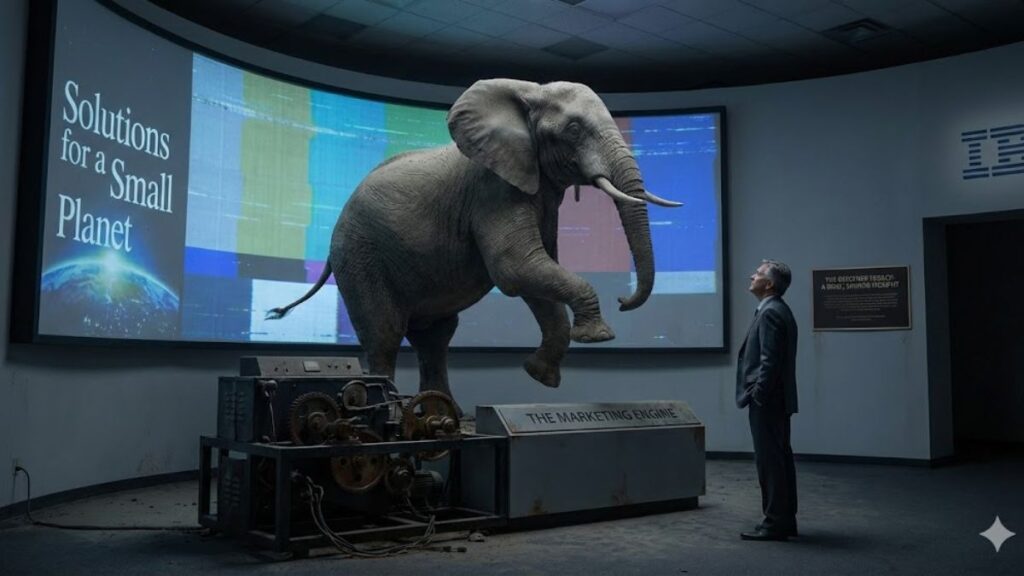
Most tech CEOs view marketing as the “paint” you slap on a product after the engineers are done. Gerstner viewed it as the engine. He realized that IBM’s technology was still good—the mainframe wasn’t dead, as the pundits claimed—but IBM’s brand was toxic. Customers felt betrayed by our arrogance and confused by our fragmented messaging.

Gerstner didn’t just tweak the ad budget; he funded a marketing effort that remains unprecedented in terms of staffing and funding. He consolidated dozens of disparately acting ad agencies into a single powerhouse relationship with Ogilvy & Mather. This wasn’t just about saving money; it was about forcing a unified voice that screamed “Solutions for a Small Planet.” He built one of the most capable marketing organizations the world had ever seen, proving that you could take a brand with negative equity and turn it into a premium asset. He knew that if you didn’t control the perception of your service, the market would define it for you—usually unfavorably.
Jerry York: The Heavy Lifting in the Shadows
While Gerstner was the face of the turnaround, the backbone was Jerry York. I’ve often said that while CEOs get the credit, it’s the CFO who usually saves the ship, and York was the best I’ve ever seen.

York was a “pit bull.” He came from Chrysler and knew how to stop the bleeding. He did the heavy lifting of fixing IBM’s broken internal processes and cost structures. He was the one who found the cash to keep the lights on so Gerstner could execute his strategy. Without York’s ruthless financial discipline, Gerstner wouldn’t have had the runway to launch his marketing offensive. York bought us time, and Gerstner bought us a future. It was a perfect partnership that most modern boards fail to replicate.
The Failure of Succession: Dismantling the Engine
However, Gerstner’s tenure had a fatal flaw: he failed to adequately select and train a successor who understood the machine he had built. When Sam Palmisano took over, he did what many operationally-minded executives do—he looked at that massive marketing budget and saw a cost center, not a revenue generator.
Palmisano dismantled the marketing organization Gerstner had painstakingly constructed. The result was a slow, painful slide into invisibility in many consumer and commercial sectors. We went from being the company that defined the “e-business” era to a backend player that struggled to articulate its value in the cloud age. The lesson here is stark: You cannot simply maintain a legacy; you must actively curate the culture that created it. Gerstner’s failure to ensure his successor respected the “soft power” of marketing meant that his turnaround was, in some ways, temporary.
A Lesson for Today’s Tech Giants
Look at companies like Intel or even Tesla today. They often suffer from the same “better mousetrap” fallacy that plagued pre-Gerstner IBM. They believe superior engineering wins by default. It doesn’t. If your brand equity is negative, your product is irrelevant.

Tech leaders need to learn that you cannot cut your way to growth. You need a Jerry York to stabilize the ship, yes, but you also need a Gerstner to tell the world why the ship matters. IBM’s current struggles often stem from an inability to dominate the narrative the way it did in the late ‘90s. If companies want to assure the success of their CEOs, they must empower marketing to lead strategy, not just support it.
Wrapping Up
Louis Gerstner proved that an elephant could dance, but he also proved that the music stops the moment you stop paying the band. His realization that perception is reality saved an American icon, but his failure to institutionalize that wisdom allowed IBM to drift back into silence. For me, the Gerstner era remains the gold standard of corporate turnarounds—a brief, shining moment where the “dinosaurs” didn’t just survive; we ruled the earth.

- Meta Finalizes Massive Teen Addiction Settlement, but Proposed App Restrictions Make Kids Less Safe - August 28, 2026
- The Aftermath of Corporate Overexpansion - August 25, 2026
- The 2026 Google Pixel 11 Pro Hits Thirty Hours of Battery Life but the New York Keynote Proved Google Wants You to Ignore It - August 21, 2026