Podcast: Play in new window | Download
Subscribe: Apple Podcasts | RSS
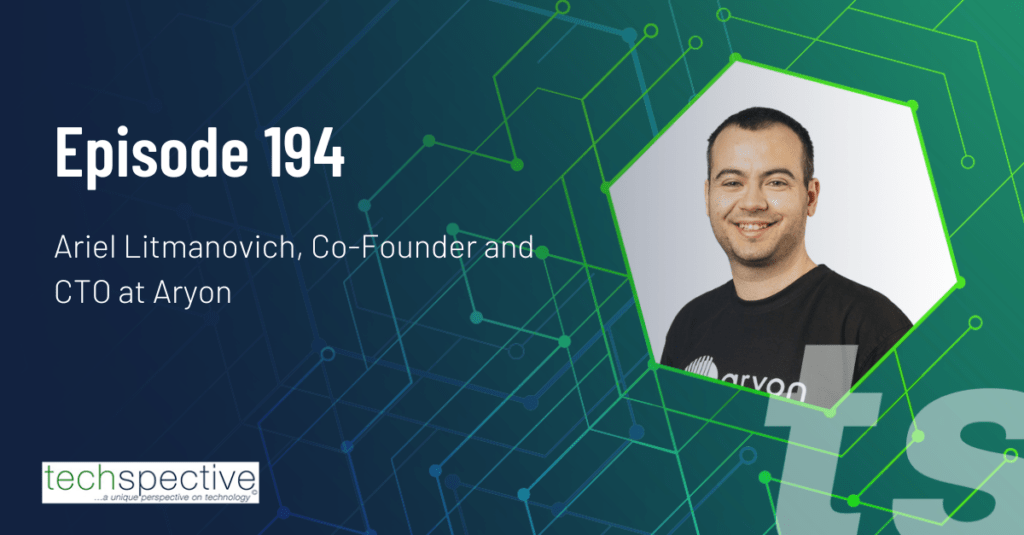
Most cloud security tools have a detection problem. They find misconfigurations well enough. The issue is what happens after — a ticket gets opened, someone works the queue, the fix goes in, and three weeks later the same misconfiguration is back because a different person on the team made the same call. Ariel Litmanovich watched that cycle for years, not at some mid-market company struggling with tooling, but at the Israel Defense Forces, running cloud security for one of the more demanding environments you can imagine. The team had budget, direct relationships with AWS, Azure, and GCP, and access to good tools. They still kept finding the same problems.
That frustration is where Aryon Security started.
The platform Ariel and his co-founders built intercepts cloud configurations before they reach production. If a resource is being deployed in a way that violates policy, it gets stopped at that stage — not discovered later, not added to a remediation queue. They came at this from the application security world, where shift-left has been standard practice for years, and applied the same logic to cloud infrastructure. The security controls move to where the decision is made, not where the damage shows up later.
Ariel joins me on this episode of the TechSpective Podcast to talk about what that looks like in practice. We cover the friction organizations run into when they move from detection to enforcement — what it means for the engineer whose deployment just got blocked, how the exception process is supposed to work, and why those details determine whether a policy actually holds or quietly gets routed around. We also get into a specific challenge that rarely comes up in cloud security marketing material: what happens when developers have a legitimate reason to configure something outside the standard policy, and how Aryon handles that without creating a backdoor that undermines the whole approach.
We talk about AI too. Ariel’s argument is that attackers using AI have compressed the window between a misconfiguration going live and it being exploited. He walks through what that means for detect-and-remediate as a primary strategy and why the timing math matters for cloud security decisions today. He also gets specific about where Aryon actually uses AI in the product versus where it does not.
Aryon does not fit neatly into any existing analyst category, which can be a challenge for procurement. Budget gets allocated against categories defined by Forrester Waves and Gartner Magic Quadrants. When something does not have a pre-approved line item, buying decisions get complicated, regardless of whether the product solves the problem. He talks through what that friction looks like and mentions some 2026 market research that is relevant if you are actively making cloud security tooling decisions right now.
If you work in cloud security and have ever looked at your remediation backlog wondering why the same issues keep cycling back through, this conversation is worth your time.

- What It Took to Drill Down to 33 Trapped Miners - September 25, 2026
- Rebuilding Identity Security From Scratch for the Age of AI Agents - September 21, 2026
- Moving Past Indicators Toward Behavior - September 9, 2026