Specs
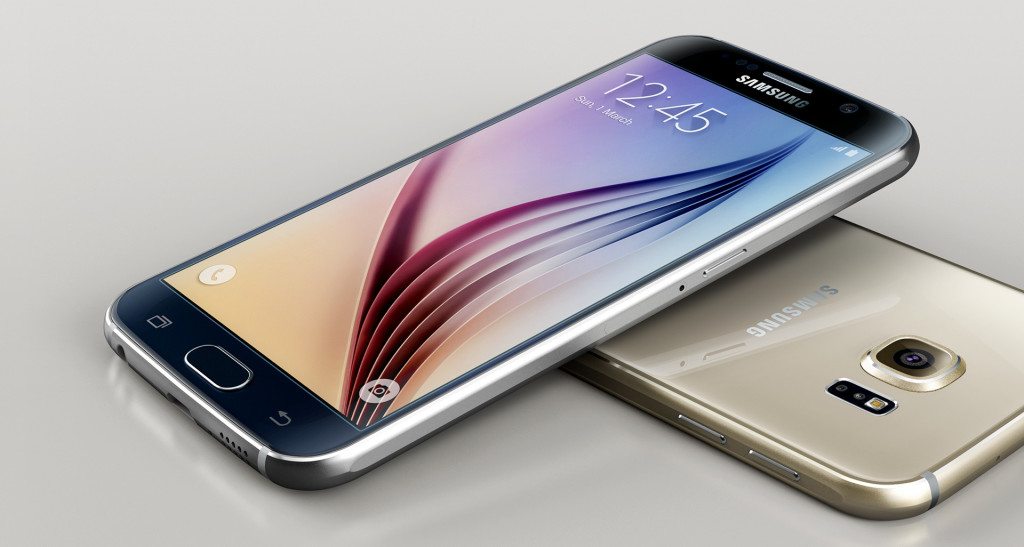
The device is 2.78 inches wide, 5.65 inches tall and just over a quart of an inch thick. The Galaxy S6 weighs 4.9 ounces while the S6 Edge is a tad lighter at 4.6 ounces—possibly a result of the wrap-around glass on the sides replacing some of the aluminum frame.
The 5.1-inch Super-AMOLED display has a resolution of 2,560 x 1,440—making a market-leading pixel density of 577 PPI. It comes with Android “Lollipop” and has an Exynos 7420 processor which merges a 1.5GHz quad-core Cortex-A53 with a 2.1 GHz quad-core Cortex-A57. The Galaxy S6 / S6 Edge has 3GB of RAM and is available with 32GB, 64GB, or 128GB of internal storage.
It has a 16-megapixel rear-facing camera and a 5-megapixel front-facing camera, and a complete sensor array, including accelerometer, gyroscope, proximity sensor, compass, barometer, blood oxygen and heart rate sensor. It also has a fingerprint scanner for authentication.
Form
Both the Galaxy S6 and Galaxy S6 Edge feel like they’re well-engineered and solidly constructed. Samsung learned some hard lessons from the relatively tepid response to the Galaxy S5 and took a page (or two) from the Apple playbook when designing the Galaxy S6. The Galaxy S6 is an aluminum alloy frame with Gorilla Glass on front and back. The Galaxy S6 Edge is essentially the exact same device with the obvious exception being that the Edge has a wrap-around display that curves around the sides and comes with a couple extra features that make use of the funky edge glass.
I prefer the Galaxy S6. The additional features of the S6 Edge seem like marginal parlor tricks—novelties that get old quickly. The Galaxy S6 feels better in my hand. I feel like I am much less likely to drop the S6, and if you do drop an S6 Edge that curved display will cost you more to replace—estimates run as high as $260 and according to VentureBeat it’s not covered under warranty.
Function
No complaints in this department with either device. There’s a reason that Samsung dominates the Android smartphone market and why the Galaxy line of devices is the de facto standard for flagship Android devices.
Both the display and the camera are amazing. I’ve come to expect nothing less from Samsung mobile devices. Battery life and app performance were stunning. The bonus on the battery life is that when it does need to recharge it does so quickly with the included fast charger. Samsung claims you can get 4 hours of battery life out of the Galaxy S6 with just 10 minutes on the charger. I found that I could get it to about 50 percent capacity in about 30 minutes. Not too shabby if you need to recharge in a hurry before you hit the road.
One thing I don’t like about Samsung mobile devices is the additional proprietary bloatware. Some of it is useful and I know there are those who love the Samsung apps. I’d just prefer a stock Android experience out of the box with the option to install the Samsung apps I want. I’m not a fan of having additional apps installed by default that I can’t even remove if I want to.
Verdict
When it comes to Android smartphones Samsung is dominant and it’s easy to see why. The Galaxy S6 and Galaxy S6 Edge have the quality engineering and craftsmanship to go head-to-head with the iPhone 6. Samsung has gone to great lengths to pay attention to detail and provide an exceptional smartphone experience.
The Galaxy S6 Edge is cool, but the things that make it unique just don’t impress me that much. I’d recommend just going with the regular Galaxy S6 if you’re in the market for a new Android smartphone.

- When the AI Breaks Its Own Rules - September 2, 2026
- What It Took to Film a Real-Life Lion King - August 28, 2026
- Your AI Agents Are Multiplying and Nobody’s Counting - August 26, 2026