It’s that time of year again. The leaves are turning, the air is getting crisp, and a procession of Apple executives has once again graced a minimalist stage to tell us what we should want. This year’s September event was a masterclass in the beautiful, baffling duality of modern Apple. It was a keynote that delivered a phone so thin it might be mistaken for a credit card, earbuds that still look like futuristic Q-tips, and a gentle AI update that felt both impressive and five years late. And yet, amid the head-scratchers, Apple also unveiled two of the most desirable pieces of technology on the planet. It was a perfect encapsulation of a company that can be simultaneously tone-deaf and brilliant, often within the same presentation.
The iPhone Air: A Solution in Search of a Problem
For the past few years, customer surveys and tech forums have been screaming one thing into the void: “Give us a foldable iPhone!” The people have spoken. They want a device that can transform and offer a larger screen in a compact form factor. So, did Apple deliver? Of course not. In its infinite wisdom, Apple decided what we really needed was the iPhone Air, a device that boldly answers a question nobody was asking.
The iPhone Air is an engineering marvel, a sliver of glass and aluminum so impossibly thin it seems to defy physics. It’s also a practical nightmare. Apple has traded performance, durability, and battery life for a headline-grabbing form factor that is notoriously unpopular. Ultra-thin phones have always been a gimmick because they are fragile, hard to hold without a case (which negates the thinness), and prone to bending. The iPhone Air is a beautiful, expensive object that feels designed to live in a constant state of pre-breakage anxiety. It’s a classic case of Apple flexing its engineering muscles simply because it can, completely ignoring the more versatile and innovative foldable designs its customers are actually asking for (I carry a Google Pixel Fold 9 with the 10 on order).
AirPods: Still Loudly Whispering
Next up, the new AirPods. The audio quality is, by all accounts, phenomenal, and the battery life has been improved. But let’s be honest, the fundamental design flaw remains: they still look profoundly dorky (I think Earbuds should be the opposite of kids: heard and not seen). The iconic white stems still dangle from your ears, broadcasting to the world, “I am actively ignoring you with technology!” In an era where personal tech is increasingly about subtlety and seamless integration, Apple remains committed to a design that is anything but.
Most people don’t want to advertise their earbuds. They want small, discreet buds that disappear, providing a private soundtrack to their lives without making a loud visual statement. While the tech inside the new EarPods is top-notch, the exterior design feels stuck in 2016, a missed opportunity to create something as elegant and unobtrusive as the sound it produces.
AI: Catching Up, Gracefully
On the AI front, Apple continues its slow, steady, and decidedly cautious march forward. The new “Apple Intelligence” features are polished, thoughtfully integrated, and—in typical Apple fashion—obsessed with privacy. The on-device processing is impressive, and the updates to Siri make the assistant genuinely more useful. In the grand scheme of things, Apple’s AI rollout has been far more coherent and stable than the buggy, over-promised “AIPC” launch from Microsoft last year.
However, it’s impossible to ignore that Apple is still playing catch-up to Google. While Apple is perfecting summarization and smart replies, Google is pushing the boundaries of what AI can do with multi-modal inputs and generative capabilities. Apple’s AI is a very good student who has finally caught up with last year’s lessons, while Google is already experimenting in the next lab. It’s good, but it’s not groundbreaking.
The Pro and the Ultra: The Price of Perfection
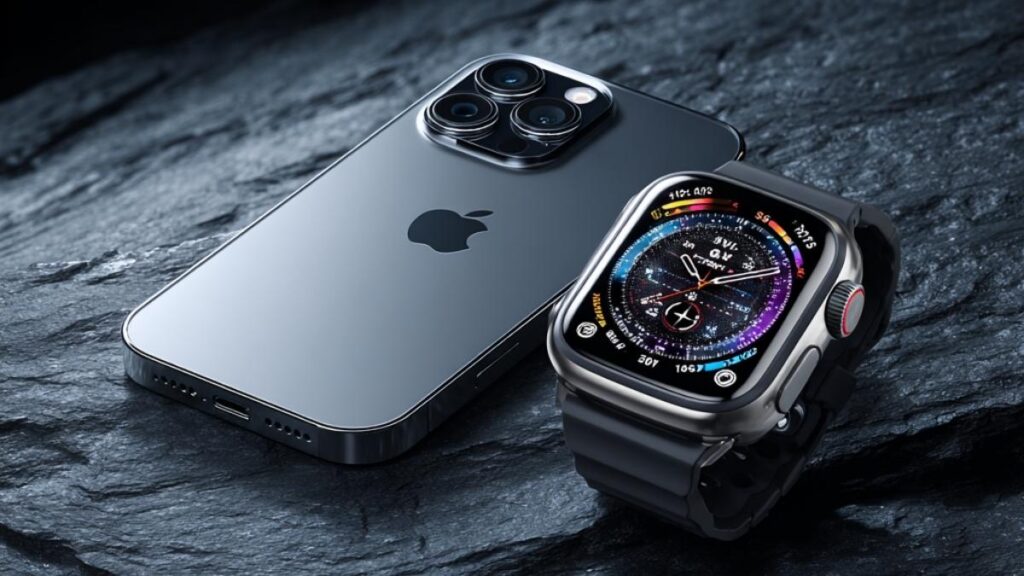
Just when you’re ready to write the whole event off as a collection of misfires, Apple pulls the rabbit out of the hat. The iPhone 17 Pro (I wonder if the orange one, which I don’t like, was especially made for Donald Trump) and the Apple Watch Ultra 3 (truly awesome) are, simply put, astonishing. This is where Apple’s obsession with engineering and design pays off, creating products that are not only the best in their category but feel like they are worth every penny of their premium price. I think Apple should have chosen deep purple over Orange for the 17 Pro, and I’d likely get the Pro Max were I to get an iPhone.
The iPhone 17 Pro is a powerhouse with a new A19 Pro chip that could probably power a small starship and a camera system that will make professional photographers weep with joy. The Apple Watch Ultra 3 is the ultimate adventure companion, now with an even brighter screen, longer battery life, and new biometric sensors that offer a staggering amount of health data. These aren’t just iterative updates; they are massive leaps forward. They are technological showcases that demonstrate what happens when Apple stops chasing gimmicks like thinness and focuses on delivering raw power, capability, and tangible value. They are the most expensive products in Apple’s respective lineups, yet they feel like the best deal because the value proposition is so clear and compelling.
Wrapping Up
This year’s launch was the perfect microcosm of the Apple experience. We got the baffling iPhone Air and the awkward EarPods, products born from an insular design culture that doesn’t always listen. But we also got the iPhone 17 Pro and the Watch Ultra 3, devices so good they make you forget all the other missteps. They remind us that even when Apple seems to lose the plot, it still possesses a unique magic. It’s a company that can frustrate you with its stubbornness one minute and leave you breathless with its brilliance the next. For better or worse, that’s why we’ll all be tuning in again next year.

- Anthropic’s Legal Reaper: Why the Death of the Middleman Is Now a Certainty and Your Industry Is Next on the Menu - February 6, 2026
- The Dawn of “Personal Intelligence”: How Google’s New AI Strategy Could Dethrone Microsoft and Reshape the Future of Work - January 30, 2026
- The Human Exploit: Why Wizer Is the Secret Weapon in the War for Your Digital Soul - January 29, 2026