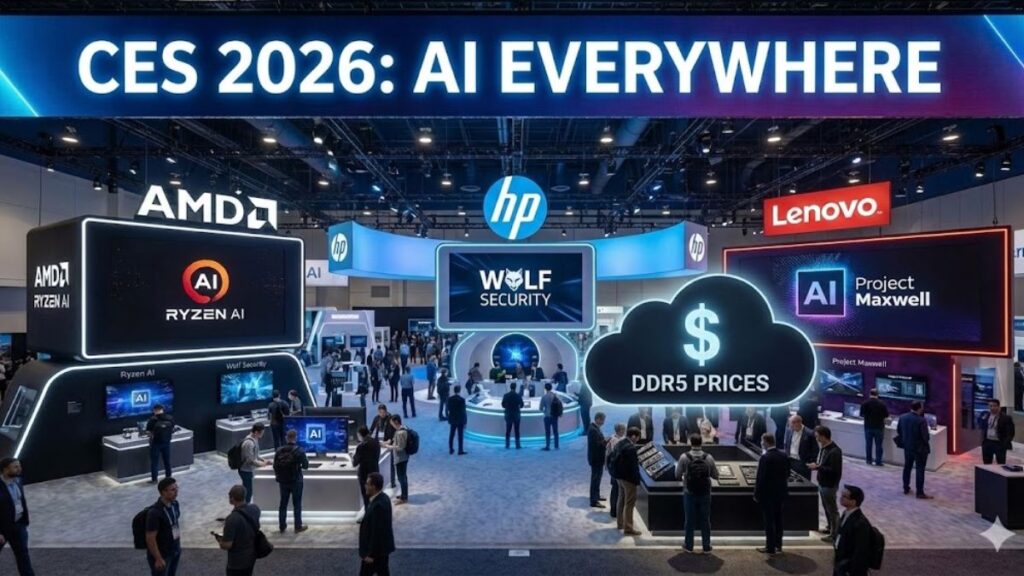
Las Vegas has always been a city of dreams, but last week at CES 2026, the dream everyone was pitching is Artificial Intelligence. It is everywhere—embedded in our cars, running locally on our laptops, and even managing our safety. Yet, as I walk the floor of the Las Vegas Convention Center, the conversation often shifts from the dazzling prototypes to a darker reality: the skyrocketing cost of components. While the innovation on display is breathtaking, particularly from companies like AMD and Lenovo, the specter of DDR5 memory pricing is casting a significant cloud over what should be a celebratory event.
AMD: Executing on the AI Promise
I have followed AMD for decades, and I have to say that Chair and CEO Dr. Lisa Su continues to impress. She embodies the best competence that once defined IBM, and her keynote this week was a masterclass in execution. While AMD lacks a CMO to truly amplify their message at events like this, their product stack speaks for itself.
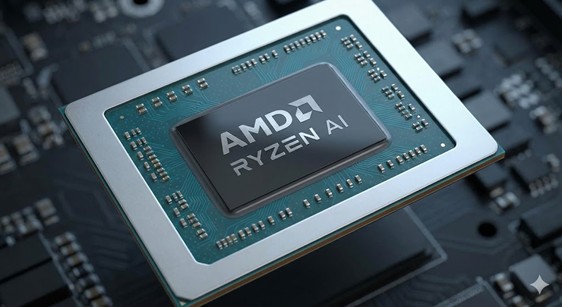
In her opening keynote, Dr. Su unveiled the Ryzen™ AI 400 Series and Ryzen AI PRO 400 Series, built on the “Zen 5” architecture. These aren’t just incremental updates; with up to 60 TOPS of NPU performance, they exceed Microsoft’s Copilot+ PC requirements. This is critical because it moves AI processing from the cloud to the device, ensuring better privacy and latency.
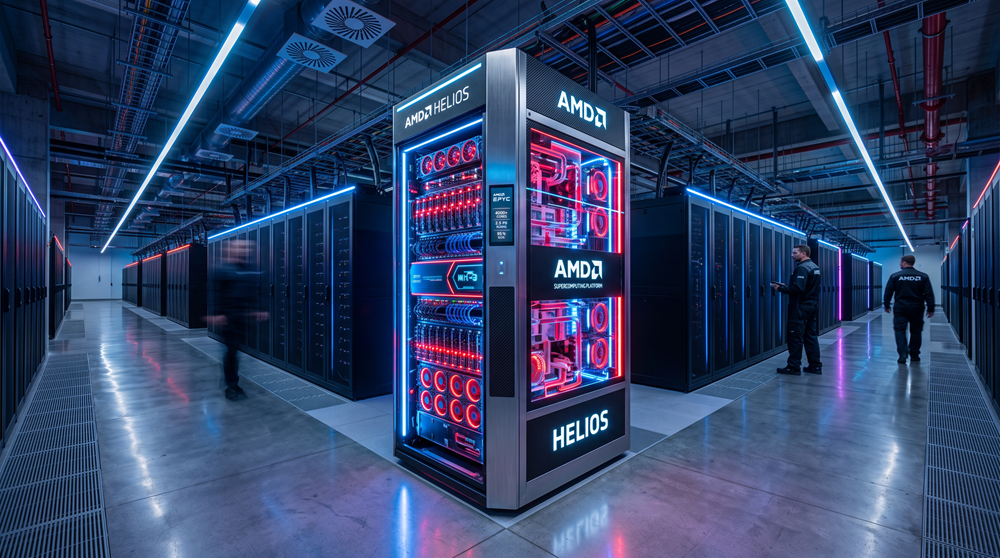
For the gamers—and I know many of you are looking for this—the new Ryzen™ 9850X3D is now the fastest gaming processor on the market. By utilizing 2nd Gen AMD 3D V-Cache™ technology, they have managed to squeeze out massive performance gains. On the data center side, the Instinct MI400 Series, led by Helios, creates a blueprint for yotta-scale compute. It is clear AMD is not just participating in the AI race; they are supplying the engines for it.
HP: Security and the Hybrid Workplace
HP’s presence this year felt more grounded but equally vital. Following up on the HP Security Summit I attended last month, HP is doubling down on the idea that AI needs to be secure to be useful. Their new EliteBook lineup integrates AI not just for productivity, but for active threat defense.
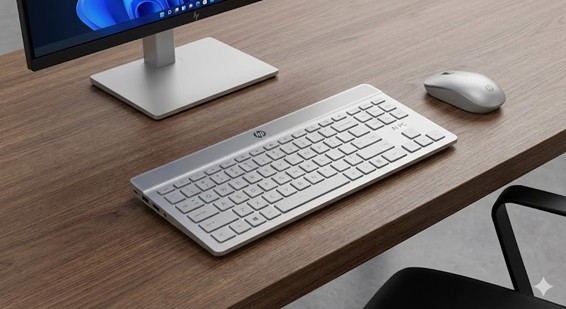
The most intriguing announcement from HP, however, was a completely new form factor: the HP EliteBoard G1a. This device is essentially a powerful PC built entirely inside a sleek, compact keyboard. You simply connect it to a monitor and mouse, and you have a full desktop experience that you can easily slip into a bag. It’s a bold rethinking of the traditional desktop, perfect for the hybrid work era. HP also emphasized security with their HP Wolf Security suite, now enhanced with AI to detect and neutralize threats in real-time.
What stood out to me was their focus on trust. In an era where “deepfakes” and AI-generated phishing are becoming rampant, HP’s Wolf Security improvements are a necessary layer of armor. They aren’t chasing the flashiest consumer gadgets this year; they are building the fortified infrastructure that enterprise clients desperately need. It is a smart, albeit conservative, play that aligns with their strength in the commercial sector.
Lenovo: The King of Vision
If most vendors at CES 2026 were pitching products, Lenovo was pitching a future. Their event at the Sphere was, frankly, the highlight of the week. While vendors like Intel and Microsoft remained somewhat vague, Lenovo reminded me of the IBM of old—vision-oriented and unafraid to lead.
Lenovo is moving beyond just “making PCs” to creating a comprehensive “AI overlay.” Their new solution dynamically chooses the best AI engine for any given task, a feature that is unique in the market. This creates a seamless experience where the technology fades into the background, and the utility comes to the forefront.

The most eye-catching of their concepts was the ThinkPad Rollable XD Concept. This laptop features a screen that can unroll to provide a much larger workspace, offering the portability of a standard laptop with the screen real estate of a desktop monitor. It’s a glimpse into a future where our devices can physically adapt to our needs. Lenovo’s keynote also highlighted their vision for a personal AI hub that connects all your devices, creating a seamless and intelligent ecosystem around the user.
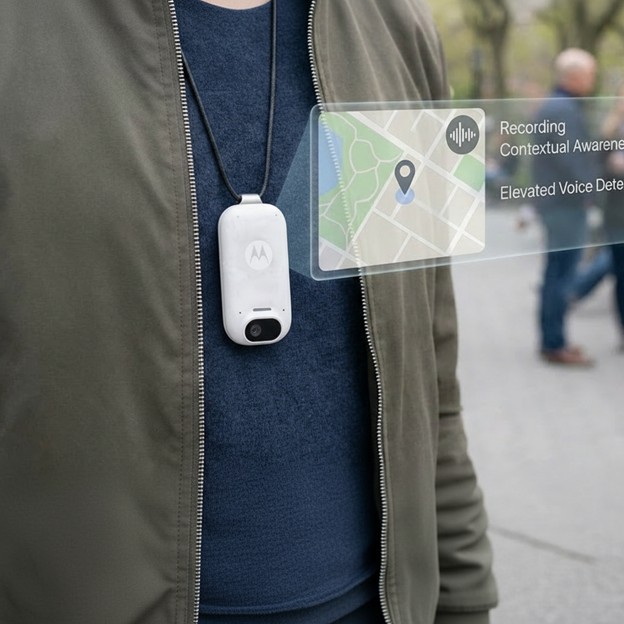
The most compelling announcement was Project Maxwell, a personal safety and digital twin technology. As someone who has had close calls with violence—including a nearly fatal incident at an illegal party and an attack in a park—I cannot overstate the value of this technology. Project Maxwell uses AI to understand the context of your surroundings. It could identify aggressive behavior in a group of teenagers or alert you to a threat before you even sit down at a picnic bench. This isn’t just about productivity; it is about keeping you and your loved ones safe. It is the foundation for a personal digital twin that looks out for you, and it arguably makes Lenovo the leader in AI solutions across smartphones, PCs, and edge devices.
The DDR5 Pricing Cloud
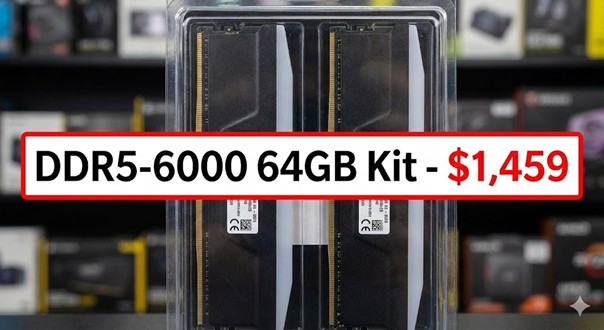
Despite these advancements, we cannot ignore the elephant in the room. DDR5 memory prices are astronomically high right now. The demand for high-bandwidth memory in AI data centers—like those powered by AMD’s new Helios MI400 racks—is squeezing the supply chain for consumer parts.
Builders and enthusiasts are finding that the cost to build a new AI-ready PC is ballooning. It casts a shadow over the event because while the processors are ready for the mass market, the memory required to run them is priced for the enterprise. It is a bottleneck that could slow down the adoption of these incredible new AI technologies in the consumer space for the rest of 2026.
Trends and Keynotes
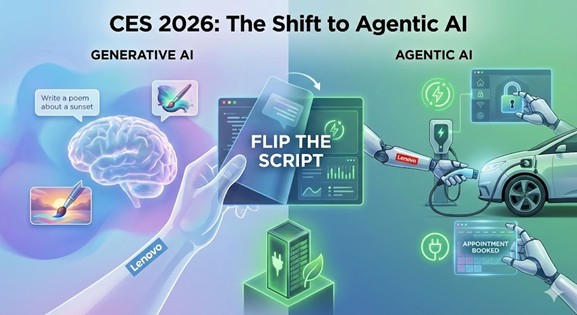
The overall trend at CES 2026 is the shift from “Generative AI” to “Agentic AI.” We are moving from chatbots that write poems to agents that take action—booking appointments, securing your home, or optimizing your car’s energy usage.
Lenovo’s “flip the script” strategy is a key part of this. Much like IBM in the 1980s, Lenovo is beginning to force technology providers to deliver what their customers want, rather than just accepting standard components. This was evident in their data center announcements, where they showcased systems that are far more energy-efficient—a critical requirement as AI power consumption becomes a global concern.
Wrapping Up
CES 2026 has proven that the industry is ready to move AI from a novelty to a necessity. AMD is providing the raw horsepower, HP is securing the perimeter, and Lenovo is providing the vision and the personal safety applications that will actually change lives.
However, the industry faces a difficult year ahead with component costs. The products are amazing, but until the supply chain for DDR5 stabilizes, the “AI PC” revolution might remain a luxury for the few rather than a tool for the many. It was a show of incredible highs and expensive lows, but one thing is certain: the future is here, and it is watching out for you.