I’ve spent most of my career watching organizations repeat the same mistake with new technology.
We get excited about what it can do, move fast, and bolt it onto existing workflows. And only later—usually after something breaks—do we stop and ask whether we actually understood the risks, the governance implications, or whether the people responsible were trained for what we just put into production.
AI feels uncomfortably familiar.
Over the past couple of years, I’ve had more conversations about artificial intelligence than I can count. Early on, those conversations were almost entirely about potential—productivity gains, automation, competitive advantage. And nearly every discussion included some version of the same reassurance: AI isn’t here to replace people.
That line came up so often it started to feel rehearsed. I wondered if tech execs had circulated a memo emphasizing the importance of staying on message with that mantra.
More recently, the tone has shifted. The conversations are more grounded. Some roles will change. Some will disappear. And the real dividing line isn’t whether AI replaces jobs—it’s whether people know how to work alongside systems that learn, adapt, and operate at machine speed.
From Experiments To Systems We Depend On
For a while, AI lived on the edges of the enterprise. Pilots. Side projects. Limited deployments that could fail without taking the business down with them.
That’s no longer the case.
Today, AI is increasingly embedded in systems of record—identity platforms, security operations, customer data pipelines, financial workflows. Once that happens, the risk profile changes entirely. Mistakes scale. Bias propagates. Security gaps widen.
I’ve seen this pattern before. In the early days of web development, speed and functionality were everything. Security and governance were secondary concerns—until breaches and outages forced organizations to care. AI is following a similar trajectory, but at far greater speed and scope.
The difference this time is that AI doesn’t just execute instructions. It adapts. And many organizations are still staffed and structured as if it doesn’t.
The Skills Gap Hiding In Plain Sight
There’s been no shortage of debate about whether AI will eliminate jobs. That framing misses the more immediate issue.
AI is reshaping responsibilities faster than organizations are redefining roles or expectations. Security teams are being asked to protect AI-enabled environments. Program leaders are expected to oversee AI initiatives responsibly. Executives are accountable for outcomes influenced by adaptive systems.
What’s often missing is a shared baseline of understanding—how these systems behave, how they fail, and how risk should be governed over time.
As Den Jones, founder and CEO of 909Cyber, put it, “You’re either on the AI bandwagon, or you’ll be left behind. A lot of people talk about AI and security, but in reality, they still need to learn what it all means and, more importantly, what it means to their business risk.”
That tension is what makes the skills gap dangerous. AI adoption is accelerating. Risk comprehension isn’t.
I’m not saying everyone should panic or suggesting organizations are reckless. It’s about alignment. Responsibility is shifting faster than formal training, frameworks, and role definitions are keeping up.
Tools Don’t Solve Structural Problems
One lesson cybersecurity has taught us—over and over—is that tools don’t fix structural gaps. Skills do.
You can deploy the most advanced platform on the market and still struggle if the people using it don’t understand its limitations, its failure modes, or how it might be abused. AI amplifies that challenge.
Treating AI as “just another tool” underestimates the operational and security complexity it introduces. Effective use requires more than prompt-writing or feature adoption. It requires understanding data flows, model behavior, attack surfaces, and governance responsibilities.
How The Industry Is Starting To Respond
Some parts of the industry are beginning to acknowledge this gap—not by launching yet another platform, but by focusing on workforce readiness.
One example is EC-Council, best known for its Certified Ethical Hacker program. The organization just launched a new set of role-based AI certifications focused on adoption, defense, and governance—moving beyond generic AI awareness toward practical, job-specific readiness.
Organizations need to make sure their teams have these skills. As AI moves out of pilot mode and into everyday operations, the cost of getting it wrong increases. “AI is moving from experimentation to infrastructure, and the workforce has to move with it,” said Jay Bavisi, founder and CEO of EC-Council.
What stands out isn’t the idea of certifications themselves, but the framing behind them. AI readiness looks different depending on your role. Baseline fluency matters, but the risks faced by security practitioners, program managers, and governance leaders are not the same. Training that reflects those distinctions is more likely to translate into real-world capability.
That approach mirrors what worked in cybersecurity years ago. When defenders understand how systems behave under stress—and where they’re most likely to fail—they’re better equipped to protect them. The difference now is that AI systems don’t just execute instructions. They learn, adapt, and scale faster than traditional training and governance models were built to handle.
Leadership Can’t Delegate This Away
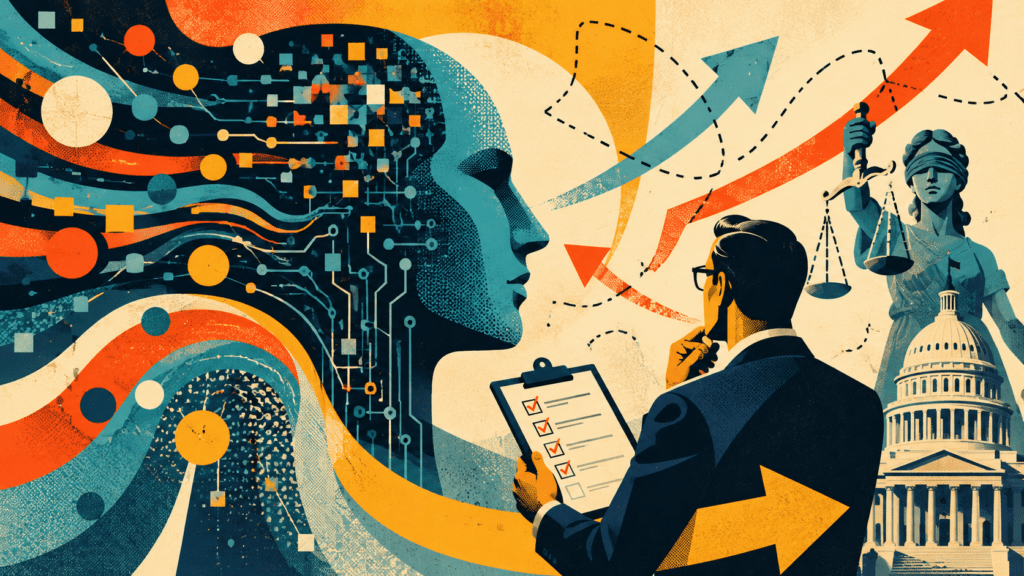
As AI systems become more autonomous, accountability doesn’t disappear—it concentrates.
Boards and executives are increasingly responsible for outcomes influenced by AI, whether those outcomes involve security incidents, regulatory exposure, or operational failures. That reality is forcing organizations to rethink what leadership competency looks like in an AI-driven environment.
Governance, risk management, and ethical oversight are no longer abstract concerns. They’re operational requirements.
The Real Challenge Ahead
AI isn’t slowing down. That much is clear.
The more important question is whether organizations invest in the skills, frameworks, and leadership capacity needed to keep pace—or whether they continue treating AI as a shortcut rather than a structural shift.
In my experience, the organizations that struggle aren’t the ones that move cautiously. They’re the ones that move fast without preparing the people responsible for what comes next.
AI may be scaling at machine speed. Making sure humans can keep up is the harder—and far more consequential—challenge.

- ‘Pompeii: Out of Time’ Series Reframes History as Survival Story - July 21, 2026
- Most AI Problems Are Really Capitalism Problems - July 19, 2026
- The Case For Rebooting Democracy With AI - July 9, 2026