The technology industry has a short memory, but the markets are starting to remember why Intel was once the undisputed king of the hill. For the last few years, the narrative surrounding Intel was one of managed decline—a titan struggling with its own weight while nimble competitors like AMD and Qualcomm nipped at its heels. But as of April 2026, that narrative has flipped.
Intel stock just received two significant upgrades from Benchmark and Cantor Fitzgerald, and the reasoning is clear: the “real” AI recovery isn’t just a promise anymore—it’s shipping. Between the successful ramp of the 18A process node and the clear execution failure of competitors in the AI PC space, Intel is finally showing the “operational discipline” that was missing for a decade.
The State of the Intel Recovery: From Vision to Execution
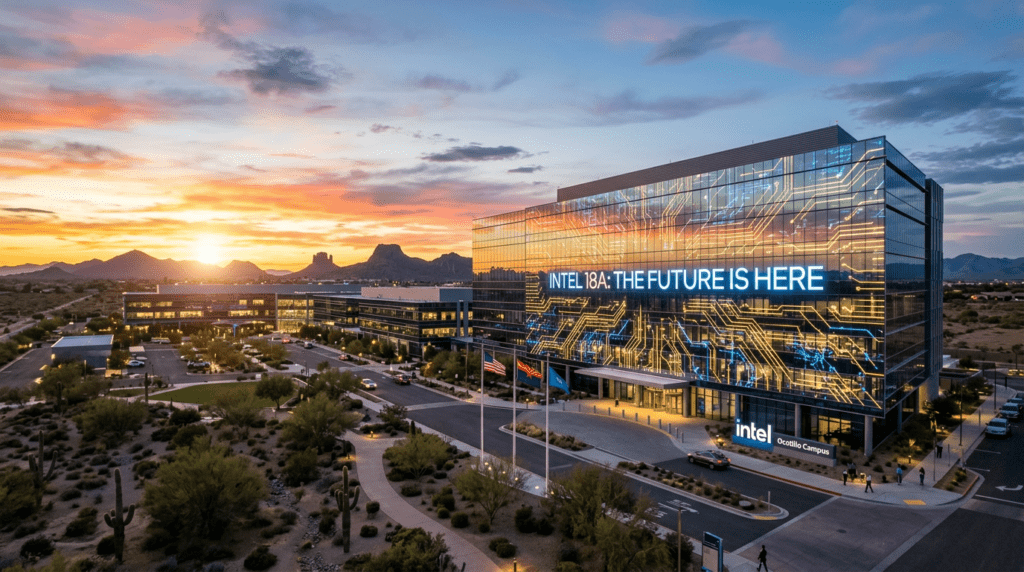
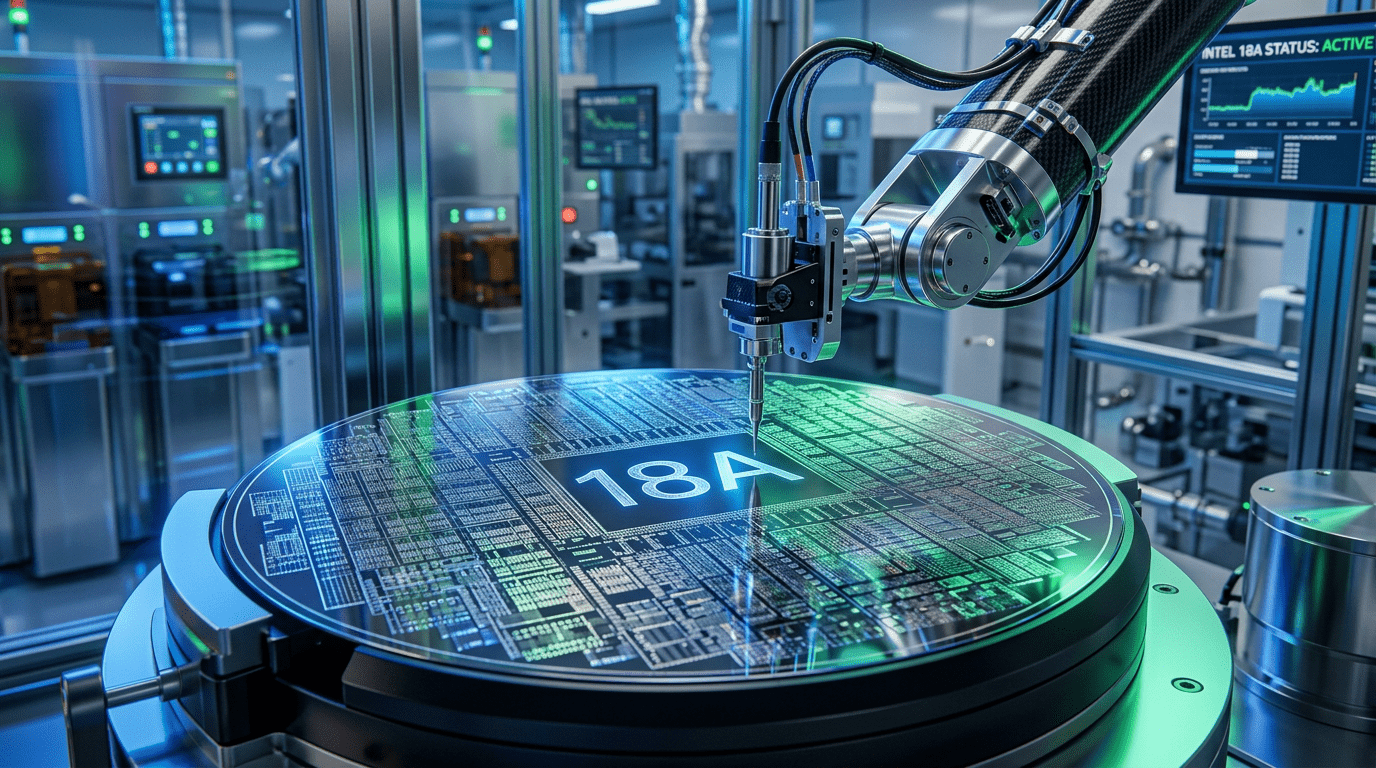
We are currently in the “Angstrom Era.” Under the leadership of CEO Lip-Bu Tan, who took over from Pat Gelsinger in early 2025, Intel has pivoted from “visionary engineering” to “ruthless operational focus.” The “5 Nodes in 4 Years” goal wasn’t just marketing fluff; it was a survival pact. With the launch of Panther Lake earlier this year—the first consumer processor built on the 18A node—Intel has effectively reclaimed the manufacturing crown.
Recent successes supporting these upgrades include:
- The NVIDIA/CrowdStrike Collaboration: Intel secured a $5 billion investment from NVIDIA to co-develop AI infrastructure. This is a massive validation of Intel’s CPU technology as the necessary “brain” for NVIDIA’s GPU “brawn.”
- Terafab Inclusion: Intel is now a core partner in Elon Musk’s Terafab project, supplying the foundational silicon for xAI’s massive infrastructure needs.
- Foundry Validation: CFO David Zinsner recently confirmed that 18A is now being offered to external customers, signaling that yields are healthy enough to compete directly with TSMC.
The Ghost of Andy Grove: “Only the Paranoid Survive”
If Andy Grove were alive and at the helm today, he wouldn’t be celebrating the stock upgrades. He would be terrified of the complacency they might breed. Grove’s philosophy was built on “Strategic Inflection Points”—those moments when the balance of power shifts. We are in one now with Agentic AI.
Grove would likely be doing three things:
- Vertical Integration on Steroids: He would be pushing the Foundry division to not just “offer” 18A, but to essentially “own” the supply chain for every major AI startup.
- Product Cannibalization: He would be ordering the team to build the “AMD-killer” even if it hurt Intel’s short-term margins, ensuring that no one could compete on price-performance in the mid-range.
- Aggressive Talent Reacquisition: Grove understood that technology is only as good as the people building it. He would be poaching the best AI software engineers from Silicon Valley to ensure Intel’s software stack (oneAPI) is as dominant as its hardware.
The Headwinds: Memory Shortages and Global Conflict
Intel’s recovery isn’t happening in a vacuum. Two major external factors are threatening to slow the momentum: the 2026 AI memory shortage and ongoing geopolitical instability.
The rapid build-out of AI data centers has created a massive shortage of DDR5 and HBM memory. While Intel designs the CPUs, those CPUs are useless without memory. This shortage is driving up the Bill of Materials (BOM) for AI PCs, which could suppress sales volumes just as Intel is ready to flood the market.
Furthermore, various wars have disrupted the supply of rare gases and neon required for lithography. Intel’s massive U.S. and European footprint (boosted by CHIPS Act funding) acts as a “geopolitical hedge,” but they aren’t immune to global logistics costs. Marketing needs to frame this “Western resilience” as a primary reason for enterprise buyers to stick with Intel over rivals who are more exposed to Taiwan-centric risks.
The Competitive Landscape: AMD and the Qualcomm “AI PC” Failure
While AMD continues to be a formidable foe, particularly in the server market where EPYC still holds nearly 30% share, Intel is starting to push back. The Xeon 6 (Granite Rapids) is finally giving Intel a competitive story in high-performance AI workloads.
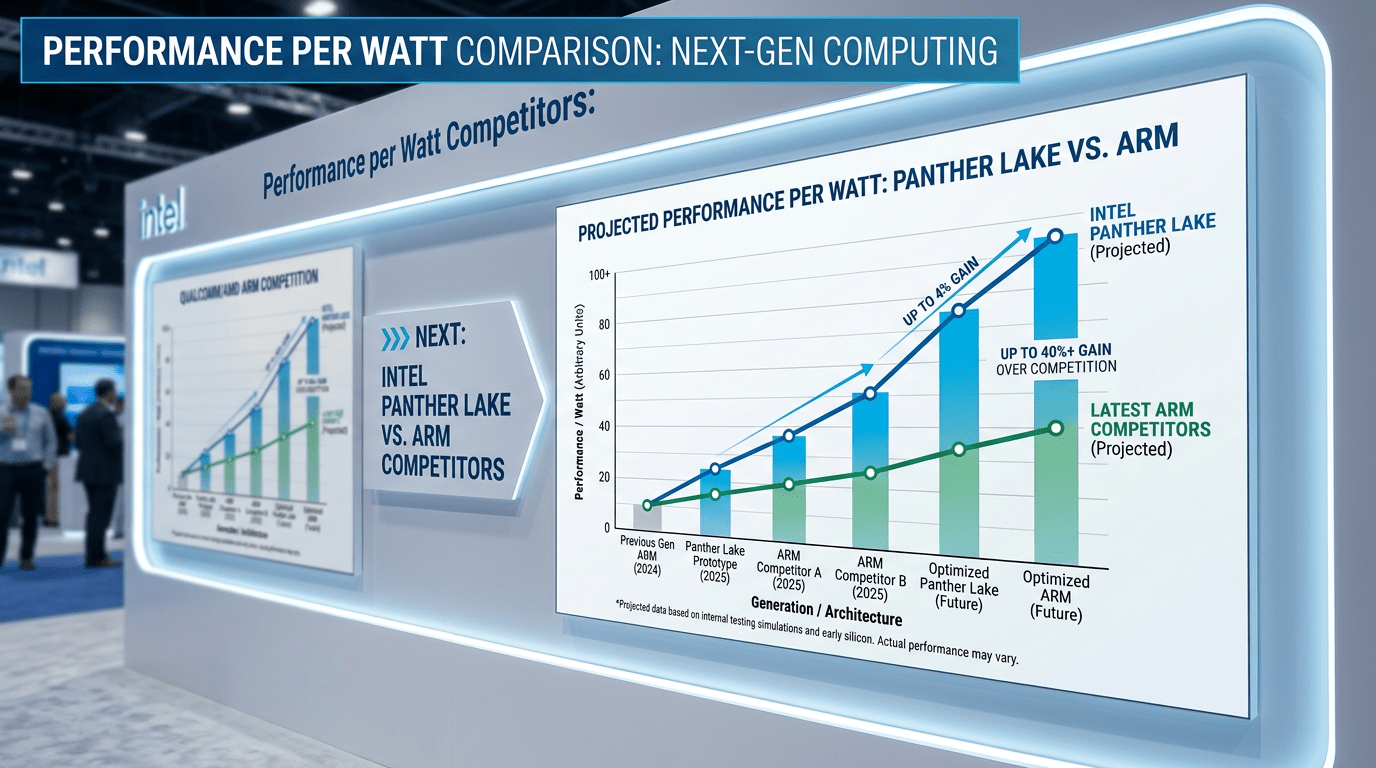
However, the real gift to Intel has been Qualcomm’s failure to execute on the AI PC. Qualcomm promised an ARM-based revolution with Snapdragon X Elite, but software compatibility issues and a lack of “Agentic” optimization have left the door wide open. Enterprise IT managers, tired of “emulation” headaches, are returning to the x86 fold. Intel’s Lunar Lake and Panther Lake have closed the battery life gap so significantly that the “ARM advantage” has largely evaporated for the average business user.
What Intel Marketing Needs to Do Next
To get “full credit” for this turnaround, Intel marketing needs to stop talking about chips and start talking about outcomes.
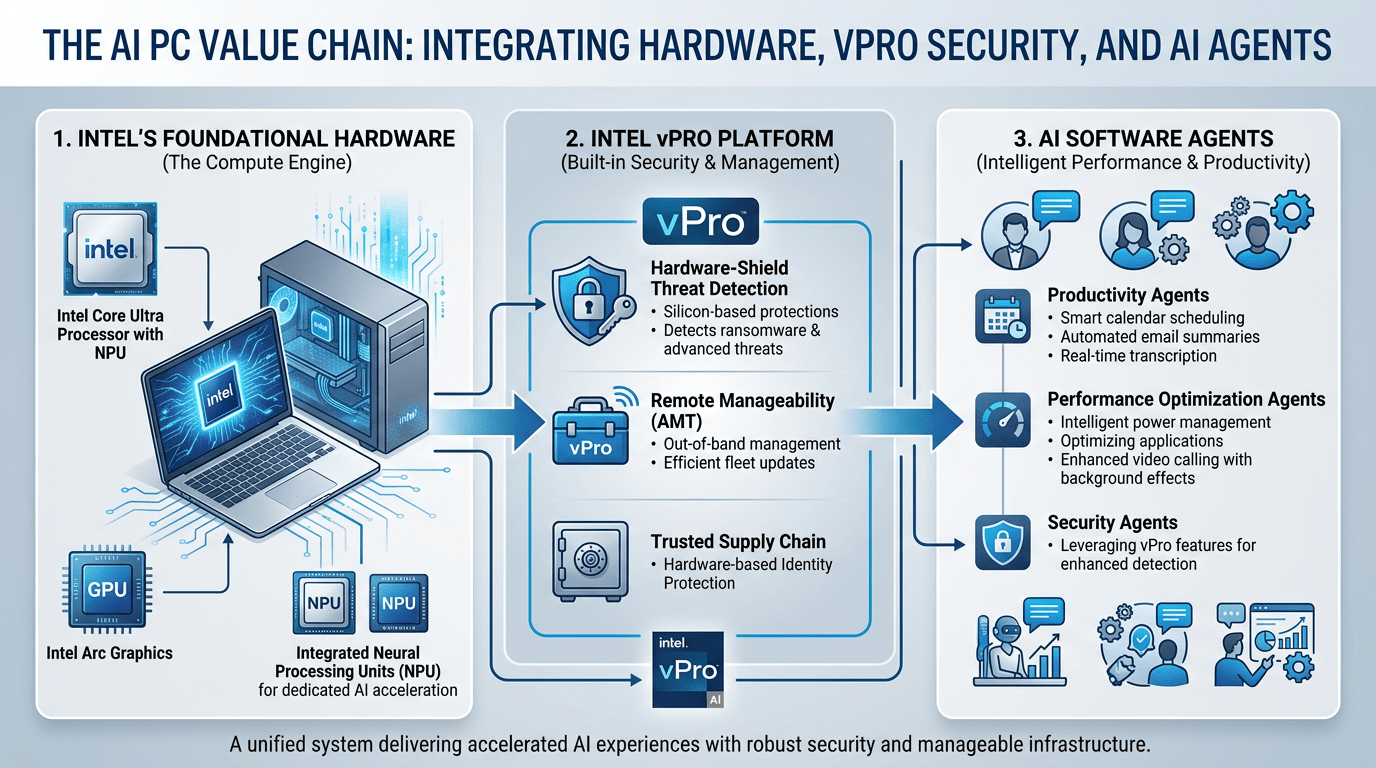
- The “AI Native” Label: They need to own the term “AI Native.” If a PC doesn’t have an NPU capable of 180+ TOPS, it’s a “Legacy PC.”
- Software Validation: They need to showcase their work with ISVs (Independent Software Vendors). The reason developers optimize for Intel first is Volume. Intel needs to remind the world that “it just works” on Intel.
- The Sustainability Narrative: With 18A being significantly more power-efficient, Intel should be leaning into “Green AI.”
Wrapping Up
Intel is no longer a “value trap”; it is a high-stakes bet on the future of Western manufacturing. The recent stock upgrades are a lagging indicator of a recovery that started in the labs years ago. By reclaiming manufacturing leadership with 18A, capitalizing on the “volume advantage” in AI PCs, and benefiting from the missteps of Qualcomm, Intel is positioned for a multi-year bull run.
The “real” AI recovery isn’t about the hype of chatbots; it’s about the silicon that powers the agents. And right now, the most reliable silicon is coming from the company everyone thought was down for the count.

- Motorola Edge 70 Plus Achieves Massive Battery Life but the Launch Exposes Dell’s Historic Mobile Collapse - September 21, 2026
- Meta Finalizes Massive Teen Addiction Settlement, but Proposed App Restrictions Make Kids Less Safe - August 28, 2026
- The Aftermath of Corporate Overexpansion - August 25, 2026