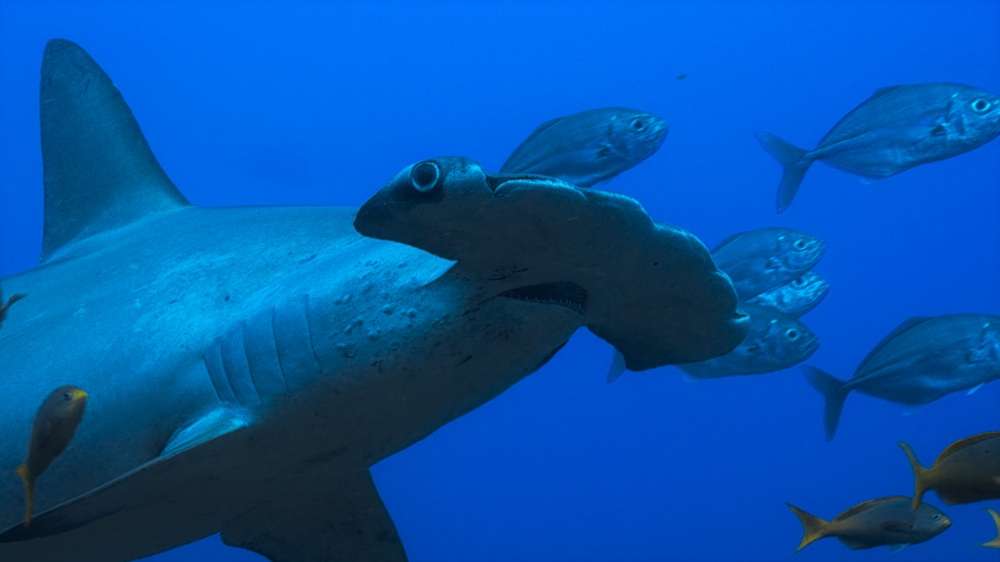
National Geographic’s SharkFest kicks off its 14th summer on July 5 with “Hammerhead Sharks Up Close with Bertie Gregory,” streaming on Disney+ and Hulu and airing on National Geographic. Gregory, an Emmy and BAFTA-winning cinematographer, spends the special in Mexico’s Pacific waters looking for hammerheads. I talked with him ahead of the premiere.
A Shrinking Population and a Rare Encounter
Hammerhead sightings in Gregory’s filming waters have gotten rare. Populations have dropped, and the special sets out to show why, and whether protected waters can turn that around. Gregory worked with shark scientists, including Dr. James Ketchum, who tagged a smooth hammerhead during filming. Marine protected areas are helping, Gregory told me, but they only cover so much water. Sharks still have to swim the open stretches between protected zones, exposed the whole way. The fix, he said, is more protected areas, plus a better map of where hammerheads actually breed and gather.
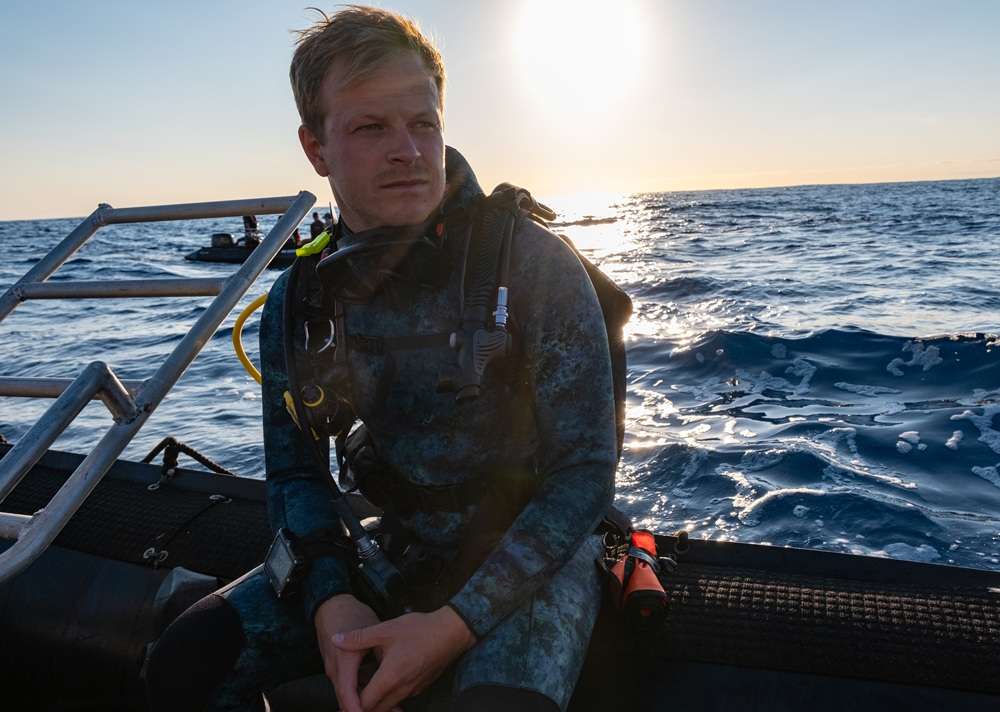
Getting close enough to film them was its own problem. Hammerheads spook easily, so the crew used rebreathers to avoid the trail of bubbles normal scuba gear kicks out. As Gregory put it, the crew spent most of the dive avoiding the sharks rather than chasing them. Usually, these stories are about the animal stalking the diver. This time it was the other way around.
The Fishermen Aren’t the Villains
Part of the special follows local fishermen who legally catch hammerheads in Mexican waters. Gregory goes out of his way not to villainize them, and I asked him why. He told me the fishermen he filmed are doing what they grew up doing. They don’t have many other options. The real money in the shark trade sits further up the chain, with fin traders in Asia.
Most of what the local fishermen catch are juveniles, sharks that haven’t had the chance to breed. That’s bad for the ocean and for the fishermen, too. They’re working with a shrinking population, which makes their job harder every year.
Gregory’s answer isn’t to shut down the industry, per se. It’s to give people something else to do. The special features a former shark fisherman who now works as a wildlife guide. That’s the kind of shift Gregory wants to see more of. It beats just pointing fingers.
Doing the Math on Shark Fear
Sharks kill a small handful of people worldwide each year. People kill more than 150 million sharks a year. “It’s like, well, hang on, really, who should be scared of who?” Gregory said. Fear sells. It’s been selling for decades, even though the actual math runs the other way.
Gregory doesn’t think fishing should be banned outright. Billions of people depend on it for food. The fix is being selective. “Don’t fish animals that reproduce slowly,” he said. Hammerheads mature late and reproduce slowly. A baited hook that catches whatever swims by is a bad bet twice over.
I’ve got my own shark story. About 14 years ago, my son was swimming off Sanibel Island in Florida. A lifeguard mentioned, almost as an aside, that a shark was out there, too. My family and I watched from the beach. The lifeguard said he believed it was a brown shark—maybe 6 feet long—cruising within 15 feet of my son the whole time. He never knew it was there. Nothing happened. That’s most shark encounters. You just don’t hear about the ones that go nowhere.
A Bigger Summer for Sharks
Gregory’s special is the marquee opener, but SharkFest’s lineup runs well beyond it this year. “World’s Biggest Mako” tracks a possible comeback for a species considered endangered elsewhere. “Attack of the Samurai Sharks” digs into a 3,000-year-old skeleton found in Japan. It’s covered in cuts that look like the work of a sword, and researchers are checking whether a shark caused them. “Shark vs. Giant Croc” follows researchers in Australia’s Daintree River as they study clashes between bull sharks and saltwater crocodiles. “Shark Island Showdown” and “Sharks: Reef Rivals” both look at why sharks gather in large numbers at specific sites off Australia. “Great White Gauntlet” studies how great whites hunt near a seal colony off Greenly Island.
The programming is also spread across an array of networks and platforms. It airs across Nat Geo WILD, Nat Geo Mundo, Disney Channel, and Disney XD. Select titles also land on Disney+, Hulu, video-on-demand, and YouTube. That’s a big footprint for a franchise that used to live on one network. The marketing leans on words like “jaw-dropping,” but the work Gregory described to me, tagging sharks, mapping nursery grounds, running rebreathers to avoid spooking a hammerhead, happens well before any of that footage makes it to air.
- How Africa: Earth’s Wild Home Captured Behavior Never Filmed Before - October 1, 2026
- The Real Cost of AI Hasn’t Shown Up Yet - September 30, 2026
- What It Took to Drill Down to 33 Trapped Miners - September 25, 2026