For the past three years, the technology industry has been utterly obsessed with Graphics Processing Units (GPUs). This made perfect sense during the initial generative AI boom, where the primary workloads involved training massive Large Language Models (LLMs) and generating text, images, or code through highly parallel matrix multiplication. However, the market is aggressively pivoting toward the next and far more valuable phase of artificial intelligence: Agentic AI.
Generative AI is essentially a brilliant savant trapped inside a box; it can answer questions but cannot act. Agentic AI, by contrast, gives that savant hands, feet, and an enterprise API key. Agents do not just write code; they test it, debug it, and deploy it. They do not just draft emails; they read your inbox, cross-reference your calendar, and negotiate meeting times. This shift from passive generation to active, autonomous task execution requires a fundamentally different computing architecture, bringing the Central Processing Unit (CPU) back to the forefront of enterprise IT strategy.
The Foundational Shift: Why CPUs Are Critical for Agentic and Genetic AI
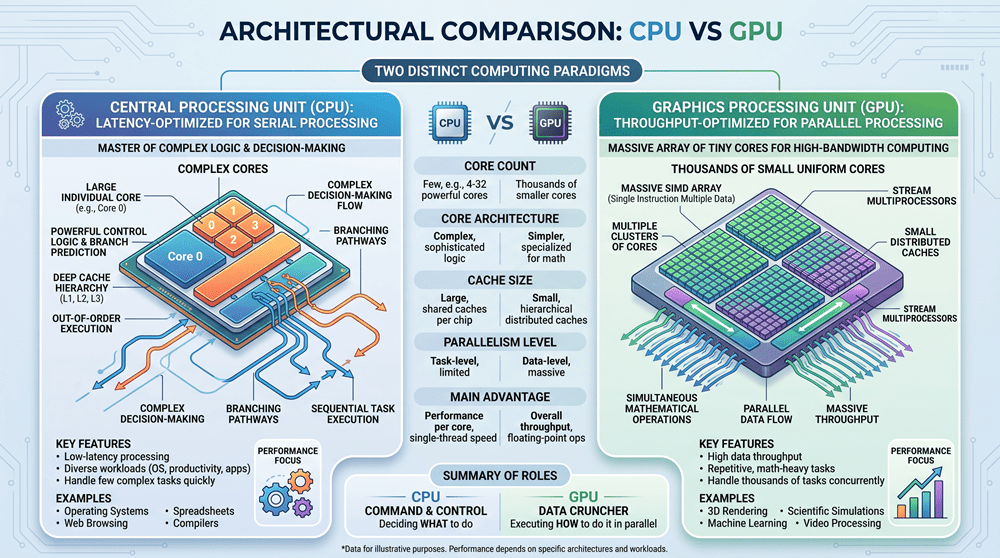
To understand why CPUs are reclaiming their throne, we must look at the nature of agentic workloads. While a GPU is a master of parallel processing – doing thousands of simple math problems simultaneously – a CPU is built for complex, sequential logic, branch prediction, and rapid context switching.
Agentic AI operates on decision trees. An AI agent makes a plan, executes a step, evaluates the result, and then decides what to do next based on that outcome. This continuous “OODA loop” (Observe, Orient, Decide, Act) requires massive amounts of sequential logic and dynamic branching. A GPU stalls when it has to constantly pause and ask, “if X is true, do Y; else do Z.” Modern CPUs, with their deep pipelines, massive L3 caches, and highly advanced branch predictors, execute these conditional logic loops vastly faster and more efficiently.
Furthermore, we must address the resurgence of Genetic AI—algorithms modeled after biological evolution that solve highly complex optimization problems by generating populations of solutions, selecting the best, and mutating them over generations. Genetic algorithms are notoriously difficult to run efficiently on GPUs because the mutation and crossover phases involve highly divergent, non-uniform operations. CPUs thrive on this type of heterogeneous, branch-heavy workload. When enterprise platforms combine Agentic AI (for autonomous decision-making) with Genetic AI (for finding optimal paths in logistics, drug discovery, or financial modeling), the CPU becomes the absolute critical path for performance.
The Silicon Heavyweights Supplying CPUs for Agentic Workloads
The race to dominate the Agentic AI hardware stack is largely a three-way battle, with each player carving out distinct domains where they perform best.
Intel continues to leverage its massive enterprise footprint. Their Xeon scalable processors, particularly those integrating Advanced Matrix Extensions (AMX), are highly capable in environments that mix legacy IT workloads with newly deployed on-premises agents. Intel performs best in hybrid edge deployments where businesses are running classical databases alongside localized AI agents that need to query that specific data securely.
ARM, through companies like Ampere Computing and internal cloud designs like AWS Graviton, is making significant headway in cloud-native efficiency. ARM-based CPUs perform best in massively distributed, lightweight micro-agent environments where the absolute lowest power draw per thread is the primary metric, even if single-thread peak performance is slightly lower.
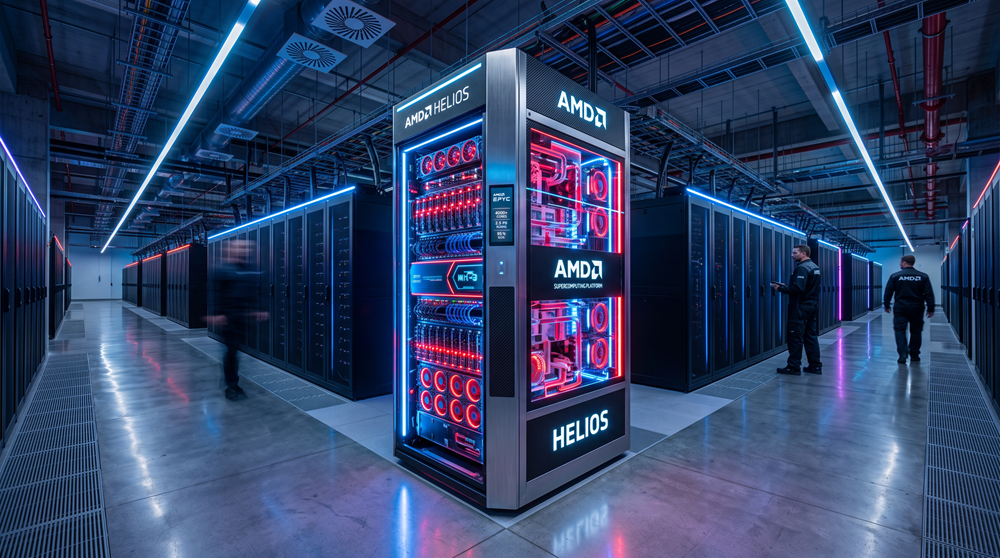
However, the clear momentum leader in high-performance Agentic AI is AMD. Through a combination of aggressive chiplet architecture, massive core density, and superior performance-per-watt metrics, AMD has positioned itself as the undisputed workhorse for heavy, enterprise-grade AI agents that require both extreme compute and high memory bandwidth.
Why AMD is Uniquely Situated to Benefit from the Agentic Wave
AMD has executed a masterclass in architectural foresight. Recognizing that AI would eventually move from the training phase (GPU-dominant) to the inference and execution phase (CPU-dominant), AMD designed its Zen 5 architecture to specifically accelerate complex, stateful workloads.
Cloud-based agents require massive core counts to run thousands of parallel autonomous environments without suffering from context-switching latency. AMD’s EPYC processors deliver this density while maintaining the high clock speeds required for the sequential logic of agentic decision-making. As outlined in AMD’s 2026 strategic technical blog, running cloud agents is vastly superior when upgrading to CPU architecture like AMD Zen 5, which handles the constant database queries, memory retrieval, and API calls that choke traditional AI accelerators. You can explore the technical deep dive on this advantage here.
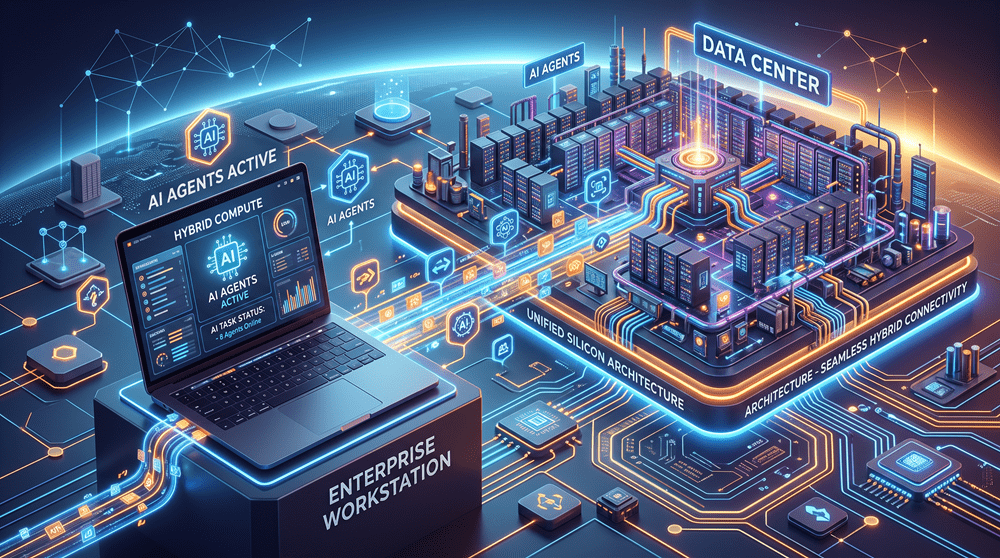
Beyond the data center, Agentic AI must exist at the edge to manage personal data securely and execute tasks with zero latency. AMD’s Ryzen AI Halo architecture bridges the gap between cloud and client. By integrating powerful Neural Processing Units (NPUs) directly alongside high-performance CPU cores, AMD ensures that endpoint devices can autonomously run local agents without instantly draining battery life. As detailed in their client-side strategy, this architecture is purpose-built to allow consumer and enterprise PCs to act as localized AI hubs, offloading the cloud and protecting user privacy.
This end-to-end synergy – from EPYC in the cloud to Ryzen AI at the edge – gives AMD a unified, ubiquitous footprint that IT developers desperately want when writing agentic software platforms.
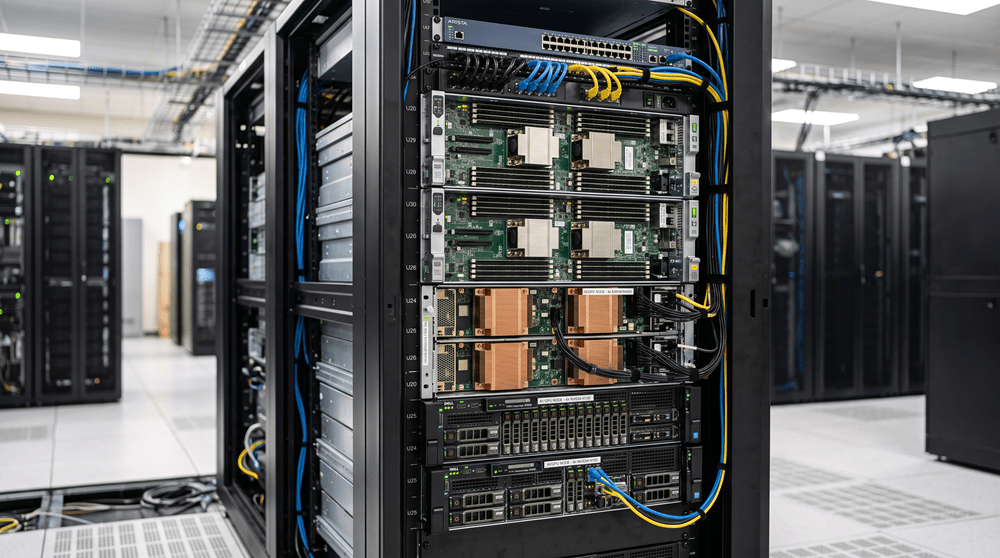
Strategic Directives for IT Buyers and Data Center Builders
For IT buyers and Chief Information Officers, the arrival of Agentic AI requires a drastic reallocation of budget and infrastructure planning. The knee-jerk reaction of the past three years – “buy as many GPUs as possible” – will lead to wildly unbalanced infrastructures that fail to deliver ROI on agentic software.
First, IT buyers must prioritize high-core-count, large-cache CPUs. Because agents spend their time evaluating logic, searching vector databases, and managing software states, the CPU-to-memory bandwidth is the new bottleneck. You need silicon that can feed data to the cores without latency.
Second, data center builders must redesign network fabrics. Generative AI requires massive “east-west” traffic (servers talking to other servers during model training). Agentic AI generates massive “north-south” traffic (agents constantly reaching out to the internet, corporate APIs, and end-users to execute tasks). High-throughput, low-latency networking interfaces directly tied to CPU PCIe lanes are paramount.
Finally, buyers must prepare for heterogeneous computing. Future racks will not be uniform. They will require intelligent workload orchestration software that seamlessly routes parallel math tasks to the GPU and complex logic/decision tasks to the CPU. Investing heavily in open-source orchestration tools that support AMD and Intel architectures equally will prevent costly vendor lock-in.
Solving the Data Center Community Crisis Through Silicon Efficiency
We cannot discuss data center expansion without addressing the elephant in the room: public backlash. The initial AI boom drove an unprecedented build-out of hyper-scale data centers. However, these facilities have become increasingly unpopular. Communities are actively rejecting them due to massive grid power consumption, the unsightly footprint of high-voltage transmission lines, and the millions of gallons of municipal water used daily for evaporative cooling. In many regions, the “NIMBY” (Not In My Backyard) movement has successfully halted data center construction, threatening the AI roadmap.
To overcome this, the industry has had to fundamentally rethink data center physical impact, and silicon providers like AMD have been the tip of the spear in making these facilities acceptable to local municipalities.
The most vital change is extreme silicon efficiency. By shrinking process nodes and utilizing chiplet designs, modern CPUs deliver exponentially more compute per watt. A single rack of AMD Zen 5 processors can replace multiple racks of older hardware. This density consolidation means data centers can be physically smaller, requiring less land and disrupting less local ecology.
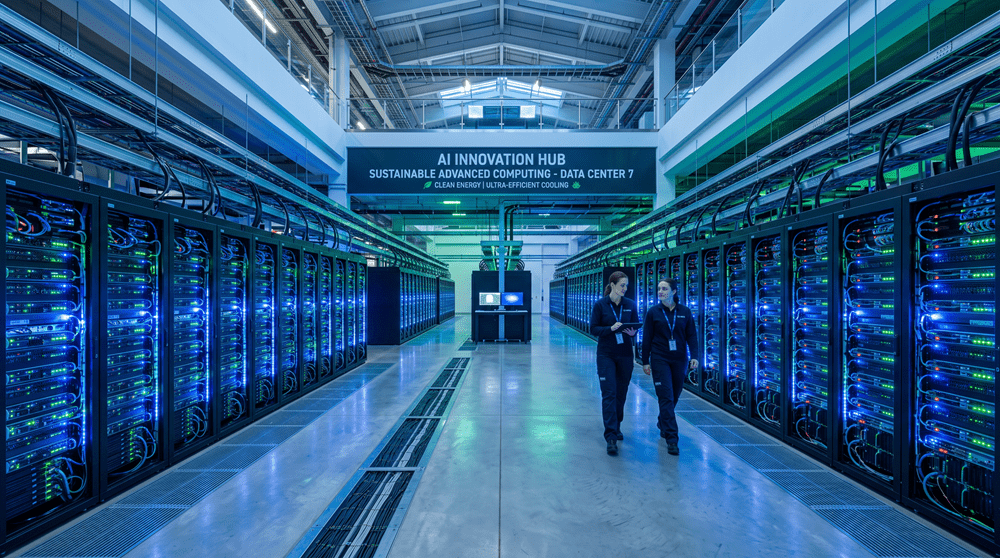
Furthermore, high-efficiency CPUs generate a more manageable thermal profile, enabling the shift away from evaporative water cooling—which drains local reservoirs—toward closed-loop direct-to-chip liquid cooling. By drastically lowering the Power Usage Effectiveness (PUE) and zeroing out municipal water waste, companies can present data centers not as community burdens, but as quiet, green, sustainable tax-revenue generators. AMD’s commitment to pushing performance-per-watt directly enables data center builders to secure permits in highly regulated, environmentally conscious communities that would have summarily rejected the water-guzzling facilities of 2023.
Wrapping Up
The transition from generative AI to Agentic AI is not merely a software update; it is a fundamental realignment of how enterprise compute is executed. As artificial intelligence moves from generating static text to taking autonomous, multi-step actions, the complex sequential logic, dynamic branching, and genetic optimization algorithms required heavily favor the CPU.
While GPUs will maintain their critical role in foundational model training, the execution, operation, and scaling of daily AI agents belong to the CPU. IT leaders who fail to recognize this architectural pivot will find themselves with incredibly expensive infrastructure that is bottlenecked at the point of action. By leaning into high-density, hyper-efficient architectures like AMD’s latest offerings, enterprises can deploy powerful, responsive Agentic AI seamlessly from the edge to the cloud – while simultaneously solving the power and sustainability crises that have plagued recent data center expansions. The era of the agent is here, and the CPU has definitively returned to the center of the technological universe.

- Building the Ultimate AI-Defiant Workforce: The Future of Work Mega-Platform - September 30, 2026
- The AI Tipping Point: How AMD’s MLPerf 6.1 Results Signal the End of Nvidia’s Monopoly - September 29, 2026
- AMD Achieves Datacenter Compute Power At IFA 2026, but Local Production Scaling Remains Difficult - September 28, 2026