
Most of us don’t give the spare tire in the trunk much thought. We know it’s there, we might check the air pressure once in a while (if we remember), and we hope we never need it. Then one night on the shoulder of a highway, we find out whether it actually works.
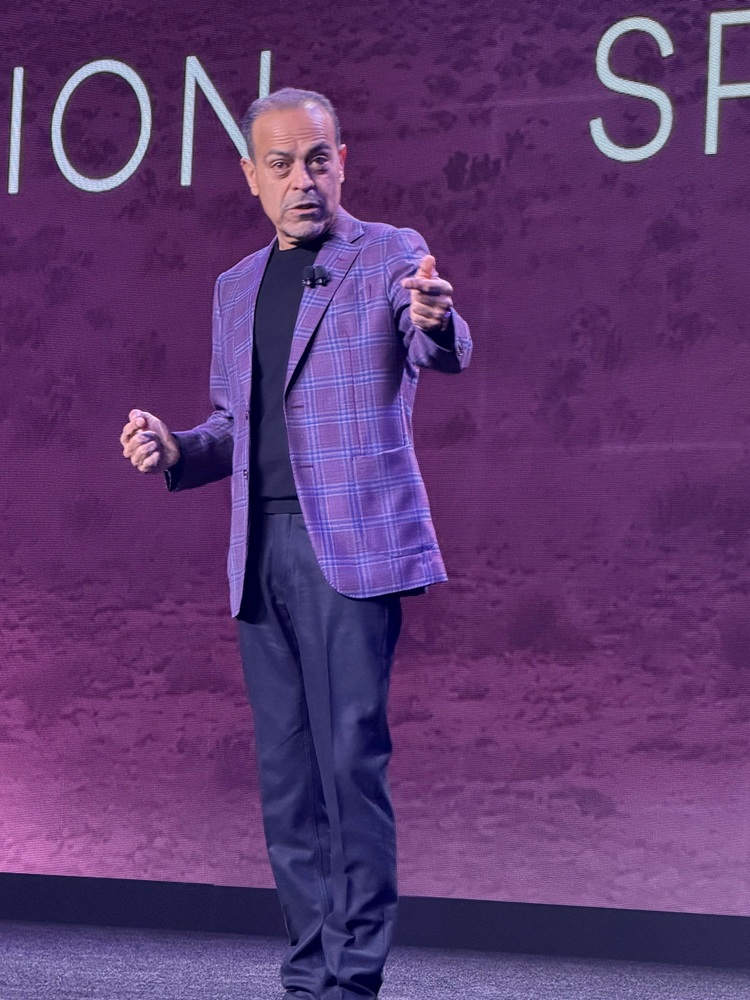
For a long time, that’s how a lot of organizations treated backup and recovery. Commvault CEO Sanjay Mirchandani described it as an insurance policy during a press briefing at Commvault SHIFT in Nashville this week. You paid for it, tested it a couple of times a year, and hoped you’d never have to use it. Security was the main event, and recovery was the backup plan for when security failed.
Mirchandani believes AI has turned that around, and that recovery is now the new security. The argument he and BNSF Railway CISO Alex Levy made for that idea comes down to time, and how little of it defenders have left.
Prevention Is Running Out of Time
Most security programs are built around prevention, which means finding weaknesses and fixing them before attackers can take advantage of them. That only works if defenders get enough time to do it.
Levy said that time is disappearing. There used to be days or even weeks between the disclosure of a vulnerability and a working exploit in the wild. Now AI models are finding the flaws, and attackers are exploiting them within minutes to hours. He cited a figure he’d seen recently showing that 4% of all critical vulnerabilities in the history of CVE tracking were discovered in the last 30 days, and many of them had been sitting in production systems for five or 15 years.
Pranay Ahlawat, Commvault’s Chief Technology and AI Officer, followed that to its logical end. A CISO has hundreds of issues to fix and an attacker only needs to find one, so he doesn’t think enterprises can pay down that security debt fast enough. Security leaders will have to assume it won’t get paid.
Attackers aren’t the only problem, either. Mirchandani pointed out that as engineers learn to build real AI applications, they’re going to make mistakes with access controls and data, much like a kid riding a bike for the first time without training wheels. AI agents add another wrinkle, because they act on their own and don’t always behave predictably. Levy said humans used to be the chaos in the equation while systems did exactly what they were configured to do, and AI has flipped that. “There’s now chaos and chaos.”
Planning for Things to Break
If you can’t prevent every incident, then what matters most is how quickly and cleanly you can get back to a trusted state when one happens. For BNSF, getting that wrong would be felt well beyond the railroad. “An outage for us is an outage for the entire country,” Levy said. A couple of days of downtime would show up as empty store shelves.
So BNSF builds on the assumption that something will go wrong. The company is breaking its environment into isolated pockets with a defined blast radius and making systems ephemeral wherever it can. If one area has a problem, the team can contain it, burn it down, and rebuild it.
Mirchandani tells customers to take the same approach with AI and build resilience in from day zero, because figuring out recovery after something is already deployed is usually too late. He also wants recovery to be continuous instead of a once-in-a-while event. That means constantly discovering what’s in the environment and watching for drift, so that when something goes wrong, the team can bring back exactly what was affected rather than rolling back everything.
Security and Recovery Become One Job
The org chart is starting to reflect all of this. Levy runs cybersecurity at BNSF, but his team also owns business continuity, disaster recovery, and resiliency planning. He expects more companies to follow, with recovery functions that have traditionally lived on their own folding into security as AI spreads through the business.
Mirchandani has seen the same thing. When he asked a room of CISOs who’s responsible for recovering the identity layer if something goes wrong, every hand went up. Ahlawat cited estimates of 2 billion to 4 billion AI agents by 2030, each with a non-human identity and permission to change data, and he expects those privileges to become the front door for a lot of attacks. If the identity system can’t be trusted, nothing else can come back online either.
Which brings me back to the spare tire. Prevention still matters, and nobody at SHIFT was suggesting you stop locking the car or skip the oil changes. But—to continue leaning on the spare tire analogy—AI has made a flat a lot more likely than it used to be, so the spare can’t be something you check once in a while and hope for the best. It needs to be ready every time you pull out of the driveway, and you need to know it’ll actually hold air.
Organizations that keep treating recovery as an insurance policy are going to find out whether it works the same way the rest of us do, on the shoulder of the highway in the dark. That’s why recovery can’t sit off to the side as an IT task anymore. When attackers can exploit a flaw faster than anyone can patch it and AI agents are changing systems on their own, getting back to a trusted state quickly is as much a part of security as anything you do to keep attackers out.
What Commvault Announced at SHIFT
Commvault obviously has a stake in this argument, since recovery is what it sells, and the company used SHIFT to show what its version of continuous recovery looks like in practice. Most of the news maps back to the problems Mirchandani, Levy, and Ahlawat described, from restoring entire business services after an incident to auditing and rolling back what AI agents have done.
Commvault is announcing five products and partnerships at SHIFT:
- Recovery Studio orchestrates the recovery of applications, identities, configurations, infrastructure, and data together in automated runbooks to restore complete business services.
- New AgentRecover capabilities help organizations audit what agents built on Microsoft Foundry and Amazon Bedrock AgentCore have done, then recover both the agents and the systems they changed.
- A strategic partnership with Zscaler pairs Zscaler’s discovery and policy enforcement for AI use with Commvault’s ability to recover from harmful agent activity.
- A collaboration with NVIDIA aims to make Commvault-protected data usable for AI applications and agents while keeping it current, authorized, and governed.
- Commvault Data Activate for Databricks brings governed enterprise data, along with its business context, into Databricks for analytics and AI.
Most of these are slated for early access this month or in December. Mirchandani acknowledged that the larger vision of continuous recovery isn’t all here today and will keep evolving as standards and technologies catch up to how fast AI is moving.

- Recovery Is Becoming the New Security - November 11, 2026
- Steering Autonomous Agents Toward the Safe Route - November 11, 2026
- Getting Up Close With Wolves Changes How You See Them - November 5, 2026