We are witnessing a fundamental pivot in how cybercriminals operate, moving away from brute-force technological intrusions toward sophisticated psychological manipulation and systemic camouflage. For years, the cybersecurity industry focused heavily on building higher walls to stop attackers from breaking into networks. However, as I frequently discuss with the readers here at Techspective, building higher walls is a flawed strategy when the adversary already has a key to the front door.
The latest data published on the HP Threat Research Blog confirms that threat actors have simply stopped trying to scale those perimeter walls. Instead, they are walking right in, heavily disguised as trusted employees carrying legitimate administrative tools. Attackers are now prioritizing operational efficiency and return on investment. Why spend millions of dollars and months of development time crafting bespoke, highly complex zero-day exploits when you can simply ask a distracted user to install a perfectly legitimate, digitally signed remote administration tool?
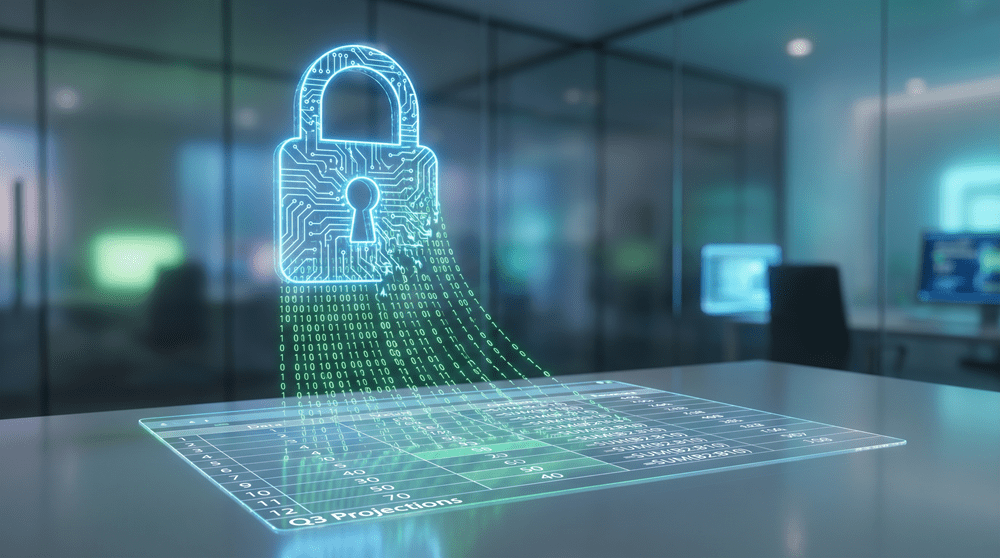
This creates a perilous landscape where malicious activity is explicitly engineered to look exactly like standard IT operations. These attacks do not trigger traditional antivirus alarms because they do not look like attacks—they look like business as usual. When malware blends seamlessly into the background noise of everyday corporate network traffic, traditional detection-based security platforms, which look for known bad signatures, are effectively rendered blind to the intrusion.
What Makes HP Wolf Security Different
For decades, I’ve built around two desktop systems a quarter here in my Bend, Oregon office, usually favoring AMD Threadripper processors for their sheer multi-threaded compute performance and stable architecture. When you build a system entirely from the motherboard up, you acutely understand the critical intersection where the physical hardware ends and the software begins. The traditional PC OEM market—dominated by players who assemble commodity components and simply slap a standard Windows image on top—has historically treated endpoint security as a secondary, post-production software problem. They partner with third-party vendors, preload a trial of a detection-based antivirus suite, and consider the job done.
HP took a radically different, structurally superior path. By recognizing early on that software-based security is inherently vulnerable if the underlying operating system is compromised, HP shifted the root of trust completely down into the silicon. Rather than relying solely on scanning for known threats, HP Wolf Security utilizes hardware-enforced micro-virtualization.
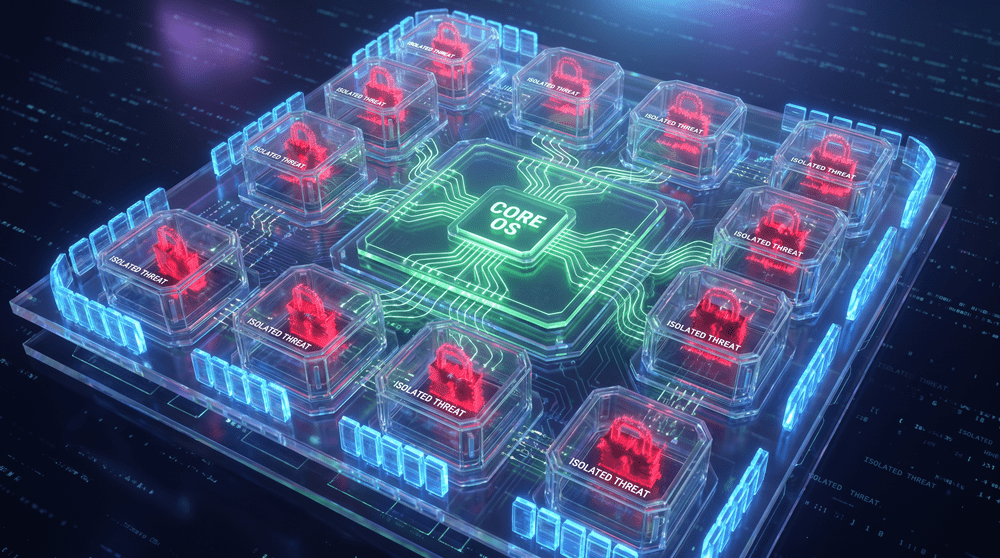
When a user clicks a web link or opens a document on an HP machine, a feature called HP Sure Click opens that task inside its own isolated, hardware-enforced container – a micro-VM. If the downloaded file is malicious, the malware detonates safely inside the container, completely cut off from the host operating system, the user’s personal files, and the broader corporate network. When the user closes the application or browser tab, the container is destroyed, and the malware simply vanishes without a trace.
This silicon-to-cloud architectural integration is what makes HP’s security division uniquely capable compared to other PC OEMs who remain beholden to vulnerable OS-level software APIs. The scale of this protection is massive. According to HP’s internal endpoint security metrics, HP Sure Start has protected more than 200 million shipped endpoints against compromised firmware, while HP Sure Click has successfully isolated over 60 billion risky user activities across documents and web pages, with zero reported breaches resulting from those isolated activities.
Major Exposures Identified by HP
The June 2026 Threat Insights Report, analyzing millions of endpoints from January through March, highlights exactly how this camouflage strategy is being deployed in the wild. The most alarming trend called out in the report is the aggressive weaponization of trusted software. Cybercriminals are actively hijacking legitimate remote access applications like LogMeIn and ConnectWise ScreenConnect to establish persistent, quiet backdoors into victim devices.
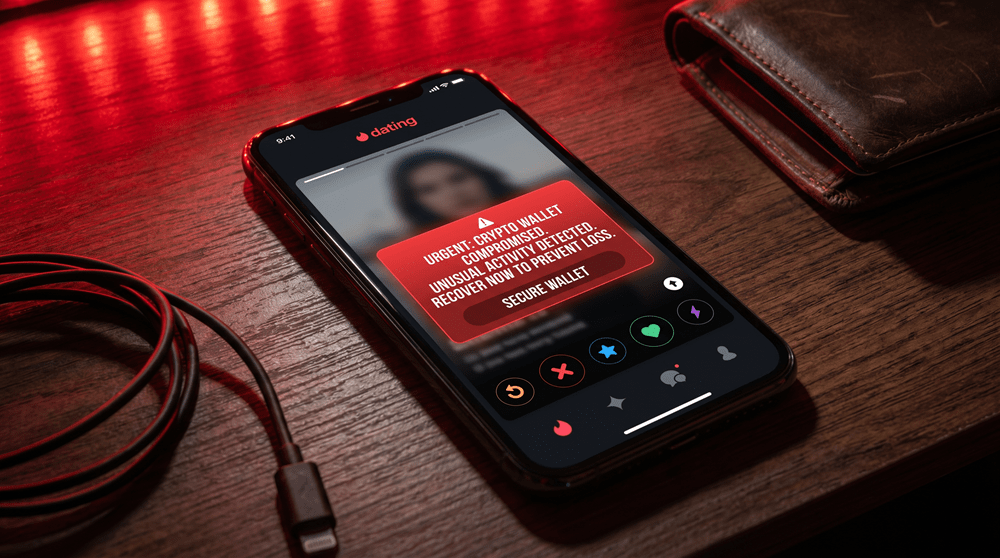
The initial infection vectors are masterpieces of modern social engineering. Attackers utilized high-stress, time-sensitive lures—such as tax year-end phishing emails—and entirely fabricated desktop app downloads, including malicious software posing as dating websites. The primary goal is to induce panic, urgency, or curiosity, prompting the user to bypass their own common sense and manually authorize the installation of a remote management tool. Once installed, these tools grant the attacker total control over the PC while generating telemetry that looks identical to a standard corporate IT helpdesk session.
Furthermore, the report identified a sophisticated evolution in payload delivery mechanisms. Recent “ClickFix” campaigns are now disguising highly destructive malware as harmless audio files. Victims are directed to well-designed, highly convincing fake websites and presented with realistic CAPTCHA prompts. We have trained users for over a decade to automatically click CAPTCHAs to prove they are human to access content. In these new campaigns, the act of solving the CAPTCHA actually triggers malicious commands that quietly execute disguised payloads in the background. It is a brilliant, albeit highly malicious, subversion of a trusted security checkpoint.
The success metrics of these evasion tactics from the report are sobering for any IT professional: At least 11% of the email threats identified by HP Sure Click had already successfully bypassed one or more enterprise email gateway scanners before reaching the endpoint. Malicious executable files were the most popular delivery vehicle, accounting for 39% of malware delivery, with archives like .zip files closely following at 38%. PDF documents accounted for 10%, showing a 2% increase as attackers lean heavily into fake court documents and urgent payroll lures to drive user clicks.
The Danger of Agentic AI and Vibe Coding
I research and analyze advanced mobility platforms extensively as a strategic futurist. In the automotive sector, we must draw a very hard, distinct line between “agentic AI” – which operates as a cognitive-layer technology making complex, context-aware navigational decisions—and basic “automation,” which acts strictly as an execution-layer for deterministic vehicle functions. You absolutely do not want agentic AI independently deciding how your anti-lock brakes should operate; you need strict, predictable execution-layer automation for safety.
Cybercriminals, however, are intentionally blurring these layers on the enterprise PC to maximize damage. The HP report highlights the rapid rise of fake crypto wallet recovery tools spreading highly unusual, emoji-heavy infostealer scripts. Threat researchers refer to this emerging phenomenon as “vibe-coded” malware. The structural anomalies and bizarre commenting styles strongly suggest these attack chains were generated rapidly by generative AI coding assistants.
Attackers are leveraging agentic AI at the cognitive layer to rapidly generate customized, emotionally manipulative social engineering lures and complex, obfuscated script structures. They then use these AI-generated assets to hijack your execution-layer automation—specifically, the administrative scripts and remote access tools built natively into Windows. By using AI to automate the creation of the attack, cybercriminals with very low technical skills can now deploy enterprise-grade, highly persistent threats that steal credentials, package wallet data, and exfiltrate system archives with terrifying speed.
What HP is Doing to Address These Threats
HP is addressing this escalating threat landscape by fundamentally acknowledging a basic truth of human nature: human beings will always make mistakes. You cannot train away human curiosity, user fatigue, or the sheer panic induced by a fake tax audit email from a spoofed government address. If a user is presented with a highly realistic CAPTCHA prompt blocking the content they need for their job, they are going to click it.
Instead of relying on the user to act as the last line of defense, HP uses hardware-enforced isolation to make the endpoint inherently resilient to user error. By allowing malware to detonate safely inside secure micro-VM containers, HP Wolf Security not only protects the endpoint but also turns the attack into an intelligence-gathering opportunity. Because the malware believes it has successfully compromised a real, unprotected machine, it executes its full, uninhibited attack chain.
This process provides the researchers at the HP Security Lab with deep, unparalleled visibility into the exact techniques, tools, and procedures cybercriminals are using to evade standard detection tools. This rich threat intelligence is then fed directly back into the Wolf Security platform, continuously hardening the entire global ecosystem against future zero-day attacks without requiring a catastrophic breach to learn the lesson.
Strategic Advice for CSOs
If there is a central, unavoidable takeaway for Chief Security Officers in this latest Threat Insights Report, it is that detection alone is now a failing strategy. When an attacker leverages LogMeIn—a tool your own IT department likely uses on a daily basis to troubleshoot remote endpoints—your behavioral analytics and endpoint detection and response (EDR) platforms will fundamentally struggle to classify the activity as malicious until the data exfiltration has already occurred.
CSOs must immediately shift their strategic posture toward rigorous Zero Trust architecture principles implemented down at the hardware level. First, you must aggressively restrict unnecessary user privileges across the board. The era of standard users having local administrator rights on their corporate machines must end permanently. You must tightly control software installation vectors; if a user cannot physically install an unapproved remote access tool without elevated IT approval, the tax-year phishing lure dies on the vine, regardless of how convincing the email was.
Second, you must isolate risky activities by default. Downloads, email attachments, and links from external sources should never be allowed to execute directly on the bare-metal operating system. They need to be contained. CSOs must evaluate their endpoint fleet purchasing decisions not just on CPU compute performance or chassis form factor, but on whether the OEM provides a robust, hardware-enforced isolation architecture. When evaluating your enterprise security stack, you must assume that your perimeter will eventually be breached, your email gateways will miss evasive threats, and your users will be tricked. Your endpoint architecture must be purposely designed to survive that inevitable reality.
Wrapping Up
The June 2026 HP Threat Insights Report paints a clear, definitive picture of a rapidly maturing cybercrime economy. Attackers are no longer acting as mere digital vandals; they are operating like highly efficient corporate businesses, leveraging agentic AI to write malicious code and actively abusing trusted IT software to establish persistent, quiet control over enterprise networks. The barrier to entry for launching devastating, highly targeted cyberattacks has never been lower, while the technical difficulty of detecting those attacks using traditional methods has never been higher.
To secure the future of work and protect corporate assets, organizations must move definitively beyond the antiquated cat-and-mouse game of malware detection. Protecting the modern, distributed workforce requires a fundamental architectural shift toward hardware-enforced isolation. By containing threats rather than just chasing them after the fact, comprehensive platforms like HP Wolf Security provide a necessary, proven blueprint for enterprise resilience in an era where you can no longer implicitly trust what you see on the screen.

- Meta Finalizes Massive Teen Addiction Settlement, but Proposed App Restrictions Make Kids Less Safe - August 28, 2026
- The Aftermath of Corporate Overexpansion - August 25, 2026
- The 2026 Google Pixel 11 Pro Hits Thirty Hours of Battery Life but the New York Keynote Proved Google Wants You to Ignore It - August 21, 2026