Reflecting on my time judging the recent HP Future of Work Accelerator Pitch Fest in New York, something kept gnawing at me. As I sat alongside my fellow judges—Antara Lahiri, Catherina Gioino, and HP’s Michele Malejki—we watched five remarkable organizations pitch brilliant, targeted solutions to the AI employment crisis. Produced with strategic precision by Conspiracy of Love and amplified by Good Is The New Cool, the event successfully showcased the heroic efforts needed to save the next generation from the “price parity trap” of AI.
But in the tech industry, we know that point solutions, no matter how innovative, eventually hit a scaling wall. The true magic happens when you integrate them into an ecosystem.
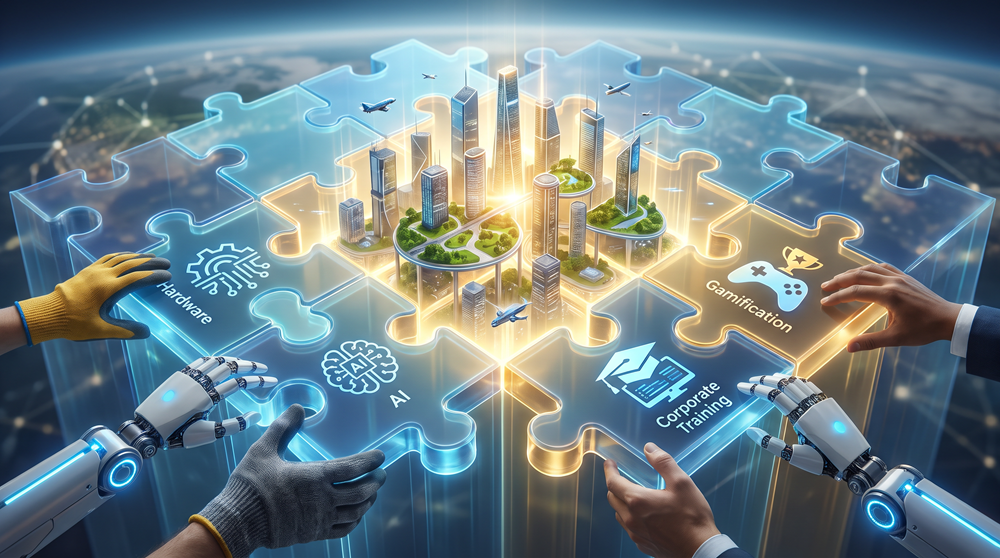
What if these five finalists didn’t just operate in their respective silos? What if they were integrated into a unified, sequential educational and career-development mega-platform? By stringing these organizations together, we could create an end-to-end pipeline capable of taking a marginalized youth from complete unawareness to a highly paid, AI-augmented, and socially conscious corporate leader.
Here is what that ultimate, blended partnership would look like, and why it might be the most powerful weapon we have to offset the adverse job impacts of Artificial Intelligence.
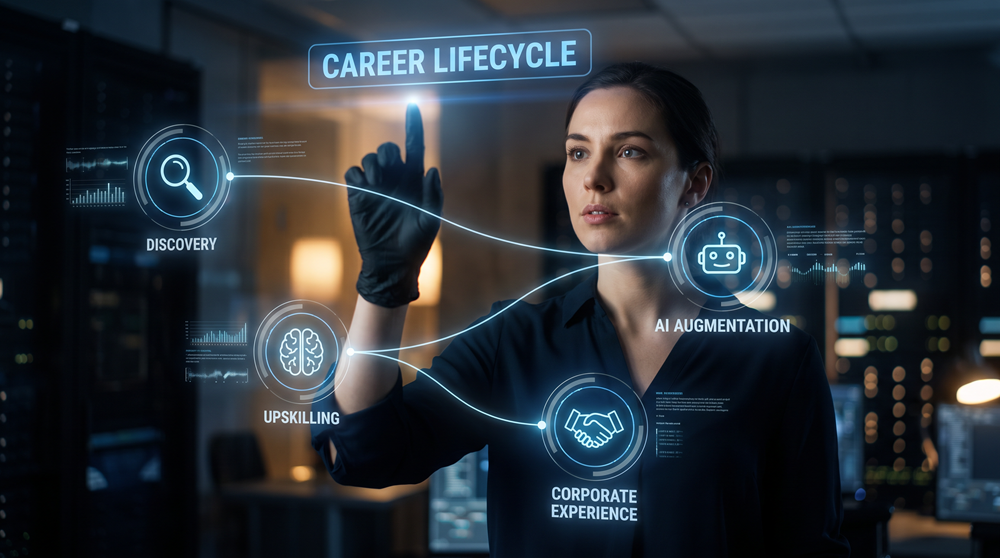
Phase 1: Discovery and Acquisition (Skillionaire Games)
The hardest part of modern education is user acquisition and engagement. Traditional career counseling fails because it relies on outdated pamphlets and bored high school counselors. The blended solution would start at the top of the funnel with Skillionaire Games.
By gamifying career exploration on mobile devices, Skillionaire acts as the Trojan Horse. It intercepts Generation Z and Alpha where they live, using addictive game mechanics to expose them to high-demand careers in cybersecurity, advanced manufacturing, and IT. In our integrated platform, Skillionaire wouldn’t just be a game; it would be the diagnostic entry point. As users play, the system assesses their natural aptitudes, problem-solving skills, and interests, seamlessly feeding that data into the next phase.
Phase 2: Rapid Upskilling and Certification (SkillUp Coalition)
Once a user identifies a viable, high-demand career path through gameplay, they are handed off to the SkillUp Coalition.
Traditional four-year universities are too slow and expensive to keep up with the AI revolution. SkillUp acts as the agile, rapid-response training engine. Instead of a generic degree, the platform uses the aptitude data from Skillionaire to prescribe targeted, bite-sized upskilling pathways. Users gain specific, applicable certifications for tech-adjacent roles without accumulating massive debt. This module operates as the emergency triage center, quickly pivoting displaced or uncredentialed workers into growth areas before they fall out of the middle class entirely.
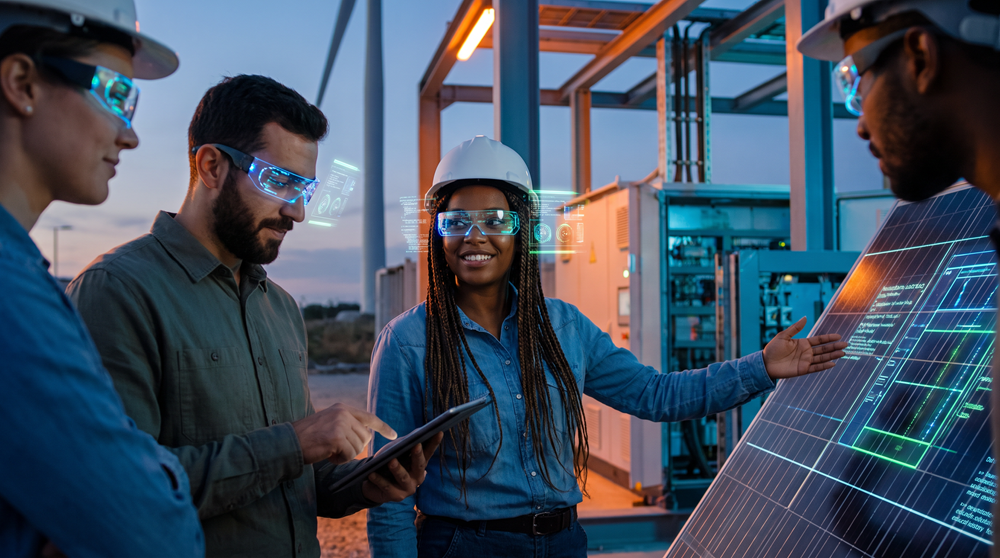
Phase 3: The AI-Augmented Workflow (PHIND)
Knowing a skill is one thing; executing it efficiently in an AI-dominated landscape is another. Once users are certified by SkillUp, they need to learn how to operate alongside machines. This is where PHIND integrates into the ecosystem.
PHIND bridges the gap between digital knowledge and physical execution, particularly in the trades, construction, and clean energy sectors—areas deeply resistant to AI automation. But PHIND also serves as the collaborative training wheels. In their blended platform, users wouldn’t just learn a trade; they would use PHIND’s AI-powered search and development engine to navigate complex workflows, troubleshoot physical infrastructure problems on the fly, and source apprenticeships. The platform trains the user to become a “10x worker”—someone who uses AI to augment their human capabilities, rendering them vastly more productive and economically immune to the price parity trap.
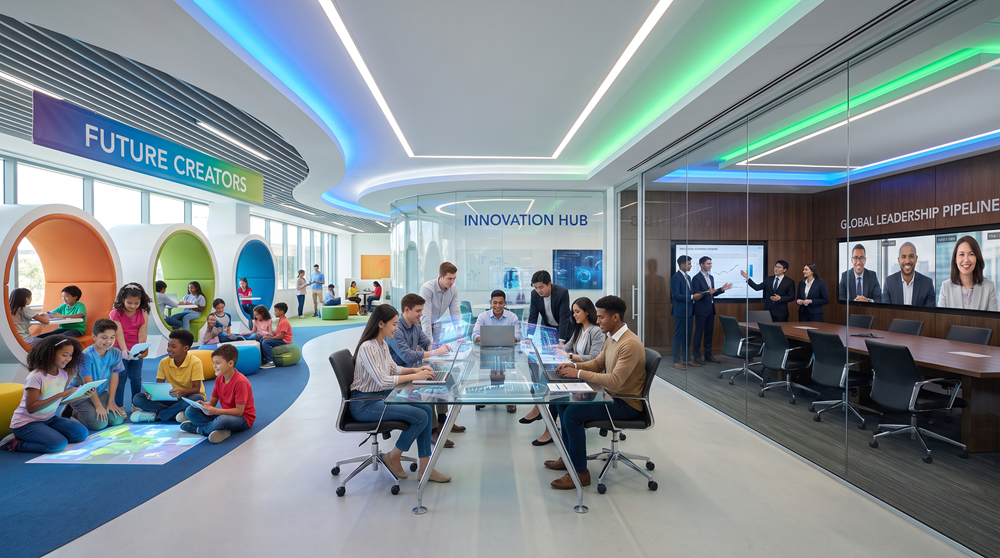
Phase 4: Bridging the Experience Gap (Extern)
The most brutal catch-22 for young professionals is that entry-level jobs—the traditional training grounds for the corporate world—are being actively destroyed by generative AI. How do you get five years of experience when the first four years of tasks are now automated?
The platform solves this by routing our upskilled, AI-augmented users directly into Extern—the overall winner of the Pitch Fest. Extern provides a remote platform that connects students with real-world corporate work experiences. In our mega-platform, corporations would effectively become distributed educators. Users would step out of the SkillUp and PHIND modules and immediately integrate into active corporate projects via Extern. This bypasses the socioeconomic barriers of traditional internships and gives the user verifiable, hands-on corporate experience that AI cannot simulate.
Phase 5: Ethical Leadership and Coalition Building (Millennium Campus Network)
A highly skilled, AI-augmented worker with corporate experience is incredibly valuable, but without ethical grounding, they are just a cog in a machine. The final layer of our integrated platform is the Millennium Campus Network (MCN).
While the other modules teach users how to handle the logic and the logistics, MCN teaches them how to handle the humanity. By plugging users into a global network of student leaders focused on sustainable development and social impact, the platform fosters the exact human-centric skills that AI lacks: deep empathy, complex ethical leadership, and cross-cultural coalition building. MCN ensures that the workers coming out of this pipeline aren’t just technically proficient, but are equipped to wield technology for equitable outcomes, actively fighting the digital divide from the inside out.
Scaling the Ecosystem: Calling in the Heavyweights
While this blended HP Accelerator platform is formidable, the sheer scale of the AI employment crisis requires reinforcements. To make this pipeline truly unstoppable, we need to inject additional corporate titans into the mix.
First, we need Microsoft. By integrating LinkedIn directly into the platform, users could have their Skillionaire aptitudes, SkillUp certifications, and Extern project experience automatically verified and permanently attached to their professional identity, creating a dynamic, real-time resume that recruiters can actually trust.
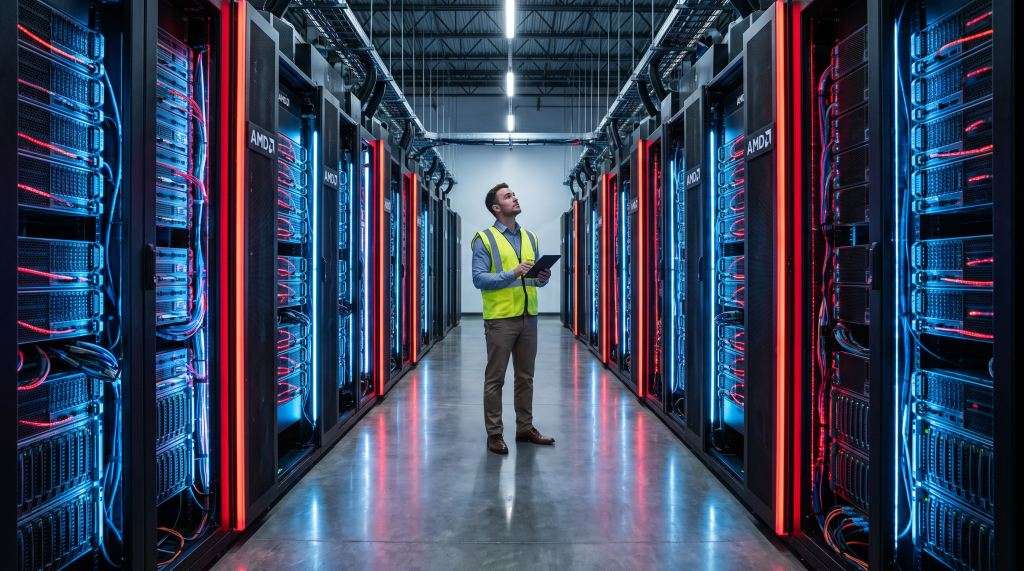
Second, we need massive infrastructure partners like AMD and Nvidia, alongside HP’s existing hardware contributions. Running localized AI agents for training and workflow augmentation requires serious edge-compute power. These hardware giants need to subsidize the Neural Processing Units (NPUs) and AI PCs required by under-resourced communities to access the platform securely, without crushing latency or cloud costs.
Finally, enterprise learning giants like Coursera or ServiceNow should be grafted onto the back end to provide the enterprise-grade badging and corporate onboarding infrastructure. If corporations trust the platform’s output, they will fund it, creating a self-sustaining loop of talent generation.
Wrapping Up
The AI era is aggressively tearing down the traditional pathways to career success. If we continue to rely on fragmented, 20th-century educational models, we are going to condemn an entire generation to economic obsolescence. What the HP Future of Work Accelerator proved is that the individual puzzle pieces to solve this crisis already exist. We have gamified discovery, rapid upskilling, AI-augmented workflow tools, remote corporate integration, and ethical leadership networks.
The heroic next step is orchestration. By blending finalists like Skillionaire Games, SkillUp Coalition, PHIND, Extern, and MCN into a singular, unified platform—and backing it with the financial and technological muscle of the broader tech industry—we can build an educational pipeline that actually outpaces the algorithms. We have the innovators; we have the technology. Now, we just need the corporate vision to wire them all together.

- Building the Ultimate AI-Defiant Workforce: The Future of Work Mega-Platform - September 30, 2026
- The AI Tipping Point: How AMD’s MLPerf 6.1 Results Signal the End of Nvidia’s Monopoly - September 29, 2026
- AMD Achieves Datacenter Compute Power At IFA 2026, but Local Production Scaling Remains Difficult - September 28, 2026