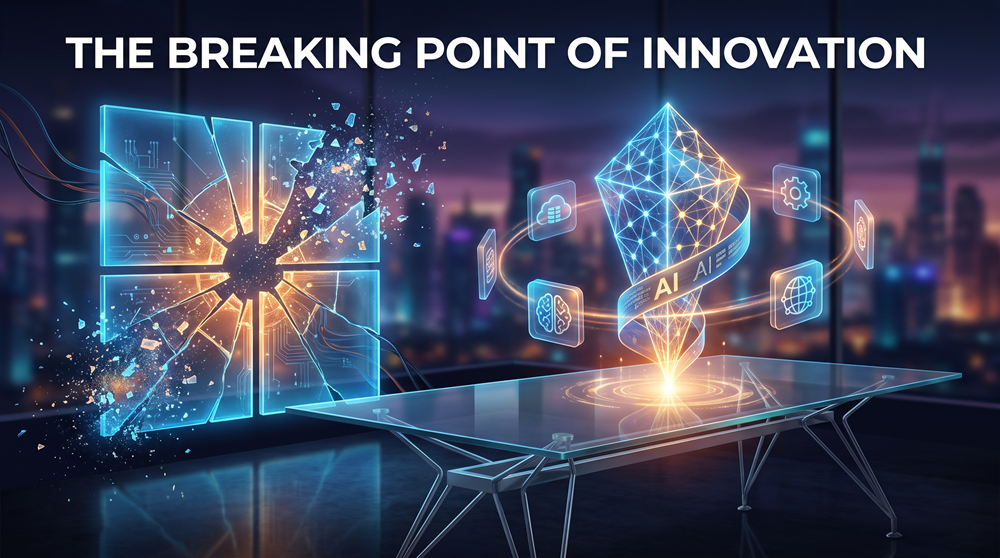
If you were paying close attention to Microsoft Ignite last week, you witnessed a historic moment that would have been unthinkable in Redmond a decade ago. Microsoft is no longer pitching Windows as the center of your computing universe. Instead, CEO Satya Nadella is openly positioning Copilot as the “new OS for work” and declaring that traditional software applications are merely “plugins to Copilot.” As analyst commentary like this sharp LinkedIn breakdown of Ignite’s message makes clear, the subtext from Microsoft is unmistakable: forget Windows, forget Office 365 as you knew it, and get ready for an agent-driven future.
I have covered this industry for decades, and I can tell you that when a dominant platform vendor starts talking past its own cash cow, you are watching the beginning of the end of an era. Ironically, Windows 1.0 first shipped on November 20, 1985, meaning this pivot is hitting full stride on the literal eve of Windows’ 41st birthday. Let’s unpack why Microsoft is walking away from the franchise that built it, whether an AI layer like Copilot or Copilot+ can actually replace an operating system, and why this gamble could hand Microsoft’s desktop crown to a rival.
What an Operating System Actually Is – and Why Windows Was Always an Anomaly
Before we bury Windows, we need to be clear about what an operating system actually does. At its core, an OS is the traffic cop between bare silicon and human intent. It manages memory, schedules processor threads, enforces security permissions, talks to storage and network hardware through device drivers, and presents a consistent interface so applications don’t have to reinvent the wheel every time you hit “Print.”
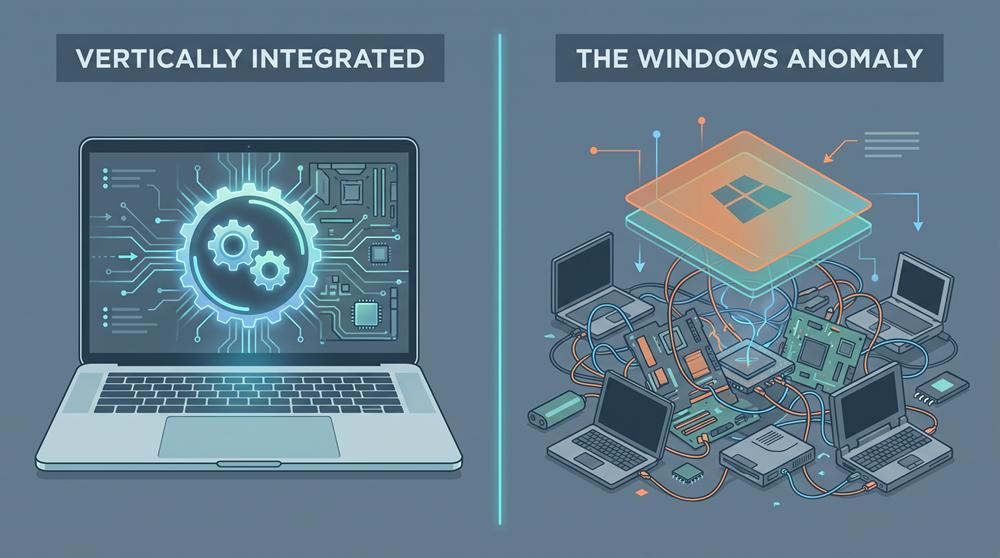
What most people forget today is how historically bizarre it is to have the operating system divorced from the hardware. In the mainframe era, IBM built the iron and the OS together. Sun Microsystems, Silicon Graphics, and DEC did the same. Today, Apple still runs that exact vertically integrated playbook on the Mac and iPhone, and every gaming console on the market follows suit.
Windows was a fluke of corporate history. In 1981, IBM rushed its first PC to market and outsourced the operating system to a tiny company in Bellevue, Washington, without securing exclusivity. That single miscalculation birthed a horizontal ecosystem where Microsoft owned the software layer while Dell, HP, Lenovo, and dozens of component makers fought over thin hardware margins. It was a brilliant business model for Microsoft, but architecturally it was always an unnatural compromise – one that forced Windows to support millions of unpredictable hardware combinations while Apple enjoyed tight, end-to-end control.
Forty-One Years of Digital Duct Tape: Why Windows Is Becoming Obsolete
In dog years, a 41-year-old operating system is practically a fossil. While Microsoft has modernized the kernel many times since the days of MS-DOS, Windows still carries decades of legacy baggage to preserve enterprise backward compatibility. Every Patch Tuesday feels like watching engineers reinforce a Victorian bridge so it can carry supersonic freight trains.
More importantly, the entire metaphor of Windows – files tucked into nested folders, static desktop icons, and isolated applications that wait passively for you to click them – was invented for an era when computers were digital filing cabinets. Today, your data lives in the cloud, your collaboration happens in real time across browsers and mobile devices, and the sheer volume of enterprise software has overwhelmed human attention. Asking knowledge workers to manually juggle fifteen open windows across Outlook, Excel, Teams, and a CRM is no longer efficient; it is cognitive friction. Windows isn’t failing because it stopped booting. It is becoming obsolete because the desktop-and-app paradigm itself is running out of road.
Can Copilot+ Be an Operating System—or Is It Something Else Entirely?
This brings us to the million-dollar question: can an AI platform like Copilot or Copilot+ actually become an operating system? The short answer is no – not in the traditional computer-science sense. Even Microsoft’s own messy branding reflects this confusion. After spending two years hyping “Copilot+ PCs” as the future of local NPU-driven computing, Microsoft quietly began walking away from the Copilot+ PC hardware label this fall following privacy blowback over Recall and lukewarm consumer enthusiasm.
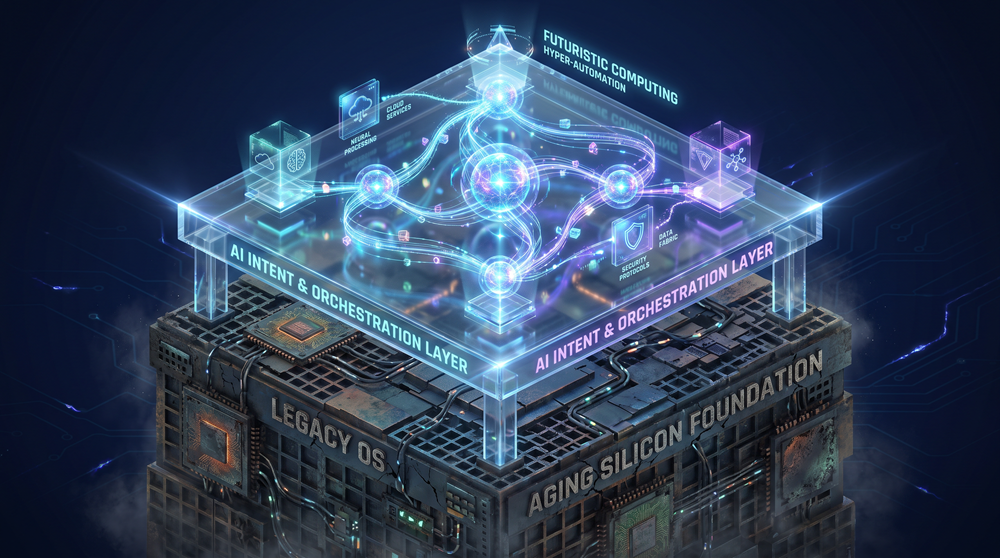
Yet even as the hardware branding fades, Microsoft’s software ambition has grown bolder. In his shareholder letter and at Ignite, Nadella framed Copilot as an orchestration layer that “transcends traditional software categories to understand user intent and act on it” across the enterprise. Under the hood, Copilot cannot manage memory pages, run a graphics driver, or talk to a Wi-Fi radio. Something—whether a stripped-down Windows core, Linux, or a cloud hypervisor—still has to do the dirty work of an OS.
What Copilot actually represents is something else entirely: an intent layer, or what I’d call a meta-OS. Instead of managing hardware resources, it manages cognitive resources—context, permissions, corporate data, and autonomous agents. To an engineer, that isn’t an operating system. To a user or a CFO, however, it might as well be. Whoever owns the interface where work gets initiated owns the customer relationship, and the underlying OS gets demoted to invisible plumbing.
Dismantling the Moat: Desktop Dominance at Risk and Who Wins
Here is the strategic trap Microsoft is walking straight into. For four decades, Windows stayed dominant because of application lock-in. You bought a Windows PC because you needed Windows apps. The moment Microsoft convinces enterprises that apps are just cloud plugins orchestrated by an AI layer, Microsoft blows up its own moat. If your primary interface is a cloud-hosted AI workspace, why on earth do you care if the laptop underneath runs Windows?
This pivot puts Microsoft’s desktop dominance at greater risk than at any point since the rise of the iPhone. Windows’ global desktop share has already slipped to roughly 74.9 percent in 2026, down nearly three points from 2025. Meanwhile, who is best positioned to cash in on Microsoft’s identity crisis?
The most likely beneficiary on the desktop is Apple. Apple already holds 27.4 percent of the U.S. desktop market and saw Mac shipments surge roughly 16 percent year-over-year in the second quarter of 2026, even as the broader PC market contracted. Because Apple owns its silicon, its operating system, and its hardware design, it doesn’t suffer from the architectural schizophrenia currently plaguing Windows and its OEM partners. When IT departments realize they no longer need Windows to access cloud workflows, employees overwhelmingly ask for Macs.
Don’t overlook Google and the open-source ecosystem either. If the “OS for work” truly lives in the cloud, Google Workspace paired with Gemini and ChromeOS offers a cleaner, browser-native alternative without forty years of Win32 debt. We are even seeing European governments, such as Switzerland trialing OpenDesk, actively looking for exits from Microsoft’s licensing gravity. Still, on the physical desktop itself, Apple is the predator standing closest to the wounded giant.

The Outage Factor: Why Enterprises Will Fight Before They Embrace
If Microsoft wants CIOs to bet their entire operations on a cloud-tethered AI operating system, its timing could hardly be worse. Just days before Ignite, a massive global Microsoft 365 outage knocked Outlook, Teams, SharePoint, and Copilot offline for roughly a day. Nadella was forced to apologize publicly, saying he was “extremely sorry” for the disruption – a painful moment when Copilot has crossed 30 million paid seats.
Think about what that outage looks like from a CIO’s chair. When a local Windows machine crashes, one employee loses twenty minutes. When your cloud-based “OS for work” goes dark because a serviceability update misfires in Redmond, your entire global workforce sits on its hands. Even third-party AI tools connected to Microsoft 365 were disrupted during the fallout.
In the short term, most enterprises are not going to rip out Microsoft – switching costs for email, identity, and document storage are simply too high. Instead, companies will quietly fight the pivot through inertia. Expect CIOs to stall broad Copilot-as-OS rollouts, push back hard on Microsoft’s licensing price hikes at renewal time, demand stronger local-fallback capabilities, and run defensive pilots with Google, Apple, or sovereign Linux stacks so they aren’t held hostage by a single cloud failure.
The Death of the PC as We Know It
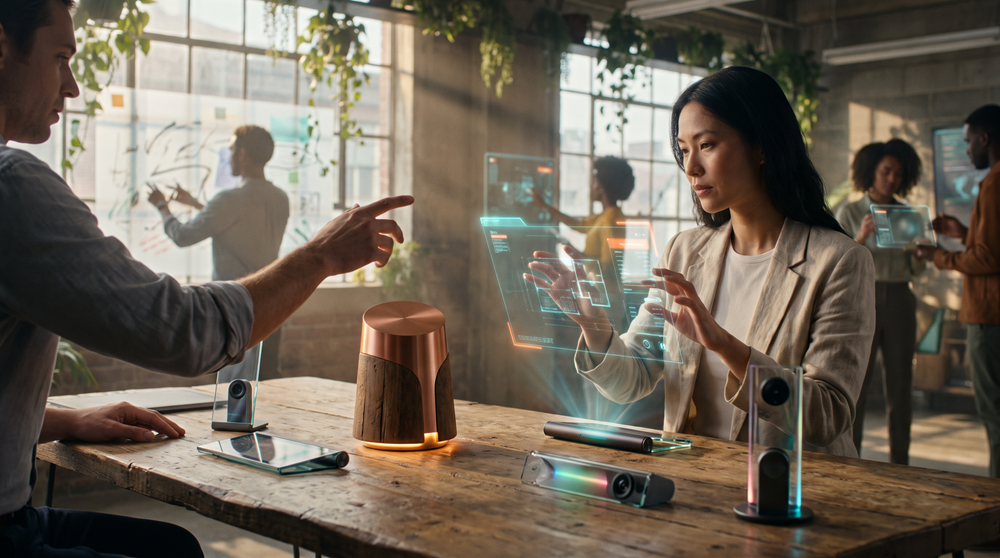
Step back from Microsoft’s stumbles, though, and the larger trajectory is undeniable: this pivot signals the slow death of the personal computer as we have known it for forty years. The PC was designed around a human operator manually commanding local software with a keyboard and mouse. In an agentic world, you don’t open a spreadsheet, write a formula, paste a chart into a slide deck, and email it to your boss. You state an objective – by voice, text, or context – and specialized AI agents handle the execution behind the scenes.
That doesn’t mean physical computing devices disappear. It means the PC evolves into something very different: an AI terminal or ambient workspace appliance. Future endpoints will care far less about running bloated local legacy apps and far more about sensors, microphones, displays, ultra-low-latency connectivity, and local neural processors that handle privacy-sensitive inference and keep you working when the cloud hiccups. The personal computer is transforming from a tool you operate into a portal for a digital workforce you supervise.
Wrapping Up
Microsoft’s pivot from Windows to Copilot is both visionary and perilous. Windows is forty-one years old, weighed down by legacy architecture, and poorly suited for an era of autonomous AI agents. Nadella is right that the center of gravity in enterprise computing is shifting from traditional operating systems to an AI orchestration layer. However, by declaring apps mere plugins and nudging Windows into the background, Microsoft is dismantling the very lock-in that protected its desktop empire – giving vertically integrated rivals like Apple and cloud-native challengers like Google their best opening in decades. Combined with embarrassing global outages that expose the fragility of a cloud-dependent “OS for work,” Microsoft should expect enterprise customers to resist, hedge, and drag their feet in the near term. The PC as we know it is indeed fading away, and something far more intelligent is being born – but there is no guarantee Microsoft will own the new world the way it owned the last one.

- Windows Is Dead—Microsoft Just Forgot to Tell the PC - November 24, 2026
- AMD’s Venice Triumph: How Lisa Su and MEXT Are Reshaping the Post-Huang Data Center - November 14, 2026
- Prescription for the Edge: Why HP Looked Beyond Silicon Valley to Find Its Next CEO - November 14, 2026