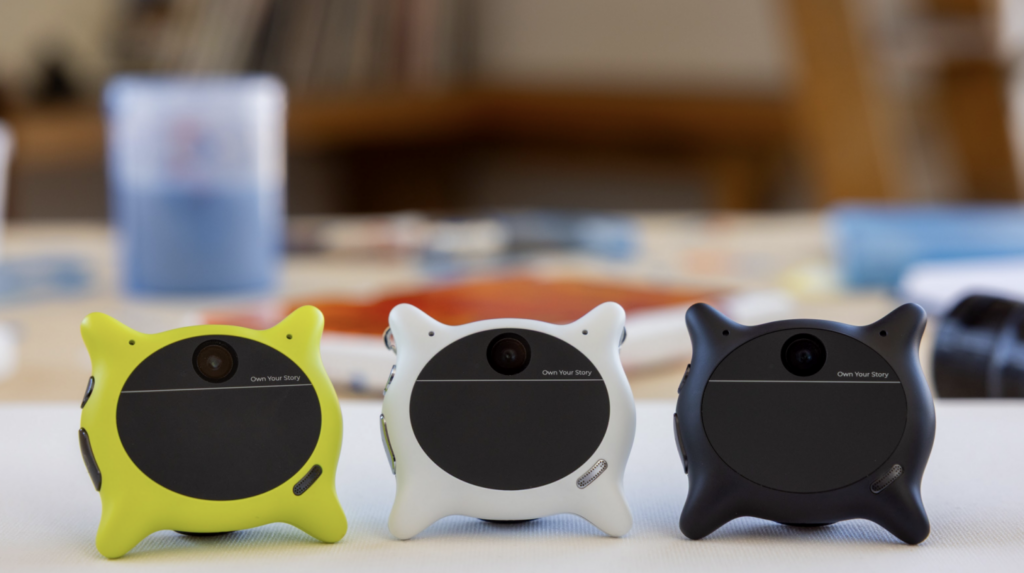
AI wearables have earned skepticism. Too many of them arrived wrapped in future-facing language and left behind a trail of awkward hardware, unfinished software, and business models that assumed patience from buyers they had not yet earned. The Looki L1 enters that same category, but from a more believable starting point. At $199, with a 32g body, 12MP camera, three microphones, 32GB of onboard storage, IP67 protection, Bluetooth 5.0, and dual-band Wi-Fi, it aims lower and lands closer to reality.
Although the company’s claim of moving from reactive to proactive isn’t fully realized, and its “scene-adaptive” features, such as patiently observing personal routines, require significantly more buy-in from the owner than its more passive use cases, I still found value in the Looki L1, and not just as a novelty. While I don’t see the device as a new computing paradigm, I did find it useful, even fun, as a memory device with higher ambitions.

That is a better starting point than many “AI wearables”, including Meta’s AI glasses, which seek to find a meaningful home as personal companions. The Looki L1 captures clips throughout the day, organizes them into a searchable timeline, and turns the raw material into AI-generated outputs such as daily vlogs, comic pages, journals, and weekly reels. This review is based on actual use across events and work contexts, including Emerald City Comic-Con, CES, business conferences, class finals, and a visit to the National Air and Space Museum. In those environments, the device showed both the appeal of passive capture and the persistent limits of first-generation execution.
Form
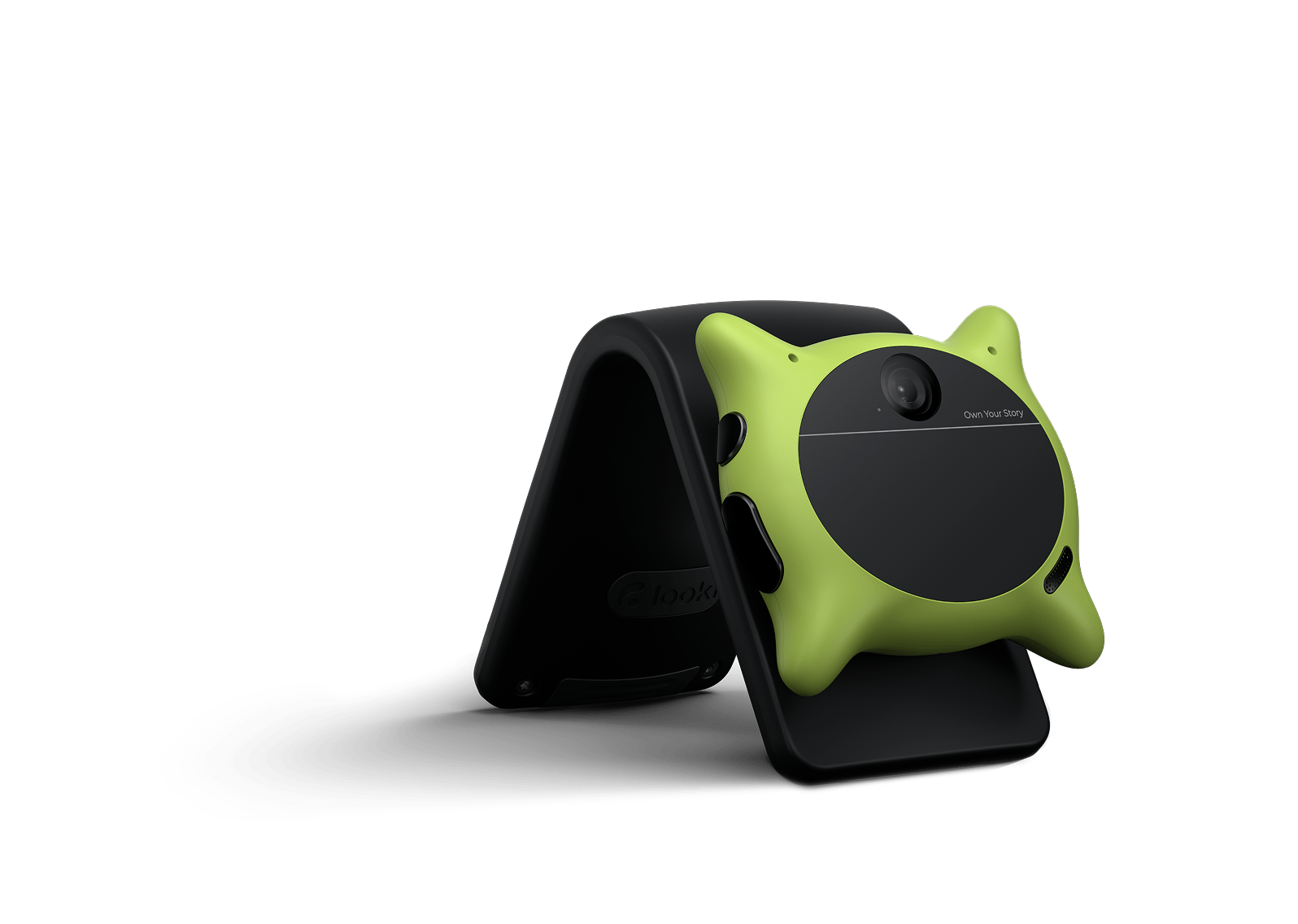
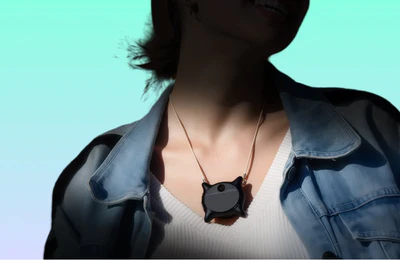
The Looki L1 gets the basics right. It is small enough to wear without feeling like a body-mounted action camera and light enough that it doesn’t become a burden over the course of a day. The 109-degree field of view, f/2.2 aperture, 16mm equivalent lens, 1080p/30fps video, and 4K photo support reflect sensible design choices for documentation rather than cinematic performance. I found Looki’s battery to last between 9 and 13 hours, depending on capture interval, which puts it in the range of an all-day event device.
The physical characteristics are important because products in this category fail when the hardware becomes annoying. Looki does not feel absurd when worn. That should not count as high praise, but in AI hardware it still does.
Function
Looki’s core function is not really photography, or video/audio recording. It is recovery. The device attempts to preserve the fragments of the day that human memory quickly discards. The searchable timeline and context-based recall are the best parts of the product. The AI-generated outputs create differentiation, but the underlying value comes from turning ambient capture into meaningful moments that can be retrieved later. And yes, that content may be reflected upon to improve behavior or discover an insight, but that will come more from active user engagement with the captured data than L1’s interpretive missives.
The L1 worked best for me when I was in motion. Walking through Emerald City Comic-Con, the Looki L1 captured the rhythm of the day in a way that felt genuinely useful. It recorded a sense of flow, not just isolated clips. The same was true at conferences and during class finals, where a lot was happening quickly, and the device could passively gather moments that would otherwise disappear into the blur of a busy day.

I found the L1’s value proposition struggles when daily life slows down. Sitting at a desk, attending video calls, reading, or writing did not play to its strengths. It also competes with dedicated AIs in Google Meet and other Google office apps, Microsoft’s Copilot in Office, or Zoom’s AI features.
I also find that because suggestions and observations happen in the app, looking at them takes me out of my routine. I’d like to see it integrate with the Microsoft Windows and Apple macOS environments so that useful insights don’t stay on the phone, but migrate into my primary work consciousness. That’s what I found appealing about Lenovo’s Qira vision.
In terms of effectiveness as a wearable, I found the chest-mounted perspective drifted too easily. The camera would tilt upward, wander off target, and capture too much ceiling and too little intent. Even clipped securely, it behaved like a witness with poor posture.
I also didn’t find pressing the front of the Looki L1 to invoke AI overly useful, especially in my primary use cases where I couldn’t hear the terse, constrained and at times, uninformed voice over the din of Klingons chanting behind me.
My Experience
The Looki L1 is at its best when the world is moving around the wearer. It feels most useful during events, travel, and public experiences where holding up a phone would have made participation worse. That is the product’s clearest value proposition. It lets the wearer remain present while still collecting a trail of the day.
But the gap between passive capture and meaningful storytelling still defines the experience. During my visit to the National Air and Space Museum, I spent a great deal of time focused on the U.S.S. Enterprise Star Trek filming model. That should have registered as a clear signal of intent. Instead, the resulting vlog barely reflected that experience. The Looki captured the day, but it did not yet understand what mattered about the day. That is the difference between recording and interpretation, and Looki is still closer to the former than the latter.
That “behavior” repeated during the day. The photos and videos I proactively shot with the Looki were not prioritized. I wanted the system to escalate that act over its passive background collection. It does not yet do enough with intentionality. A device like this should learn from what its owner chooses to notice, not just from what drifts into the lens.
Beyond using Looki L1 to capture memories in public, the press materials suggest using it in “Everyday Life Mode” to integrate it into routines and habits. I tried it a few times and found I did not need a comic book image of my nightly exercise routine, my face washing and tooth brushing, nor a vlog of me eating dinner. Owners will choose what to capture, but I found that the more personal and intimate the capture, the more I wanted to distance myself from the L1. It’s an entirely different experience when you become the subject, even for those accustomed to being in public via blogs or social posts, which are often staged, rehearsed, or, at a minimum, intentionally captured. I may be wrong, but I don’t think “Everyday Life Mode” will prove the L1’s market driver.
As noted above, the slow-to-response voice interaction also proved inconsistent in noisy environments. Being in public is exactly where a device like this ought to shine, but public spaces are acoustically messy. I had trouble getting the device to reliably hear me, and when it responded, hearing it was not always easy. Those factors weaken the utility of a device that sells itself on ambient interaction.
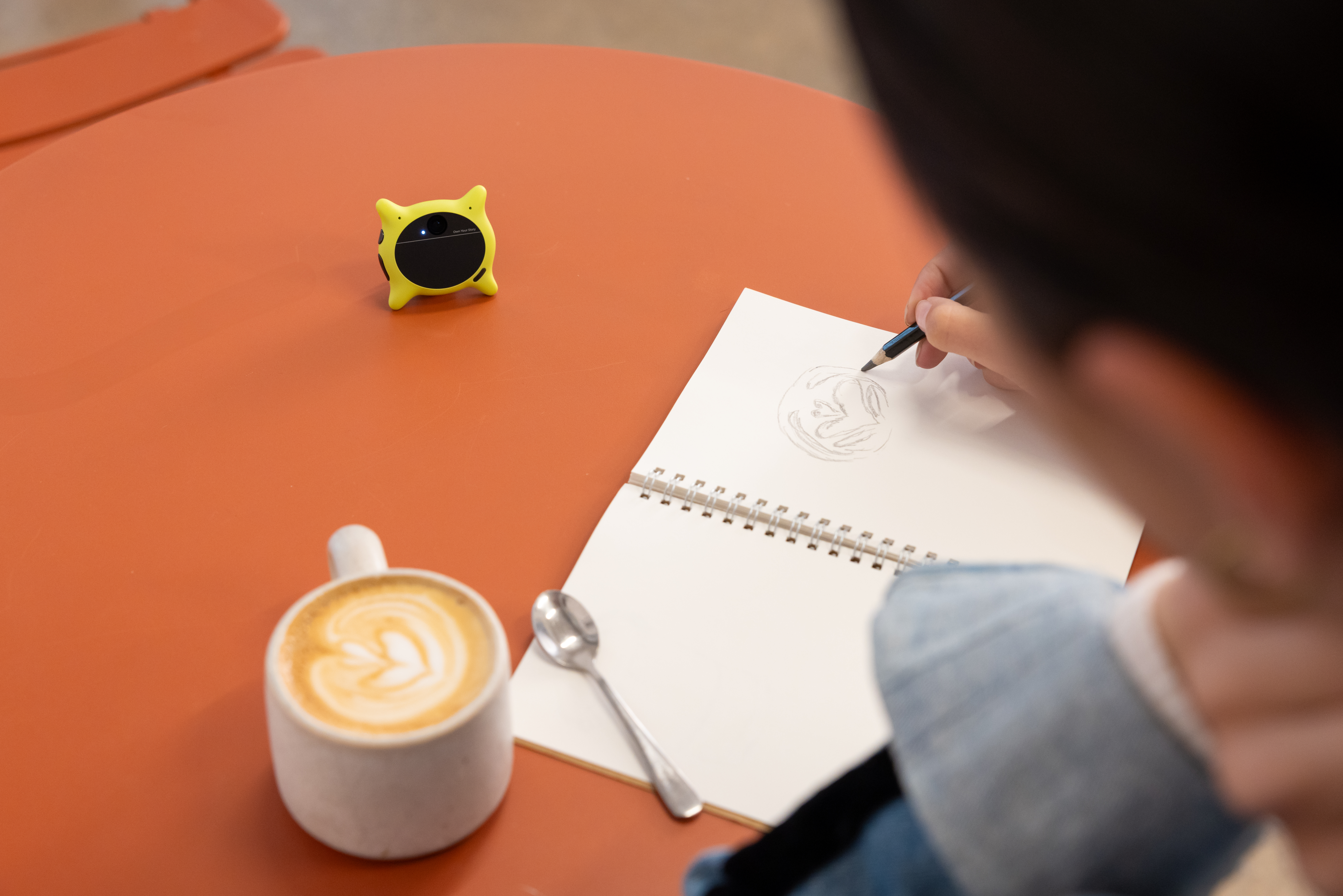
I plan to continue wearing the L1 in public spaces. I don’t plan to use it as a personal observer during my daily routines. I will, however, continue to explore it as a work companion, in that I own my personal workspace and can control when it records and when it doesn’t. However, I’m not sure of the value of yet another voice-capable stationary AI in my workflow. I am looking forward to work devices that scan documents, examine 3D objects, project images, and otherwise integrate with the work experience, like the Lenovo AI Workmate Concept. The Look L1, at least for now, isn’t that device.
Privacy and workplace reality
Looki’s privacy posture starts from a better place than some rivals. The company says content is stored locally first and uploaded only when the user chooses, with cloud storage handled via AWS. That local-first design is the right instinct. It does not solve the deeper issue. Wearing a camera all day changes the social contract around the wearer.
In public spaces, that tension can be manageable. Museums, parks, and large events already expect photography and video capture. The device feels more acceptable there, and arguably more humane than experiencing everything through a phone screen. Conferences sit in a grayer zone. A keynote is one thing. A reception or informal conversation is another. During sessions in which I explicitly demonstrated the Looki L1 and then kept wearing it, people accepted it as a curiosity, but acceptance is not the same as explicit permission.
The workplace is even harder. In many organizations, a wearable recorder would conflict with policies related to meetings, screens, proprietary material, or private conversations. That sharply limits the product’s professional use, even though work settings are where memory capture could be highly valuable. This is not a side issue for ambient AI. It sits at the center of whether the category can become a powerful tool or remain a personal item that may occasionally skirt the edges of propriety as a shadow tool.
Pricing and value
At $199, the Looki L1 asks for less faith than earlier AI wearables. It also ships now, which remains a nontrivial advantage in a product segment crowded with declarations and short on execution. Looki sells the device in black, white, and green, includes one month of Prime membership, and offers a 30-day return window and one-year warranty. The company layers functionality across free and paid tiers, which makes experimentation easy but muddies the long-term value story as more desirable features move behind subscriptions.
For the right buyer, the value is real. Someone who travels often, attends conferences, visits trade shows, or wants a passive memory companion for active days may find enough here to justify the purchase. Someone hoping for a polished AI-driven live experience editor that understands intent, frames shots intelligently, and fits neatly into work life will find a product still trying to figure out its own purpose.
Pros
- Lightweight, wearable design
- Searchable memory capture is genuinely useful
- Local-first storage is the right architectural choice
- AI-generated comics, journals, reels, and vlogs create differentiation
- Affordable entry compared with earlier AI wearable experiments
- Shipping product with a return policy and warranty
Cons
- Weak understanding of user intent
- Unreliable framing when seated or shifting position
- Uneven voice interaction in noisy environments
- Limited editability and personalization in AI outputs
- Persistent privacy and workplace policy concerns
- Modest image quality and low-light performance
- Subscription tiers complicate the value proposition
The Verdict
The Looki L1 is one of the more credible AI wearables to reach the market because it starts with a practical premise and a manageable price. It can capture the scraps of experience that usually vanish by evening, and in motion-heavy contexts, it sometimes feels like a legitimate memory companion. But it still confuses exposure with understanding. It records more than it interprets.
That leaves the Looki L1 in an interesting middle state. It is useful enough to justify attention, especially for events and travel. It is not yet disciplined enough to deliver consistently intentional stories from the lives it observes. As a first-generation product, that may be enough. As a platform for ambient AI, it still has some evolving to do.

His work has been featured in Harvard Business Review, Fast Company, Wired, NASA Ask, and dozens of other magazines and websites. His analysis on the future of work can be found at SeriousInsights.net. He is also the author of Understanding Artificial Intelligence, Cyberlife, Rethinking Smart Objects, and Empower Business with Generative AI.
Rasmus regularly speaks on the future of work at events such as Comic-Con International, Wondercon, Impact, Enterprise AI World, Worktech, CLO Symposium, KMWorld, AAAI, Computers in Libraries, Microsoft’s Building the Future, Educause, Expo Capital Humano, Devlearn, Internet Librarian, CAMEX, EduComm, and Sourcing Summit Europe.
As an Affiliate Instructor, Rasmus teaches scenario planning at the University of Washington and is an Associate Adjunct Professor at Bellevue College.
- Star Trek Celebrates 60 Years with Major Announcements at San Diego Comic-Con 2026 - September 8, 2026
- Why AI Will Humble Regulators - July 25, 2026
- San Diego Comic-Con 2026: The Gear That Made the Away Mission - July 18, 2026